How to clean a stucco wall
Stucco collects dirt, mildew, and efflorescence over time. A proper cleaning extends the life of the finish coat and is the correct first step before any painting or crack sealing.
What you'll learn
- Safe cleaning methods for textured stucco surfaces
- How to remove efflorescence without damaging the finish coat
- Why a garden hose is safer than starting with a pressure washer
- How to treat mildew and biological growth on stucco
Step by step
- Pre-wet the wall Before applying any cleaning solution, soak the stucco surface with a garden hose from top to bottom. This prevents the cleaning solution from soaking directly into the dry porous stucco and keeps it on the surface where it can work.
- Mix your cleaning solution Use a cleaner labeled for exterior masonry or stucco, mixed exactly as the label says. Test a small hidden patch first. Never mix bleach with ammonia or other acids. If the wall has white powder (efflorescence) or the test patch changes texture, stop and have a C-35 crew look at it.
- Scrub with a soft brush Apply the cleaning solution with a long-handled soft bristle brush. Do not use wire brushes or metal scrubbers. They leave metal particles in the stucco that rust and stain the surface. Work from top to bottom in sections and keep the surface wet.
- Rinse thoroughly Rinse the wall completely from top to bottom with a garden hose. If you use a pressure washer, start at the lowest setting with a wide fan tip, stay well back from the wall, and stop if the texture changes or grit shows in the runoff. There is no one safe PSI for every San Diego finish. Higher pressure can erode the finish and drive water into cracks.
- Treat leftover staining if it remains If dirt is gone but white powder or stubborn staining remains, stop DIY chemistry. Those marks can mean water has been moving through the wall. A matched C-35 crew can tell whether you need more cleaning or a moisture repair.
Do not treat pressure washing as the first move on stucco. High pressure erodes the finish coat texture and can drive water behind the system. A garden hose with a spray nozzle is safer for routine cleaning.
Rather have a pro handle it?
We match homeowners across San Diego County with insured local stucco crews. One call puts you in front of one of them.
Keep learning.
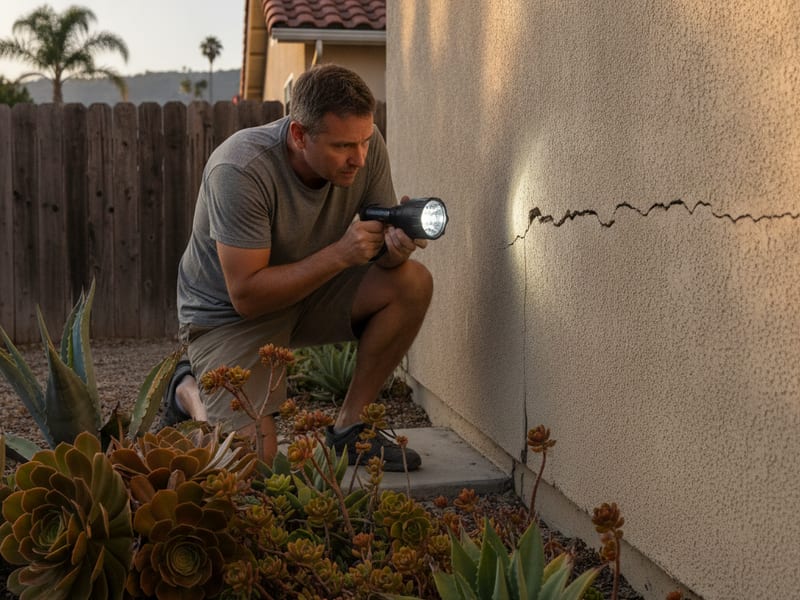
How to inspect stucco cracks on your home
Not every stucco crack is the same problem. A quick inspection with the right approach tells you whether a crack is cosmetic shrinkage or a sign that water is getting behind the wall.
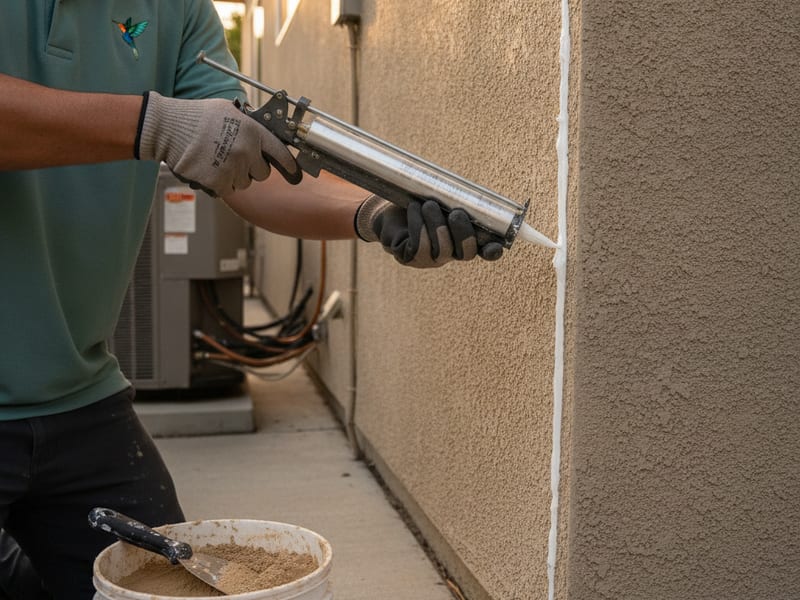
How to seal hairline stucco cracks yourself
A true hairline crack with no staining and solid surrounding stucco can be sealed by a careful homeowner. Larger or active cracks need a professional. Here is how to handle the ones you can do yourself.
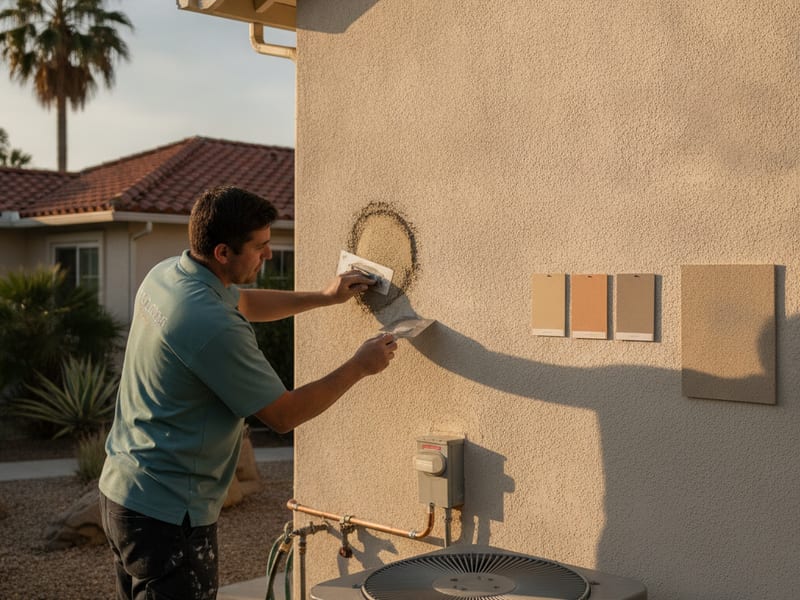
How to identify your stucco texture type
Hiring a contractor to match your existing stucco texture starts with knowing what texture you have. Here is how to identify the most common San Diego textures and describe them accurately.