How to seal hairline stucco cracks yourself
A true hairline crack with no staining and solid surrounding stucco can be sealed by a careful homeowner. Larger or active cracks need a professional. Here is how to handle the ones you can do yourself.
What you'll learn
- Which cracks are safe to DIY and which are not
- What materials to use on exterior stucco cracks
- How to prep the crack before filling
- How to apply and finish a hairline crack seal
Step by step
- Confirm the crack qualifies for DIY Only seal a crack that is hairline width (thinner than a credit card), shows no staining or efflorescence, has solid surrounding stucco when tapped, and has not grown since you first noticed it. If any of those conditions are not met, call a stucco contractor.
- Clean the crack Use a stiff bristle brush or a can of compressed air to remove loose material, dust, and spider webs from the crack. The crack must be clean and dry before any filler goes in. On a San Diego home, avoid sealing during or after rain and wait for the wall to dry at least 48 hours.
- Choose the right filler Use an elastomeric exterior masonry caulk or a paintable acrylic caulk rated for outdoor masonry. Do not use standard interior caulk or silicone caulk. Elastomeric products bridge micro-movement; rigid fillers crack again with thermal cycling.
- Apply the filler Cut the caulk tube tip to a fine point and apply a thin, consistent bead into the crack. Work the bead in one direction to keep it uniform. For very fine cracks, a spray-on elastomeric crack filler delivers better penetration than a thick bead from a caulk gun.
- Tool and finish the surface Immediately after application, use a damp finger or a caulk tool to press the filler firmly into the crack and feather the edges flush with the surrounding stucco surface. Allow to cure per the product directions before painting.
If you plan to paint the sealed crack area, choose a paintable caulk and prime the repaired area with a masonry primer before the finish coat. Unpainted elastomeric caulk remains slightly flexible and does not accept paint the same way stucco does.
Rather have a pro handle it?
We match homeowners across San Diego County with insured local stucco crews. One call puts you in front of one of them.
Keep learning.
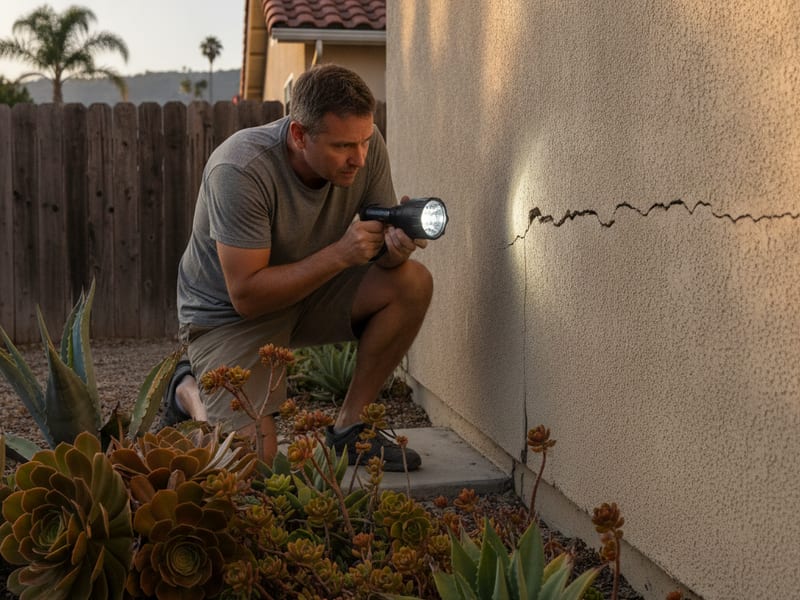
How to inspect stucco cracks on your home
Not every stucco crack is the same problem. A quick inspection with the right approach tells you whether a crack is cosmetic shrinkage or a sign that water is getting behind the wall.
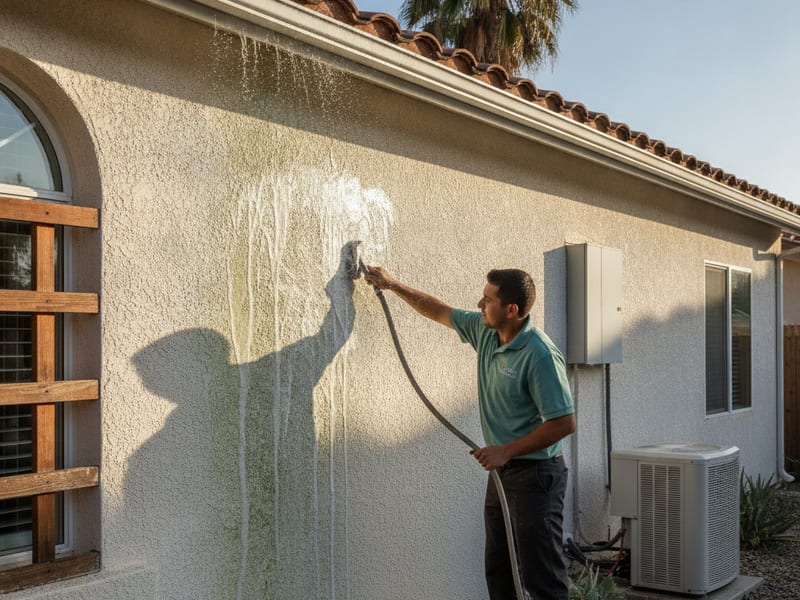
How to clean a stucco wall
Stucco collects dirt, mildew, and efflorescence over time. A proper cleaning extends the life of the finish coat and is the correct first step before any painting or crack sealing.
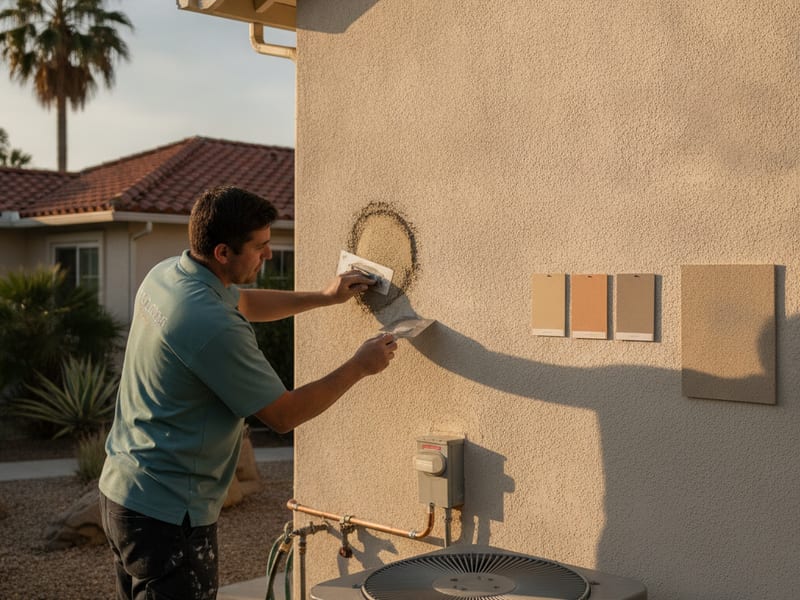
How to identify your stucco texture type
Hiring a contractor to match your existing stucco texture starts with knowing what texture you have. Here is how to identify the most common San Diego textures and describe them accurately.