How to inspect stucco cracks on your home
Not every stucco crack is the same problem. A quick inspection with the right approach tells you whether a crack is cosmetic shrinkage or a sign that water is getting behind the wall.
What you'll learn
- How to tell a hairline crack from a structural crack
- What crack width and pattern reveal about the cause
- How to check for water intrusion signs at a crack
- Which cracks to monitor and which require immediate attention
Step by step
- Walk the perimeter in good light Do your inspection in morning or late afternoon light that rakes across the wall at a low angle. This sidelight makes cracks visible that flat midday light hides. Walk within 3 feet of the wall and scan each section systematically.
- Measure crack width A hairline crack is thinner than a credit card edge. A crack wider than 1/8 inch that you can slide a coin into is a more serious problem. Note the width at the widest point and whether the crack is wider at one end than the other.
- Check crack pattern and location Diagonal cracks at 45 degrees from window and door corners suggest foundation or framing movement. Cracks that follow a grid pattern suggest lath issues below. Cracks that run horizontally at consistent heights may correspond to lath seams.
- Look for staining and efflorescence Trace the crack and look for brown or rust staining at or below it. White chalky deposits called efflorescence at or below a crack mean water has been passing through the stucco at that point. Either sign means the crack is active, not sealed.
- Tap-test the surrounding stucco Use your knuckle or a rubber mallet to tap the stucco in a grid around each crack. Sound stucco makes a dense thud. Stucco that sounds hollow has delaminated from the lath beneath and needs attention beyond just filling the crack.
If a crack shows staining, efflorescence, or the surrounding stucco sounds hollow, stop monitoring and call a stucco contractor. These signs mean water is already inside the wall system.
Rather have a pro handle it?
We match homeowners across San Diego County with insured local stucco crews. One call puts you in front of one of them.
Keep learning.
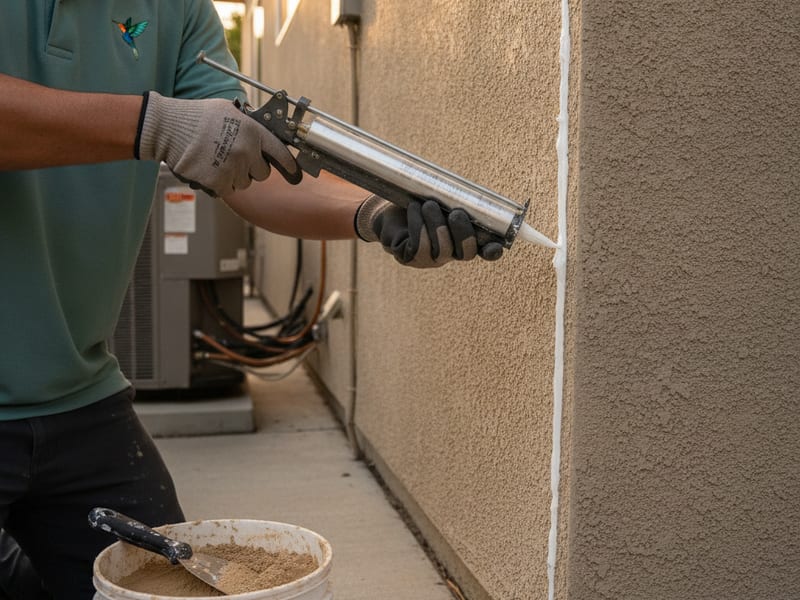
How to seal hairline stucco cracks yourself
A true hairline crack with no staining and solid surrounding stucco can be sealed by a careful homeowner. Larger or active cracks need a professional. Here is how to handle the ones you can do yourself.
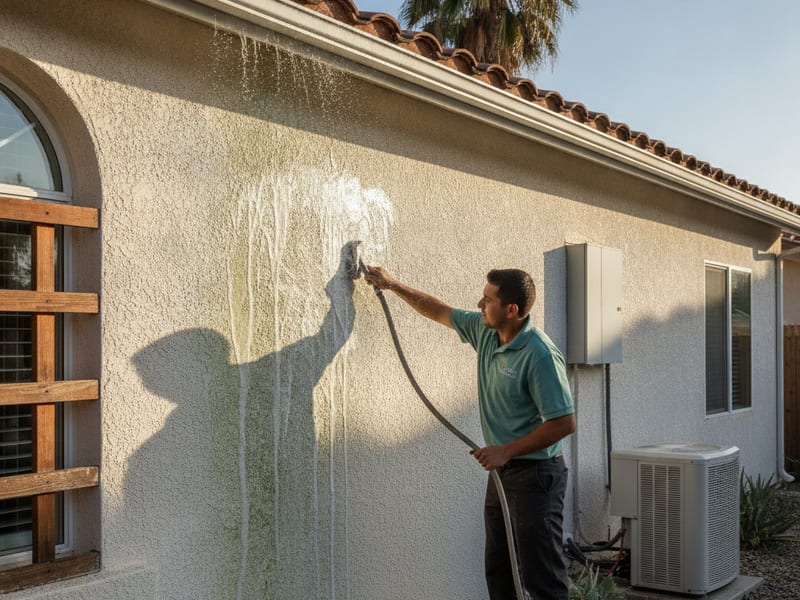
How to clean a stucco wall
Stucco collects dirt, mildew, and efflorescence over time. A proper cleaning extends the life of the finish coat and is the correct first step before any painting or crack sealing.
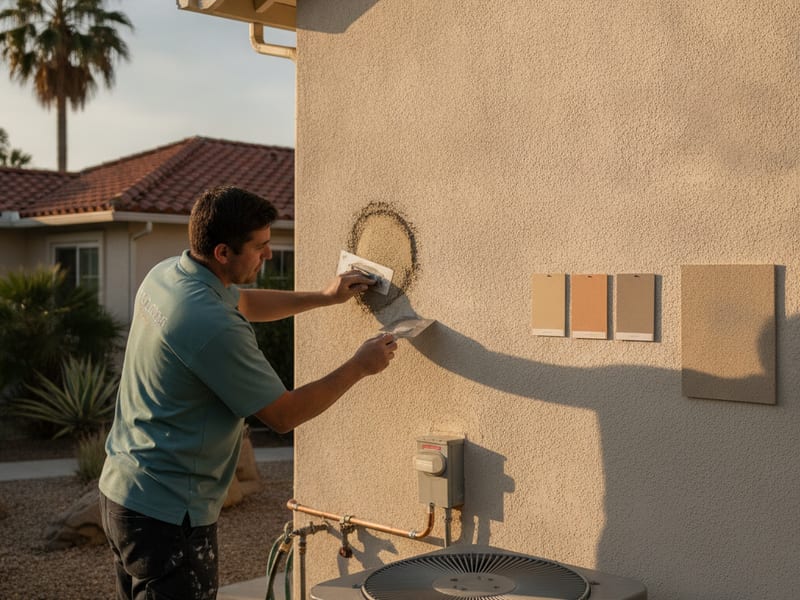
How to identify your stucco texture type
Hiring a contractor to match your existing stucco texture starts with knowing what texture you have. Here is how to identify the most common San Diego textures and describe them accurately.