Old repairs can remain obvious after the surrounding wall changes color. A stucco color coat over patches may soften color differences, but it can’t reliably erase raised edges or mismatched texture. The repair and the surrounding finish need to read as one surface before color can complete the blend.
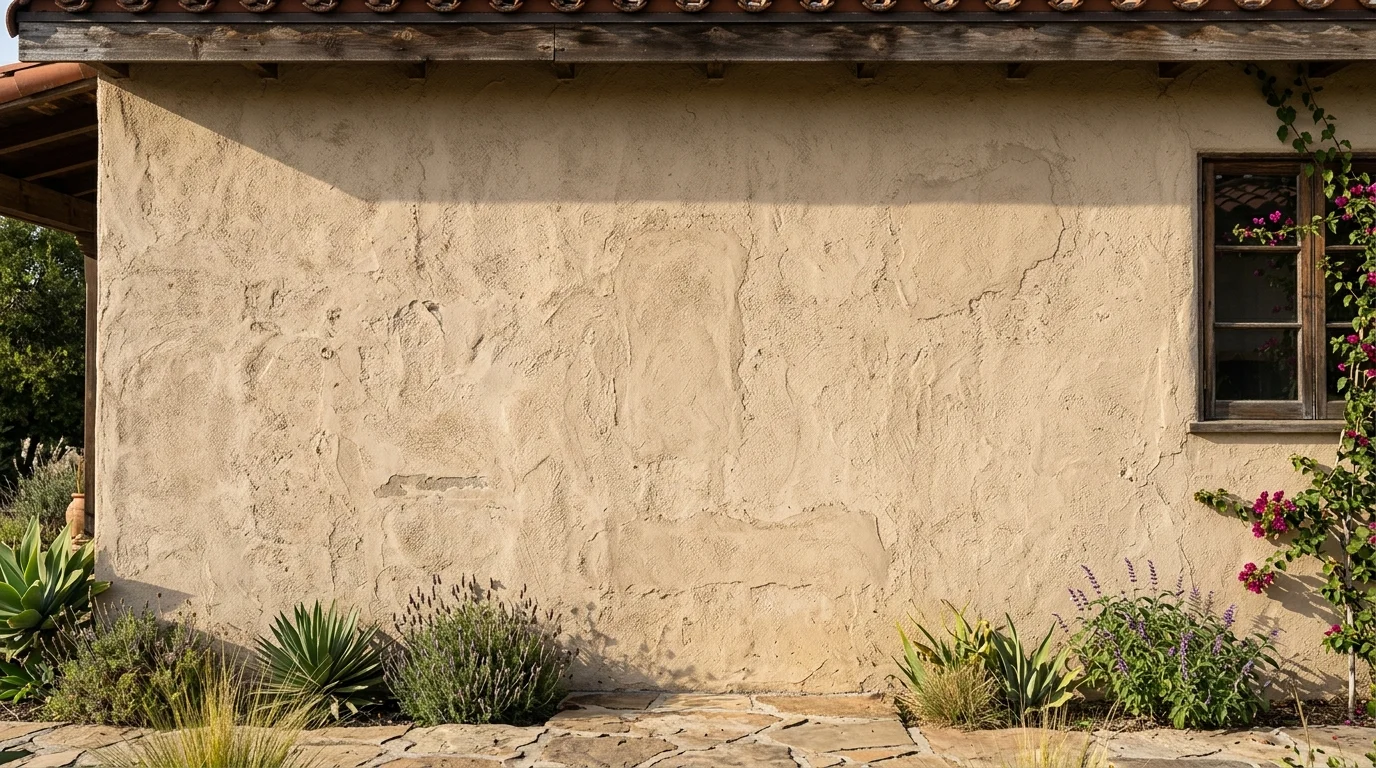
What a color coat can blend and what it can’t hide
A color coat can help when the main problem is color contrast. The patch may be lighter, darker, or less weathered than the wall around it. Giving the larger surface one finish color can reduce that contrast.
It isn’t a guaranteed patch eraser. Light still catches differences in depth, texture, and edge shape. A smooth repair inside a sand-finish wall can remain visible after recoloring. So can a patch with a raised perimeter or a shallow center.
That distinction helps set the right expectation. Color and texture are separate matching problems. Color coat stucco repair works best as a visual finishing step, not as a substitute for correcting an obvious surface difference.
Look at each patch from several positions before choosing the scope. Stand where the wall is usually seen, then move along it. Straight-on viewing emphasizes color. Angled viewing often makes ridges, smooth areas, and patch outlines easier to notice.
San Diego County light can also change the reading of a repair. Check the wall in direct light and shade. A patch that seems quiet under flat morning light may become more noticeable later. Wall orientation matters whether the property is near the coast, in the central city, or farther inland.
If the patch boundaries are still easy to trace before coating, ask whether more texture matching should happen first. A contractor can explain which visible differences can be adjusted and which will remain part of the wall.
Why patch texture matters before color is considered
Texture creates the small shadows that give stucco its appearance. When a patch carries a different pattern, recoloring both areas doesn’t remove that pattern change. The eye may stop noticing the color difference but continue finding the repair.
Start by comparing the size and spacing of the visible texture. Then inspect how the patch meets the original wall. A hard circular border can stand out. An irregular transition may blend more easily, depending on the surrounding finish and viewing angle.
Don’t judge the patch from arm’s length alone. Step back to the sidewalk, driveway, patio, or neighboring window where people normally see that elevation. A repair that looks imperfect nearby may disappear at normal viewing distance. Another may seem acceptable close up but become obvious across a broad wall.
The existing finish also sets the target. A contractor shouldn’t choose a texture from a name alone. Two surfaces described with similar words may still look different when placed beside each other. The pattern on the actual wall is the useful reference.
Our guide to stucco texture matching in San Diego explains how to inspect transitions and viewing angles. For a patched wall, that work belongs before the final color decision.
Ask the contractor to identify what they intend to change. The answer might involve the patch center, its perimeter, or a broader surrounding area. You should also ask what differences are expected to remain. That conversation is more useful than a vague promise that the color will hide everything.
How old paint or sealers change the options
A patched wall may contain more than stucco and color variation. It may also have old paint, a sealer, or another coating. That surface history affects which finish options a contractor should consider.
Don’t assume every section of the wall has the same history. A former owner may have coated one elevation, touched up repairs, or used a different product around windows. Changes in sheen can offer clues, but appearance alone doesn’t confirm the material.
Tell the contractor everything you know about earlier work. Product containers, receipts, and photos may help identify what was applied. If the material can’t be confirmed, say that plainly. The contractor can then compare the unknown surface with the written preparation instructions for the proposed finish.
This step matters because “color coat” describes the desired appearance, not a universal preparation plan. The contractor should name the proposed product and explain how its manufacturer addresses the existing surface. Ask for that information before approving the work.
You can also compare a color finish coat with the alternatives available for the actual wall. Our focused guide on color coat versus paint for stucco covers that broader choice. For this decision, keep the attention on whether the existing coating and patched areas can receive one planned finish.
If nobody can identify the old coating, avoid filling the gap with a guess. Record what couldn’t be confirmed. Then ask the licensed contractor what inspection or sample they recommend before the full elevation is committed.
When one elevation needs a full finish coat
Spot treatment may be enough when a repair already blends well. It becomes less convincing when several patches interrupt one visible wall. Separate touch-ups can leave multiple boundaries, even when each new color looks close.
A full finish across one elevation may be the cleaner visual choice. It gives the contractor one continuous area to plan instead of several isolated patches. That doesn’t mean every side of the building automatically needs the same scope.
Treat each elevation as its own decision. A street-facing wall in Clairemont has a different viewing context from a narrow side yard in City Heights. A patio wall in Chula Vista may be seen much closer than an upper wall facing an open area. The right stopping point depends on where natural breaks occur and how the surface is viewed.
Corners, trim lines, and changes in wall plane may provide visual endpoints. Ask the contractor to mark the proposed boundaries before work begins. You should know whether the finish stops at a corner, continues around it, or covers another connected area.
Also separate concealment from repair. A finish coat shouldn’t be expected to resolve an active crack, loose area, or unfinished patch. Those conditions need an assessment first. The color decision comes after the contractor explains the condition of the underlying repair.
Request an itemized written scope. It should identify the elevations included, the preparation planned, and the proposed finish. No universal price for this work could be confirmed from the approved information for this site. The contractor sets the quote after evaluating the wall, access, finish, and requested scope.
How to judge a sample after it dries
A wet sample isn’t the final decision point. Ask the contractor when the proposed sample is ready for evaluation under that product’s written instructions. Don’t invent a waiting period or borrow one from an unrelated product.
Place the sample where it answers the real question. It should cross a representative patched area and nearby original texture when the contractor considers that appropriate. A sample placed only on untouched stucco can’t show how the patch will read.
Judge color, texture, and edges separately. First, look straight at the wall and compare the color. Next, move sideways and watch how light crosses the surface. Then step back to the distance where the elevation is normally seen. Take notes instead of relying on a quick impression.
Check the sample under more than one lighting condition. Morning shade, direct daylight, and late-day light can reveal different contrasts. For a wall near a property line, view it from the accessible angle that matters most. For a front elevation, include the driveway or sidewalk view.
Photographs can help document the comparison, but don’t let a phone screen make the decision. Exposure and screen settings may change how colors appear. Use the actual wall as the final reference.
Ask what the sample does and doesn’t prove. It can show the proposed appearance in a limited area. It doesn’t promise that an uneven patch will disappear across the whole elevation. Before approving the larger scope, confirm the finish, boundaries, preparation, and expected visible variation in writing.
When to call us
Call when patch outlines remain visible, the wall has an unknown coating, or one elevation may need a broader finish. Verify any contractor’s license through the California Contractors State License Board. Call us at (858) 400-4352 and we’ll connect you with a licensed local stucco contractor.