Elastomeric stucco paint can cover fine surface cracks and create a heavy, uniform finish. It can also be the wrong choice when moisture is already entering the wall or the product limits needed drying.
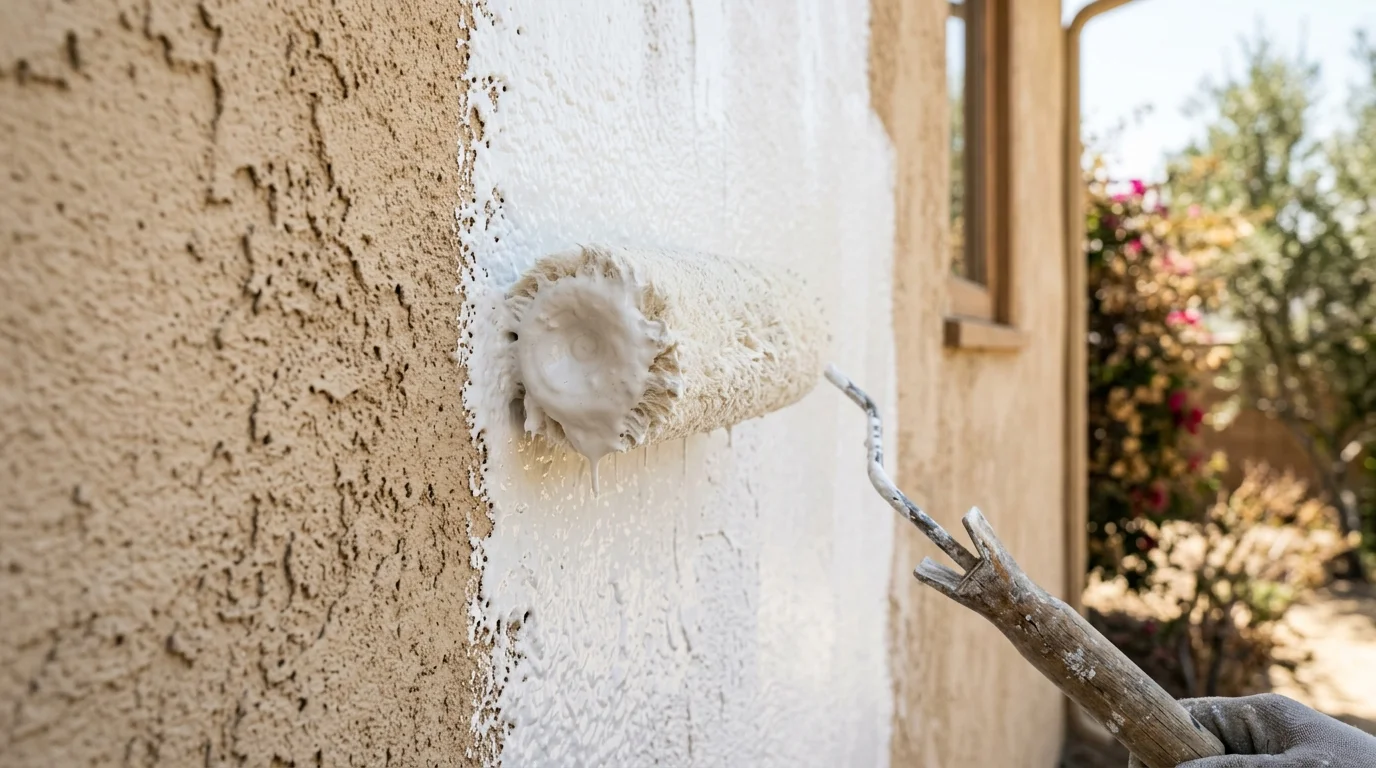
What elastomeric coating is and how it differs from ordinary exterior paint
Elastomeric is a broad coating category, not one fixed formula. Products sold under that name can have different application limits, film requirements, and vapor ratings. Those details need to come from the current technical data sheet for the exact product.
Manufacturers generally position these coatings as heavier and more flexible than ordinary exterior paint. That doesn’t mean every elastomeric product behaves alike. It also doesn’t mean an ordinary exterior paint is automatically suitable for every stucco wall.
Start by comparing product documents, not front-label promises. Look for the approved substrates, required primer, application conditions, coverage instructions, and permeability information. Ask the contractor to identify the existing finish before choosing anything new.
That last step matters on older San Diego homes. A wall may have paint, a cement-based finish, patches, or several coating layers. The visible surface doesn’t always reveal the full history.
If the existing material can’t be identified, say so. A small test area and a condition assessment are more useful than guessing. Our exterior paint prep service connects homeowners with licensed local pros who can inspect the surface before a coating is selected.
Film build, elongation and crack bridging: the actual selling points
Elastomeric marketing often emphasizes film build, elongation, and crack bridging. Each term needs context.
Film build describes the coating layer created after application. The required amount isn’t universal. Check the manufacturer’s current instructions for the specific product and substrate.
Elongation describes how much a coating sample can stretch under a stated test. A larger number on one document isn’t automatically a better choice for your wall. Test methods, film thickness, weathering, and product conditions may differ. Ask for a like-for-like comparison.
Crack bridging describes a coating’s ability to span an opening without immediately separating. It doesn’t explain why the crack formed. It also doesn’t confirm that movement has stopped.
These properties can be useful when the substrate is sound and the selected system matches it. They aren’t substitutes for repairing loose stucco, tracing moisture, or evaluating recurring cracks.
Ask the bidding contractor to show where the product document supports the proposed application. The answer should identify the product, primer, coat requirements, and existing substrate. “Elastomeric is better” isn’t enough. The useful answer explains why that particular coating fits that particular wall.
The hairline cracks it does and does not bridge
A hairline-looking crack isn’t a complete diagnosis. Width, depth, pattern, movement, and nearby damage all affect the decision. No universal crack width can be confirmed for every elastomeric stucco paint.
Use the coating manufacturer’s current limits for the product being proposed. Then have a licensed stucco contractor decide whether the crack is only at the surface or needs separate repair.
A coating may visually span very fine, stable surface openings. That doesn’t turn it into a repair for displaced stucco, loose material, open joints, or cracks that keep returning. Covering the line can also make later movement harder to notice until the coating separates.
Look at the pattern before discussing paint. A single fine line in a sound field needs a different conversation than stepped cracking, bulging, staining, or several repaired lines opening again. If the cause can’t be confirmed from the surface, the contractor should say what further inspection is needed.
Our guide to hairline and structural-looking stucco cracks can help organize the first inspection. It doesn’t replace an onsite diagnosis. When repair is needed first, use a licensed pro rather than expecting a heavy coating to hide the condition.
Permeability, and why this is the whole argument
Permeability is central to the elastomeric decision because coatings differ in how readily water vapor can pass through them. There isn’t one verified permeability figure that applies to the whole product category.
Ask for the permeability information from the exact product’s current technical data sheet. Confirm which test and product condition the figure describes. Don’t transfer a value from a different product, older document, or marketing summary.
The practical issue is simple. Water can enter an exterior wall through more than the broad stucco field. Openings around windows, roof-to-wall connections, penetrations, failed joints, and damaged areas all deserve inspection. A surface coating doesn’t automatically correct those entry points.
If moisture is getting behind the finish, the proposed coating must be evaluated as part of the full wall assembly. A product that limits outward drying may be unsuitable for that condition. A product with a different vapor profile may fit better, but that still depends on the wall and manufacturer instructions.
Ask the contractor to explain the drying path in plain language. If nobody has checked where the water comes from, choosing a coating based only on flexibility puts the decision in the wrong order.
How a stucco wall is supposed to dry
A stucco surface is only the visible part of an exterior wall. The assembly behind it varies by building, construction period, repairs, and previous alterations. That’s why a contractor shouldn’t describe every wall as if it manages moisture the same way.
Before recoating, ask what wall type is present. The contractor should inspect accessible transitions, penetrations, joints, lower-wall conditions, and visible repairs. They should also note whether previous coatings are peeling, chalking, blistering, or separating.
The goal is to understand how incidental moisture is expected to leave the assembly. That path might involve more than outward drying through the finish. It can depend on components that aren’t visible during a casual walkaround.
No site visit can promise that every concealed condition will be found. A useful proposal states what was inspected, what remains unknown, and whether more investigation is recommended.
This is especially important after repeated repainting. Several layers can make the surface look uniform while hiding different patches and materials underneath. If the contractor can’t identify the existing system, ask how they’ll test adhesion and compatibility before covering the whole elevation.
What happens when a wall that gets wet cannot dry outward
The concern isn’t that elastomeric paint always traps water. That claim is too broad. The concern appears when moisture is already reaching the wall and the selected coating reduces an available drying path.
Visible symptoms can have several causes. Staining, peeling, blistering, soft areas, and recurring cracks shouldn’t be assigned to trapped moisture without inspection. They also shouldn’t be buried under another coating before the source is considered.
A licensed pro should first trace likely entry points and examine the substrate. If damaged stucco or wall components need work, the coating decision comes afterward. The repair scope should match what can actually be confirmed.
Don’t accept a moisture diagnosis based only on a photograph. Ask what was measured, opened, or otherwise inspected. If the contractor recommends further investigation, get that scope in writing before approving a finish system.
When moisture management is part of the job, our waterproofing and moisture barrier service can connect you with a licensed local stucco contractor. The matched pro, not Stucco Pro SD, performs the inspection and physical work.
Coastal San Diego exposure and why drying matters here
San Diego County needs more than one coating answer. A west-facing wall near Point Loma or Encinitas shouldn’t be evaluated from the same assumptions as a sheltered wall in El Cajon or Escondido.
Even within one neighborhood, orientation and exposure can differ. Shade, nearby landscaping, roof drainage, irrigation, and wind-driven weather may affect what the contractor sees. Those conditions need an onsite review. They shouldn’t be inferred from a ZIP code.
Coastal location alone doesn’t prove a moisture problem. Inland location doesn’t rule one out. The useful local question is how that elevation gets wet, how long visible dampness remains, and whether the existing assembly shows distress.
Compare separate elevations rather than treating the house as one surface. The north side may have different coating conditions than a sunny south or west wall. A garage addition may also have a different substrate from the original house.
Ask the contractor to document these differences in the proposal. One product may still be recommended for the whole exterior, but the reason should come from observed conditions and current product instructions. San Diego’s varied neighborhoods make a blanket recommendation especially weak.
Substrate condition and prep, and why elastomeric punishes a shortcut
A heavy coating depends on the surface beneath it. If that surface is loose, dirty, chalky, damp, or poorly patched, covering it doesn’t resolve the underlying condition.
The required preparation must come from the selected manufacturer’s current instructions and the contractor’s inspection. Don’t assume every wall needs the same cleaning method, primer, patching material, or drying interval. Those details weren’t confirmed as universal rules.
Ask the contractor to identify failed coating, loose stucco, open cracks, sealant joints, stains, and incompatible patches. Each item should have a stated treatment. Vague language such as “prep as needed” leaves too much room for disagreement.
A test area can help confirm appearance and adhesion before the whole building is coated. It should include the actual substrate, primer, application method, and proposed finish. Ask how the test will be reviewed and what result would require a change.
Preparation can also affect texture. Aggressive cleaning or thick patch edges may stay visible after painting. If matching repairs matter, settle that work before the final coating. Our guide to preparing stucco for repainting explains what to discuss with the licensed pro bidding the job.
Texture: what a heavy film does to a sand or dash finish
Texture is easy to overlook when comparing coating systems. A heavier film can soften sharp edges and fill shallow recesses. The degree of change depends on the product, applied amount, tools, and existing finish.
Fine sand finishes may show that change differently from coarse dash or heavily textured surfaces. No description can guarantee the final appearance on your wall. Request a mock-up in a discreet area.
View that sample from several angles and at different times of day. Check whether repaired areas stand out. Also check whether the coating creates an appearance you actually want, rather than simply accepting a uniform color.
Don’t approve a product based on a smooth sample board if your home has deep texture. The wall itself is the better test. Make sure the sample uses the complete proposed system, including primer when specified.
If preserving crisp texture is a priority, say that before proposals are written. It may change the recommended coating, application method, or finish system.
Deciding between elastomeric, breathable paint and a cement color coat
The right choice starts with the wall, not the product category. Compare the existing finish, substrate condition, moisture history, crack behavior, texture goals, and maintenance expectations.
For elastomeric paint, request the exact product documents. Review approved substrates, primer requirements, coat instructions, crack limits, and permeability information. Ask how the contractor verified compatibility with the existing surface.
For a paint described as breathable, ask for the actual product data. “Breathable” alone isn’t a measurable answer. The contractor should connect the product information to the wall’s observed condition.
A cement-based color finish is a different approach. Whether it can go over your existing surface depends on compatibility and preparation. Our color finish coat service connects you with licensed local pros who can evaluate that option. You can also compare the systems in our guide to color coat versus paint on stucco.
Get the decision and preparation scope in writing. The proposal should name the product system and exclusions. It should also state what happens if hidden damage appears.
Before hiring, verify the contractor through the CSLB license check. Stucco Pro SD is a referral service. The licensed independent contractor you hire performs the work and provides any project warranty.
When to call us
Call when cracks, peeling, moisture signs, or several old coatings make the product choice unclear. A licensed stucco pro should evaluate the substrate before a heavy coating covers it.
Call us at (858) 400-4352 and we’ll connect you with a licensed local stucco contractor.