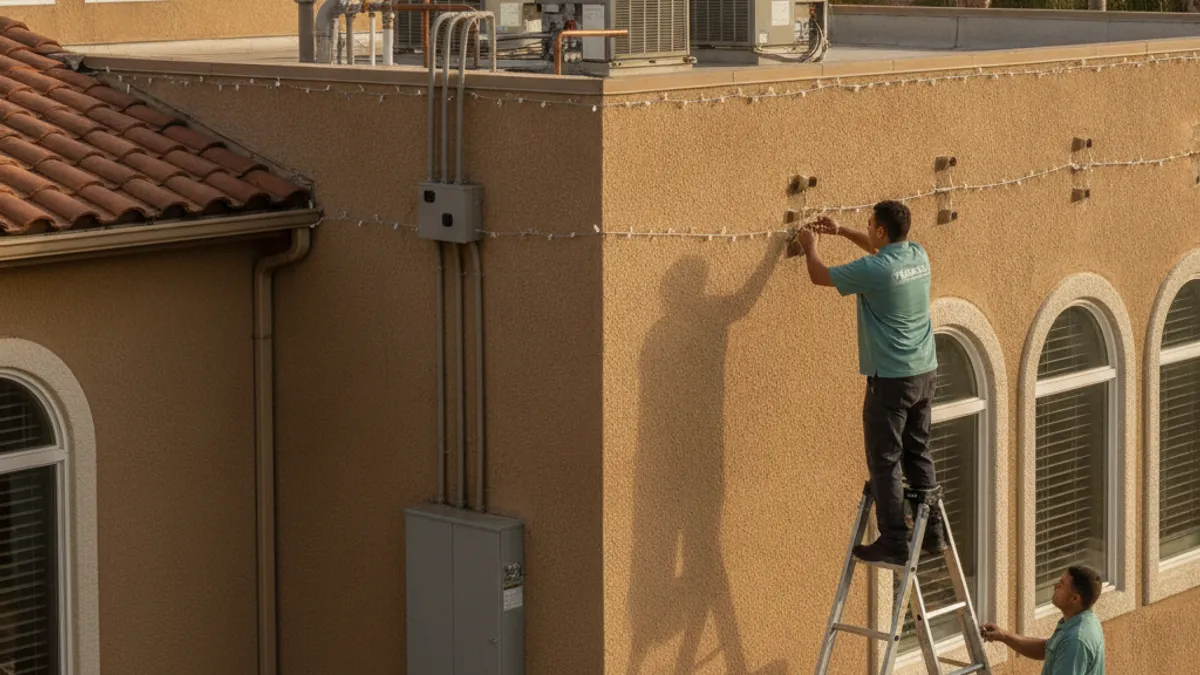
Why stucco and staple guns don’t mix
Every other siding material has an obvious way to hang lights: staple to wood fascia, clip to vinyl, magnet to metal gutters. Stucco offers none of that. It’s a hard, brittle cement-based finish over a lath and paper system, and anything that punctures it, a nail, a staple, a screw driven straight in, creates a small crack that can spread over time, especially with the freeze-thaw-adjacent expansion and contraction San Diego’s temperature swings between hot days and cool nights cause on inland and East County homes. A tiny puncture is also a point where water can start working behind the finish coat, which is a bigger problem than the hole itself.
The clip-based solution most homeowners haven’t tried
The answer isn’t a stronger drill bit, it’s not drilling at all. Stucco-specific light clips, sold at most hardware stores and home improvement retailers around the holidays, are designed to hook onto the texture of the stucco itself or wedge into the natural grooves at trim boundaries, window and door casings, and roof edges, without any adhesive or fastener touching the wall surface. These clips typically hold C9 or mini string lights and can support the modest weight of a single strand without slipping, especially when spaced every 12-18 inches along a roofline or eave.
For flatter wall sections without a trim edge to hook onto, adhesive-backed stucco clips are the next option. These use a specially formulated adhesive designed to grip a textured masonry surface and release cleanly when pulled off at the end of the season, avoiding the paint or finish damage a generic all-purpose adhesive hook can leave behind.
Where to actually attach lights on a stucco home
Roofline and eave edges are the easiest and most common target, since the fascia board or trim there is usually wood, not stucco, and takes a small nail or hook without any risk to the stucco itself. Window and door trim, if it’s wood or a different material than the field stucco, works the same way. Save actual stucco-surface clips for sections where no alternate material is available, like a plain wall run between windows.
Avoid attaching anything near existing cracks, control joints, or the weep screed at the base of the wall. These are already stress points in the stucco system, and any additional load or movement concentrated there is more likely to cause a problem than the same clip placed on an undisturbed section of wall.
What to do if you already have small holes from a previous year
If a past season’s decorations left small nail or screw holes, don’t ignore them heading into winter rain. A small dab of paintable exterior caulk or a dot of stucco patch compound over each hole keeps water from working its way in during San Diego’s rainy months, typically December through March. This is a five-minute fix per hole and cheap insurance against a bigger moisture problem developing behind the wall over several seasons of neglect.
Taking lights down without leaving damage behind
How you remove decorations matters almost as much as how you hung them. Pull adhesive-backed clips off slowly and at a low angle rather than yanking them straight off the wall, which reduces the chance of pulling at the paint or finish coat underneath. If a clip has been up for the full holiday season, San Diego’s occasional December and January rain can affect how cleanly some adhesives release, so check the manufacturer’s removal instructions rather than assuming every clip comes off the same way. For mechanical hook-style clips wedged into trim gaps, simply lifting and sliding them out is usually enough, with no adhesive residue to deal with at all.
Store clips and hooks for reuse next year rather than buying new ones annually. Beyond the cost savings, fewer install-and-remove cycles on the same trim edges means less repeated handling of the same stress points on the house.
Lighted wreaths, garland, and other attachments beyond string lights
Wreaths hung on the front door and garland draped along a porch railing are usually attached to the door hardware or railing itself rather than the stucco, which sidesteps the whole question. Where garland does need to attach to a stucco surface, such as wrapping around a stucco column or pillar, use the same clip-based approach rather than wire wrapped tightly enough to bite into the finish coat, which can leave a compression mark or small crack over the course of a season if the wire is pulled taut against a corner or edge.
When it’s worth calling a professional first
If your stucco already has visible hairline cracking near where you plan to hang lights, or if you’re not sure whether a crack is cosmetic or something more structural, it’s worth a quick look from a stucco professional before you add any additional load or activity to that section of wall, even something as light as string lights. A crack that seems minor can be a sign of moisture already working behind the finish coat, and that’s worth catching before winter rain makes it worse.
Will clip-on stucco light hooks damage the finish coat?
Properly designed stucco clips, whether the mechanical hook style or the adhesive-backed style, are made not to damage the texture or color coat when installed and removed correctly. Avoid generic all-purpose hooks not rated for masonry surfaces, since some adhesives can pull at the finish coat on removal.
Can I drill small holes for a permanent light mounting system?
It’s possible but not recommended for most homeowners, since it requires the right masonry anchors and technique to avoid cracking, and any penetration through the finish coat is a potential water entry point if not sealed correctly. Clip and adhesive systems avoid that risk entirely for seasonal decorations.
Is it safe to hang lights on stucco that already has cracks?
Light clips and adhesive hooks placed away from existing cracks are generally fine. Avoid adding any hardware directly on or immediately next to a crack, and have the crack itself evaluated if you’re unsure whether it’s cosmetic or a sign of a larger moisture issue.
If you notice new or worsening cracks while decorating this season, our stucco crack repair page can help you figure out next steps, or call (858) 400-4352.
Stucco Pro SD connects San Diego homeowners with experienced, insured stucco crews for repair and maintenance. Call (858) 400-4352 and we will match you with a crew.