When a stucco patch cracks again, don’t assume it only needs more filler. Movement, poor bonding, shallow preparation, and hidden water are possible inspection categories. Appearance alone can’t confirm which one applies.
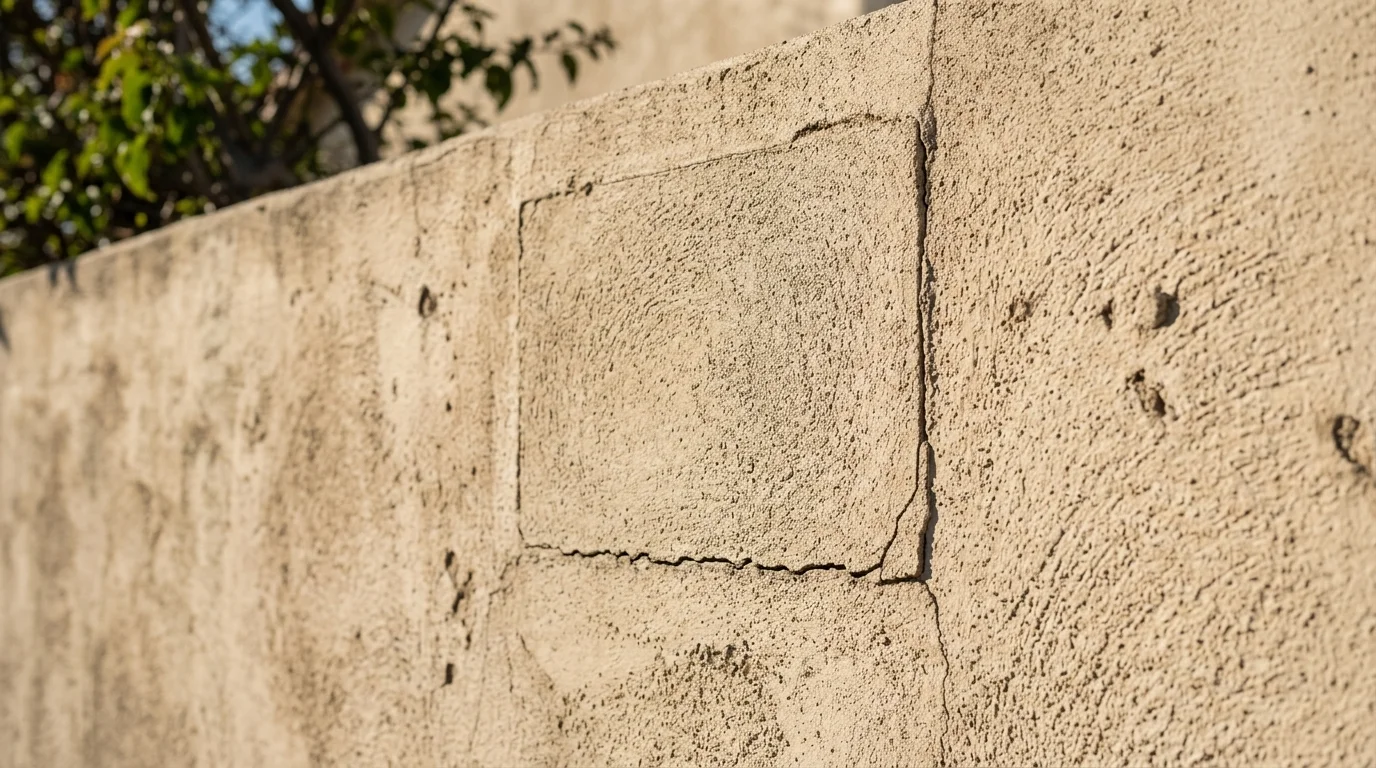
Whether the new crack follows the old repair line
Start by mapping the new crack against the completed patch. Does it follow one edge, cross the repaired area, or trace the original crack? That location gives a contractor a useful starting point. It doesn’t prove the cause.
Photograph the entire wall before taking close-up pictures. Include nearby corners, windows, doors, trim, and wall transitions. Take another photo from an angle so the patch profile is visible. Raking morning or afternoon light can make a slight edge easier to record.
Next, write down what you know about the earlier repair. Note when the crack returned and whether its appearance changed. Keep the old proposal, invoice, material packaging, and progress photos if available. Don’t guess about products or repair depth when records are missing. Tell the next contractor exactly what couldn’t be confirmed.
A crack following the patch perimeter may direct attention toward that boundary. A line crossing old and new material may require a broader look. Neither pattern confirms structural movement, water damage, or failed bonding by itself. Our guide to hairline and structural-looking stucco cracks explains why appearance shouldn’t become a diagnosis.
Compare the failed area with nearby stucco, but don’t judge texture differences as proof of failure. Texture, color, crack location, and surface profile are separate observations. A licensed pro can decide which observations matter.
This first review defines the problem clearly: the stucco crack came back after a specific repair. That’s more useful than asking someone to cover an unnamed line again.
Why movement beneath the finish reopens a patch
A patch covers a defined area. The condition affecting that area may extend beyond its visible edges. If material beneath or beside the patch is still moving, repairing only the finish might leave that condition untouched.
That statement is a possibility, not a diagnosis. A reopened line can’t reveal which layer moved or why. It also can’t establish whether the building has a structural problem. Those conclusions require an appropriate inspection.
Watch the area without altering it before the inspection. Marking directly on the wall could obscure the surface. Instead, use dated photos from the same position. Include a ruler for scale, but don’t insert anything into the crack. Record whether the line appears confined to the patch or continues beyond it.
Tell the contractor about nearby work that occurred before the crack returned. That might include a window project, an exterior opening, or another wall repair. The timing doesn’t prove a connection. It simply gives the contractor a fuller history.
The next scope may need to extend beyond the visible crack. That decision belongs to the licensed pro after inspecting the area. The pro may recommend opening part of a failed stucco patch when the surface doesn’t reveal what lies beneath.
Our stucco crack repair service connects San Diego County homeowners with licensed local contractors. The contractor can distinguish a narrow surface task from work that needs a wider inspection area. Stucco Pro SD makes the connection and performs no physical work.
How poor bonding and shallow preparation show up
A returning edge, a loose-looking margin, or a visible texture break can help locate the failed repair. Those signs don’t establish how the patch was prepared. The earlier work may be hidden, undocumented, or covered by finish material.
Ask what the contractor needs to see before proposing another patch. A surface-only review might be enough for one area but not another. If the patch edge appears separated, the contractor may need to determine whether affected material extends beyond the visible line.
Don’t describe the old work as improperly prepared unless records or inspection support that conclusion. Instead, use neutral language:
- The patch cracked again along its upper edge.
- The repair depth couldn’t be confirmed.
- The product used for the earlier patch is unknown.
- No progress photos from the first repair are available.
- The crack crosses both the patch and surrounding finish.
Those details let the contractor investigate without inheriting an unsupported diagnosis. They also make competing proposals easier to compare.
A clear proposal should identify the area included in the repair. Ask whether loose or affected material will be identified before new material is placed. Ask how the contractor will handle the boundary between the repair and surrounding stucco. Product names, preparation steps, and finish expectations should appear in writing when they’re part of the proposed work.
A good-looking surface doesn’t prove everything below it was addressed. Likewise, a visible texture difference doesn’t prove the patch has failed. Our guide to what a good stucco repair looks like helps separate appearance questions from scope questions.
For a new repair, stucco patching may be appropriate after the contractor defines the affected area. The goal isn’t simply hiding the returning line. It’s getting a scope tied to the condition the contractor can actually confirm.
When water behind the wall keeps defeating the repair
Water is another possibility a contractor may investigate. A crack alone doesn’t prove water is behind the wall. Staining, finish changes, or a repair near an opening still aren’t enough to identify a source without inspection.
Document what you can see and smell without opening the assembly yourself. Note nearby windows, doors, roof-to-wall areas, pipes, trim, and previous exterior work. Record where a stain begins and whether it changes. Don’t label any nearby feature as the source unless the inspection confirms it.
The location matters because a patch can be separated from the place water enters. A contractor may need to inspect beyond the cracked rectangle. Another qualified trade may also be needed when the suspected source falls outside stucco work.
San Diego County includes coastal, central, inland, East County, and South Bay properties. A neighborhood name doesn’t reveal what’s happening inside one wall. A home near the I-5 corridor and one near I-8 still need property-specific inspection.
If the property is inside the City of San Diego, the city’s Development Services Department is the authority to ask about current permit requirements. For another city or an unincorporated address, confirm requirements with the building department that governs that property. Don’t assume the earlier repair or proposed opening is permit-exempt.
When water is confirmed, ask for separate written descriptions of the source-related work and the stucco restoration. That keeps the scope understandable. It also prevents a cosmetic patch from being mistaken for a confirmed correction elsewhere in the wall.
What a lasting repair scope should address
A useful repair scope starts with what can be verified. It should identify the cracked patch, its boundaries, and any areas requiring further inspection. It should also separate confirmed findings from conditions that remain unknown.
Ask the contractor to explain these points in writing:
- What visible material is included?
- Does any material need removal before the full condition is known?
- What happens if the opened area reveals a wider problem?
- Who addresses work outside the stucco contractor’s scope?
- How will the repaired texture relate to the surrounding wall?
- Which finish work is included after the patch?
- Which conditions are excluded from the proposal?
The final answers will depend on the wall and inspection. This checklist isn’t a repair specification. It helps prevent a narrow surface description from being treated as a complete diagnosis.
Photos can also become part of the project record. Ask the contractor whether the condition can be documented before covering opened areas. Keep the proposal, approved changes, product information supplied by the contractor, and final invoice together.
Confirm the contractor’s license through the official California Contractors State License Board lookup. Stucco is listed under the CSLB C-35 lathing and plastering classification. Verify the specific contractor and current license record directly with CSLB.
Don’t rely on price alone when comparing scopes. One proposal may cover the visible line. Another may include inspection, removal, boundary preparation, and finish work. Ask each contractor to clarify missing details rather than assuming both proposals describe identical work.
The right scope for stucco repair cracking again depends on what the inspection confirms. Sometimes that means a defined patch. Sometimes a matched pro may need to inspect beneath or beyond the previous repair before recommending the next step.
When to call us
Call when a completed patch reopens, crosses its old boundary, or needs inspection beneath the finish. We’ll match you with a licensed independent pro who can assess the specific wall and propose an appropriate scope. Call us at (858) 400-4352 and we’ll connect you with a licensed local stucco contractor.