A neat repair can still look like a bright island. When a San Diego wall carries a La Habra stucco color, don’t trust a color chip alone. Build and compare a sample that accounts for the finish, exposure, and repair boundary.
Integral color versus painted color, and why matching is different for each
Start by identifying what you’re actually matching. Integral color’s introduced through the finish material. Painted stucco has a separate coating over the surface. Those systems call for different repair plans.
On an integral-color wall, the visible result comes from color and texture together. Sand size, surface movement, and trowel marks can change how light reaches the wall. A close color with the wrong texture may look more obvious than a slight color difference with a convincing texture.
Painted walls shift the decision toward the existing coating. The contractor needs to identify its condition and decide how a repaired area should be prepared. Don’t assume a La Habra color name identifies the paint now covering the wall. A previous owner may have coated the original finish.
Look beneath protected edges where possible. Areas near trim, fixtures, or deep returns may offer useful clues. Old bags, receipts, proposals, and paint cans can also narrow the search.
If the surface type remains unclear, don’t guess. A licensed contractor can inspect it and propose a test. Our texture-matching service connects homeowners with independent local pros who can evaluate color and texture as one problem.
How a factory stucco color is specified
A useful La Habra stucco record needs more than a casual color description. Save every available detail from the bag, container, receipt, or original proposal. That may include the product line, color name, color code, finish description, and other printed identifiers.
Photograph the complete label instead of copying one line. A handwritten note such as “tan stucco” won’t separate nearby shades. It also won’t tell a contractor which finish material was used.
If you have an old package or invoice, take it to the manufacturer or an authorized distributor. Ask them to confirm what the printed designation means now. Don’t assume an old name transfers to every current product or finish.
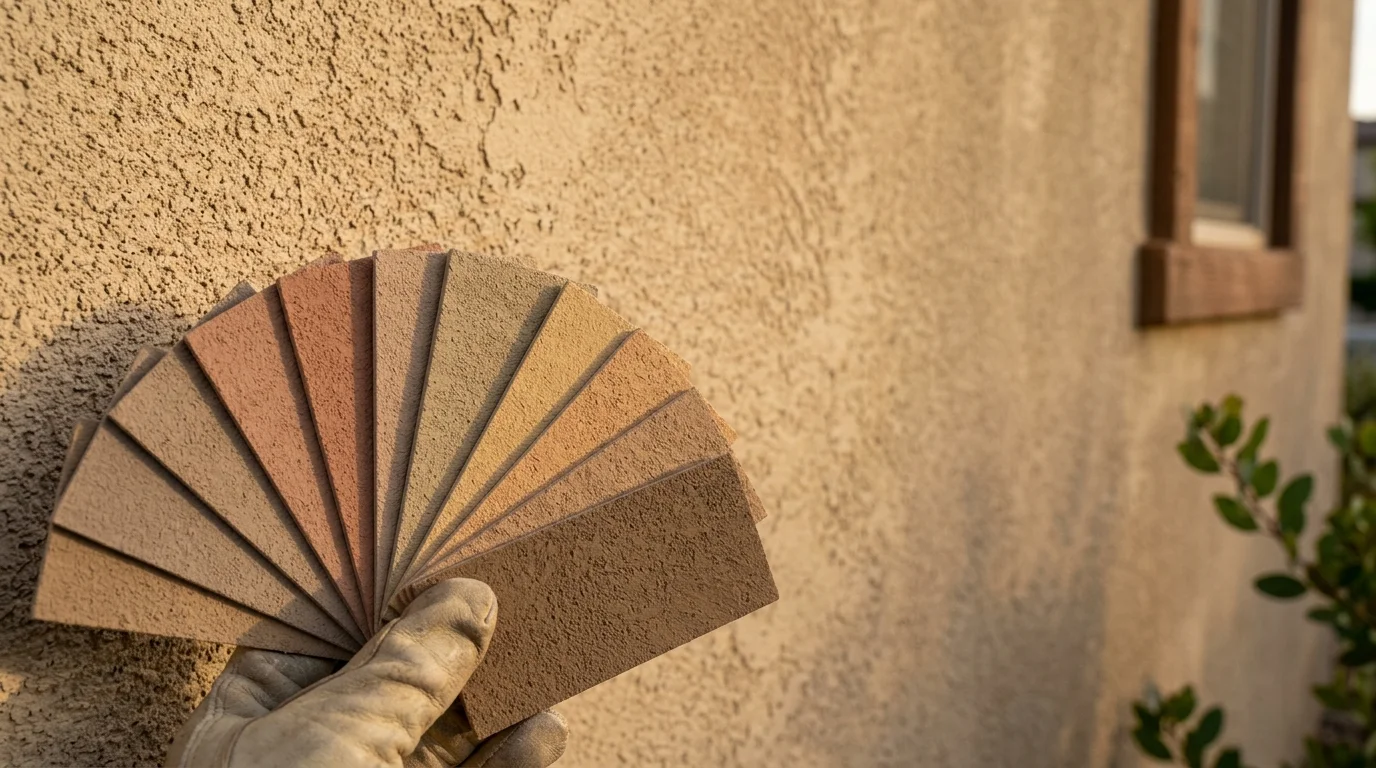
No original records exist on many repairs. In that case, begin with a physical comparison. Keep the color fan against the wall rather than judging it across the yard. Compare it in open light and near the intended patch.
The selected factory code’s a starting point. It gives the contractor a candidate material for testing. It doesn’t replace a sample on the actual house. Record the approved sample details before work begins, including where and under what light you viewed it.
Why the same color code does not come out the same twice
A color code identifies a selection, but the wall determines how that selection appears. The existing surface has its own texture, exposure, coating history, and maintenance history. A new sample doesn’t share that history.
Light creates another variable. A south-facing plane can look different from a shaded entry using the same finish. Nearby landscaping, roof overhangs, and reflected light can also change what your eye sees. Compare candidates on the elevation being repaired.
Surface texture matters just as much. Raised grains catch highlights. Recessed areas hold shadow. If a patch is smoother or rougher than the surrounding wall, it can appear lighter or darker even when the base color is close.
Don’t approve La Habra stucco from a phone photo alone. Cameras adjust brightness and color automatically. Screens then display that image differently. Photos are helpful for documenting the wall, but the final decision belongs at the property.
Set expectations around a visual blend, not a guaranteed invisible patch. The best plan considers the material, texture, wall plane, and stopping point together.
Batch, water content, trowel technique and cure
Consistency begins with the written product instructions. The person preparing the finish should record the selected material and keep the approved process consistent. Don’t improvise proportions or substitute products based on appearance alone.
Water can affect how a wet mix handles and looks. Trowel pressure and movement also shape the finished surface. One applicator may leave tighter areas while another creates stronger highs and lows. Those differences become visible as sunlight moves across the wall.
Texture should be tested alongside color. A smooth sample won’t predict a sand-textured repair. The sample needs to represent the planned substrate preparation, finish, and application method closely enough to support a real decision.
Fresh material also shouldn’t be judged as though its first appearance is final. The applicable product instructions and site conditions should guide when a sample is ready for approval. No universal waiting period could be confirmed for every La Habra stucco product and San Diego exposure. The manufacturer and the licensed contractor set that part of the process.
Write the approval into the project notes. A label photo, sample location, and finish description are more useful than memory if another batch is needed.
Sun, salt air and years: what fades a San Diego wall
San Diego exposure changes from one wall to the next. A house near the coast doesn’t present the same conditions as an inland property. Even one home can have a bright street-facing elevation and a protected courtyard wall.
Sunlight can make existing color loss appear uneven. Ocean-facing properties may also show surface films, moisture patterns, or residue. Inland walls can carry dust that changes the apparent tone. Don’t match new material to dirt when the real target is the finish beneath it.
Cleaning must fit the existing wall and coating. Ask the licensed contractor which test method is suitable before comparing colors. The goal is a representative area, not a newly damaged reference spot.
Study the complete elevation. Note protected bands beneath eaves, exposed corners, hose splash areas, and sections behind plants. If those areas show several tones, there may not be one existing color to copy.
Choose the reference area deliberately. It should represent the portion of the house you want the completed work to resemble. On a heavily weathered wall, matching the current appearance and restoring a broader elevation are separate choices.
Why a fresh patch can match at first and drift as it weathers
A wet patch can look convincing before its appearance settles. Moisture, surface texture, and changing light may temporarily hide a difference. That makes immediate approval risky.
The reverse can happen too. A new repair may look wrong while it’s fresh, then move closer to the surrounding wall. The applicable product guidance should determine when the comparison becomes meaningful. “Month three” isn’t a universal deadline for every wall or material.
The old and new areas also continue from different starting points. The surrounding wall carries its prior exposure and surface history. The patch begins with new material and new workmanship. A tiny difference can become easier to see when direct sunlight crosses their boundary.
Document the sample and completed patch under similar conditions. Stand in the normal viewing area rather than inches from the surface. Check the repair when light falls across it, since that can reveal texture differences.
If the patch starts drifting visually, don’t keep adding small color corrections without a plan. Ask whether the problem is color, texture, sheen, residue, or the location of the repair edge.
Matching a wall versus matching a plane: the break-line strategy
A small repair puts old and new finishes directly beside each other. That shared edge gives the eye an easy comparison. Extending the finish to a natural break can make the transition less exposed.
Useful break lines may include an outside corner, an inside return, trim, or an existing joint. The right stopping point depends on the building. A licensed contractor should inspect the wall before defining the scope.
Think in planes, not square patches. A front elevation may contain several distinct wall faces. Treating one complete face can create a cleaner visual boundary than ending new finish around an irregular repair.
This doesn’t mean every color problem needs a broad recoat. A small patch in a protected location may accept a localized blend. A repair centered on an open, sunlit wall offers fewer places to hide the transition.
Color can’t rescue the wrong surface profile. Review our guide to stucco texture matching in San Diego before approving the boundary. If the texture doesn’t follow the surrounding plane, the patch may remain visible regardless of the selected La Habra color.
Sample panels and why the wall is the only real test
A sample panel’s a decision tool, not a promise. It lets you compare candidate colors and textures before committing to the larger scope. The closer it represents the planned work, the more useful it becomes.
Ask for two or three focused candidates when the original color remains uncertain. Large collections of nearly identical chips can make approval harder. Narrow the options using available records, protected wall areas, and manufacturer information.
Move each sample beside the proposed repair. View it from the sidewalk, driveway, patio, or other normal sightline. Then check it under morning, midday, and late-afternoon light. Don’t compare one sample in shade with another in direct sun.
A portable panel still won’t reproduce every feature of the house. The wall’s got its own substrate, surface profile, and reflected surroundings. When appropriate, ask whether a small approved test area can be placed on the actual elevation.
Record the final choice. Include the product label, selected color, texture, sample location, and approval conditions. For repairs where texture is the main obstacle, our texture-matching options can help you connect with a licensed local contractor.
When a fog coat is the answer instead of a match
A fog coat may be an option when a contractor and the product guidance confirm compatibility with the existing stucco. It changes the question from matching one small patch to treating a broader area consistently.
Don’t assume it belongs on every La Habra stucco wall. Existing paint, acrylic finishes, repairs, residue, and unknown coatings can change the recommendation. The contractor needs to identify the surface before proposing a system.
Fog coating also doesn’t correct mismatched texture. If the patch has different sand, trowel movement, or surface depth, color treatment alone may leave its outline visible. Resolve the texture decision first.
This approach can make sense when the wall has several tones and no single spot provides an honest target. It may also help when the localized match would create too many visible transitions. The proper stopping points still matter.
Ask for a sample using the proposed material and preparation. Review the result on the actual elevation before approving the full scope. Our color finish coat service can connect you with a licensed independent pro who can assess whether a finish treatment fits the wall.
When re-coating a whole elevation is cheaper than chasing a match
No universal price rule could be confirmed for La Habra stucco matching. The licensed contractor sets the quote after inspecting the wall, access, repair size, finish, and stopping points.
Request two written scopes when the visual boundary is uncertain. One can cover localized repair and color blending. The other can cover a finish treatment or re-stucco work across the affected elevation. Compare what each proposal includes, not just its final total.
A localized plan can lose its advantage if it requires repeated samples and leaves several exposed transitions. A broader treatment creates more work, but it may replace an uncertain spot match with one planned wall plane. The actual proposals will show which approach costs less for your house.
Also compare exclusions. Surface preparation, texture correction, trim transitions, and protection of adjacent areas should be clear. Ask how change orders will be handled if the existing surface differs from what was visible during the estimate.
Don’t accept a broad recoat solely because an exact match isn’t promised. Ask the contractor to explain why that boundary fits the elevation. Before hiring, verify the contractor through the CSLB license check.
When to call us
Color matching needs a licensed stucco pro when the original finish is uncertain, the repair crosses a visible wall plane, or a broader coating is being considered. Compare samples and written scopes before approving the finish. Call us at (858) 400-4352 and we’ll connect you with a licensed local stucco contractor.