Rapid Set stucco patch is the right buy only when its current product sheet matches the wall, repair depth, coat, exposure, and finish. Don’t choose Rapid Set, Quikrete, or Sika by brand recognition alone. Compare the exact products without guessing about set times, coverage, depth limits, or bonding requirements.
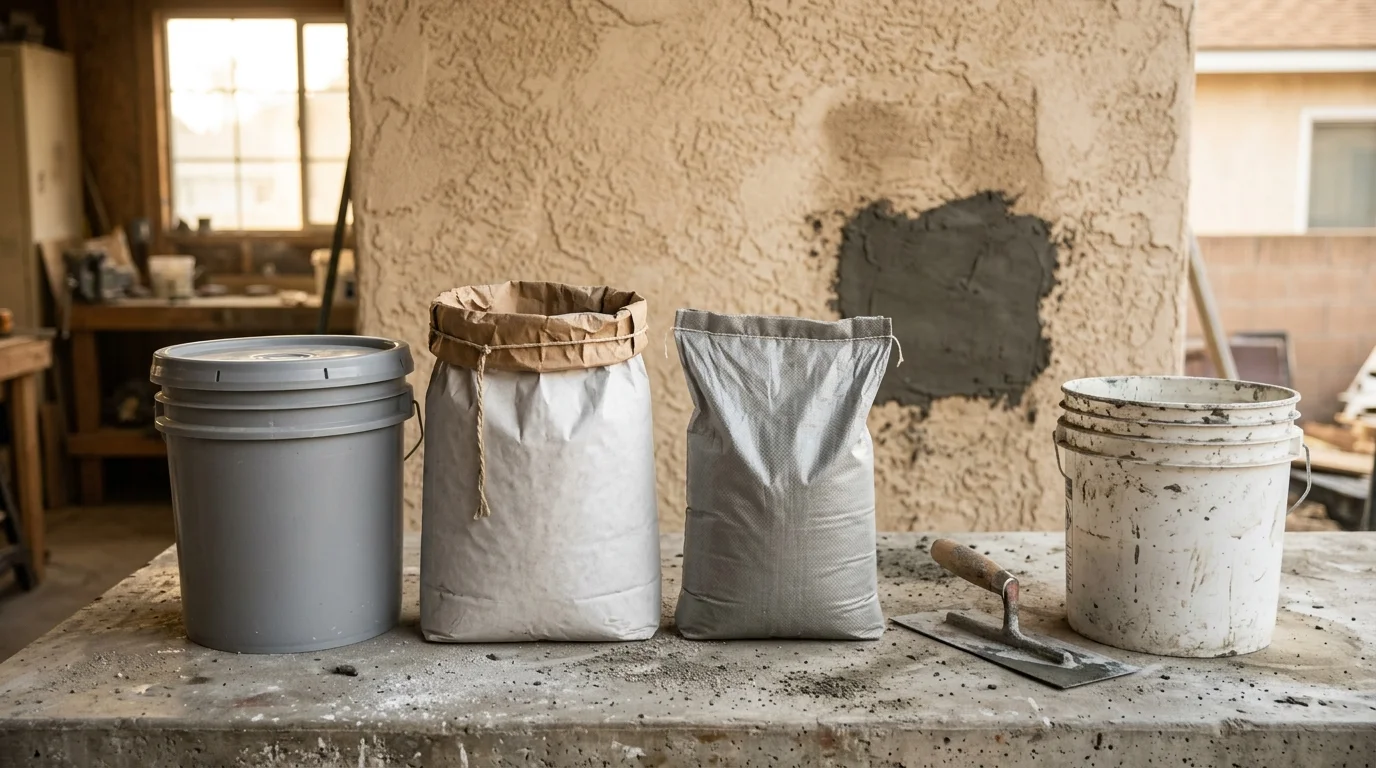
The three product families: pre-mixed acrylic, fast-set cementitious, and bagged stucco mix
Start by identifying what the exact container says it is. Pre-mixed acrylic patch, fast-set cementitious material, and bagged stucco mix are product families. A family name isn’t a complete specification.
Don’t assign Quikrete, Rapid Set, or Sika to one category from memory. Each brand can sell multiple products under related names. Record the full product name, package type, and data-sheet revision. A tub, cartridge, pail, or bag may have a different intended use.
Place the current product data sheets beside each other. Compare the stated substrates, repair depth, mixing steps, bonding instructions, exterior use, and finish options. Also note which fields aren’t answered.
That last step matters. A blank space in your comparison isn’t permission to guess. Contact the manufacturer or ask the licensed contractor handling the repair.
Our guide to stucco repair materials in San Diego explains how material choice fits into the larger repair. The brand on the package is only one part of that decision.
What set time actually changes about the finished repair
Treat the listed set time as a scheduling detail, not a quality score. A shorter advertised time doesn’t prove a stronger, longer-lasting, or better-looking repair. Those points require separate support from the current manufacturer sheet.
Look for working time, set time, cure instructions, and coating guidance as separate entries. Don’t combine them into one deadline. Follow the wording and conditions attached to each figure on the exact product sheet.
The practical question is whether the listed application window fits the repair. The person applying the material needs enough time to place, shape, and texture it according to the directions. A product that becomes unworkable before that process ends is a poor match.
Don’t copy an exact timing figure from an old package, retailer page, or different product. This guide doesn’t assign one to any Rapid Set, Quikrete, or Sika product. Check the current manufacturer document before buying or mixing.
Fast-set products and why they punish a slow worker
A fast-set label should trigger more planning. Compare the stated working window with the size, access, and texture demands of the repair. If those don’t fit, choose another product or bring in a licensed stucco contractor.
Complete every step required by the label before mixing begins. That includes reading the directions, identifying the substrate, preparing the work area, and having the specified tools ready. Don’t improvise measurements or add ingredients that aren’t listed.
Avoid mixing more material than the directions and application plan support. Don’t assume you can restore workability after the listed window. The manufacturer’s instructions should answer whether another batch, pass, or application method is permitted.
Fast-set material can be tempting for a small opening. Size alone doesn’t settle the choice. A shallow cosmetic defect and an opening that exposes another layer may require different materials. If the repair boundaries aren’t clear, pause before opening the bag.
Pre-mixed convenience versus shrinkage and depth limits
Pre-mixed packaging removes a mixing decision, but it doesn’t answer every selection question. Confirm the permitted repair depth, substrate, exterior exposure, and application method on the exact sheet.
Pay close attention to any listed minimum or maximum depth. Also check whether the directions allow multiple applications. Don’t invent a thicker application because the opening looks small from the sidewalk.
Shrinkage claims also need product-specific support. Don’t assume a pre-mixed product will shrink more, less, or not at all. Compare any manufacturer statement together with the listed depth and application conditions.
A product sold for cracks may not carry the same instructions as a product sold for patches. Match the label to the defect instead of treating every container as interchangeable. Our stucco crack repair guide explains when a crack needs more than a quick surface fill.
If the data sheet doesn’t address the actual depth, ask the manufacturer. An unanswered limit is a reason to stop, not a reason to estimate.
Bonding: when you need a bonding agent and when the product carries it
Bonding requirements are specific to the product and substrate. Read the preparation and bonding sections before buying a separate agent. Don’t assume the patch carries one because the front label uses words like repair or bonding.
If the sheet names a separate bonding product, follow that system’s exact directions. If it says no separate agent is required under certain conditions, keep every stated condition attached. Don’t shorten a qualified instruction into a blanket rule.
The exposed surface matters. Record whether the opening reaches an existing cement-like layer, masonry, lath, sheathing, paint, or another finish. Don’t identify a hidden layer from color alone. A licensed stucco contractor can inspect an uncertain opening.
Retail shelf cards and short online descriptions can omit qualifiers. Use the manufacturer’s current technical document for the exact SKU. When that document remains unclear, get a written answer from the manufacturer rather than combining unrelated products.
Matching the product to the coat you are replacing
The useful question isn’t simply, “Which stucco patch should I buy?” First identify which existing layer is missing and what surface is exposed.
A surface blemish, deeper opening, loose edge, and exposed support layer don’t present the same selection problem. Don’t cover an unidentified layer just because a bag includes the word stucco. The product sheet must address the intended layer, substrate, and application depth.
Photograph the opening, surrounding finish, and a wider view of the wall. Keep a ruler in the photo if you can do so without disturbing the area. Take those references to the seller, manufacturer, or contractor.
For repairs that go beyond a narrow surface defect, review the scope of professional stucco patching. The licensed pro performing the work can determine which coat or assembly component needs attention.
If nobody can identify the exposed layer, don’t select a product by package size. Diagnosis comes before brand comparison.
Color and texture behavior after cure
Package color isn’t a promise that the repair will disappear. Look for manufacturer statements about finish, coloring, coating, and texture. If the sheet makes no matching claim, don’t create one.
Texture also depends on the specified application method and the surrounding wall. A product may be acceptable for the repair yet still require a separate finish decision. Compare that step before committing to the base patch.
Ask for a small sample area when appearance carries significant weight. The contractor can explain what the proposed system allows and whether a wider finish area should be considered. Don’t treat a sample from another house as proof of a match.
Check coating compatibility and waiting instructions on the current sheet. Don’t rely on a general set-time statement for painting or finishing. Those are separate decisions.
San Diego homes carry many finish patterns and past coating histories. The address alone doesn’t reveal what’s already on the wall. Inspect the actual surface and follow the product documentation.
Exterior exposure in a coastal San Diego climate
For an Oceanside, Encinitas, Pacific Beach, or Imperial Beach wall, record the actual exposure instead of relying on a coastal ZIP code. Do the same for inland addresses in Escondido, Poway, or El Cajon.
Tell the manufacturer or contractor whether the wall is exposed or protected. Include its orientation, present coating, nearby irrigation, and visible moisture signs. These observations help them compare the wall with the product’s stated limitations. They don’t replace an inspection.
Don’t assume every product labeled exterior covers every San Diego County condition. Read the exposure, substrate, preparation, and environmental sections together. If the manufacturer excludes or doesn’t address the observed condition, select another documented system.
California also regulates exterior wall assemblies in mapped wildland-urban interface areas through California Building Code Chapter 7A. Whether a parcel falls within a mapped fire hazard area must be checked for that address. Confirm the map status and any applicable requirements with your local building department. Don’t infer it from the neighborhood name.
Reading a product data sheet instead of the front of the bag
Begin with the exact product name and current document revision. A similar name isn’t enough. Save the sheet used for the purchase decision so everyone works from the same instructions.
Build a short comparison table. Include intended use, accepted substrates, surface preparation, mixing, application method, repair depth, bonding directions, working and set information, exterior exposure, finish guidance, and coating instructions. Copy all qualifiers with the figures they modify.
Circle missing answers. Then contact the manufacturer’s technical support or ask the licensed contractor to resolve them. Don’t fill those spaces with figures from another SKU, an old forum post, or a retailer summary.
Read the limitations section before the marketing description. Look for conditions that rule out the wall, substrate, depth, or planned finish. A familiar logo can’t override a written limitation.
Keep the data sheet available during the repair. If the package and downloaded document appear inconsistent, stop and confirm which instructions apply to that exact container.
When no bagged product is the right answer
Don’t choose a bagged patch when the repair scope remains unknown. Recurring cracks, loose surrounding material, an unidentified substrate, visible moisture, exposed lath, or a large damaged area deserve an inspection before product selection.
The same caution applies when the proposed work may affect more than the finish. A patch product can’t determine permit requirements, diagnose hidden damage, or establish the proper repair scope. The city or county that issues permits where you live sets the current permit requirements.
California’s contractor exemption under Business and Professions Code section 7048 is narrow. The aggregate contract price must be less than $1,000, the work must be casual or minor, and no building permit can be required. The $1,000 threshold took effect January 1, 2026. Splitting work into smaller contracts doesn’t create the exemption, and a person advertising as a contractor loses it at any price.
When hiring, check the contractor through the official CSLB license lookup. Stucco work falls under the C-35 lathing and plastering classification. Match the license record to the person or company offering the contract.
When to call us
Call when the damaged layer is unclear, the patch keeps returning, or appearance matters across a visible wall. Stucco Pro SD performs no physical work, but we’ll match you with a licensed independent local pro.
Call us at (858) 400-4352 and we’ll connect you with a licensed local stucco contractor.