Cracked or damp stucco window trim needs more than a surface diagnosis. The right repair depends on what a contractor finds around and behind the opening. That includes the stucco return, sealant, flashing, and concealed water-management layers.
Why openings are where stucco walls leak
A window interrupts the broad face of a stucco wall. Its top, sides, and sill create transitions between separate materials. Each transition needs to be examined when water appears indoors or around the trim.
The visible damage doesn’t always identify the entry point. Water may follow a concealed path before reaching paint, drywall, or the lower edge of the opening. A stain beneath the sill is evidence of moisture, but it isn’t proof that the sill caused it.
Decorative stucco window trim can make diagnosis harder. A raised band may cover the joint between the window and wall. A deep stucco return may also limit what can be seen without opening part of the assembly.
San Diego County exposure varies between coastal Encinitas and inland El Cajon. Still, location alone can’t diagnose a leak. The contractor needs to inspect the specific wall, opening, and surrounding finish.
Ask for a diagnosis that separates the visible symptom from the suspected source. The repair scope should state what must be opened, what will be checked, and what will be restored.
Corner cracks and what they are telling you
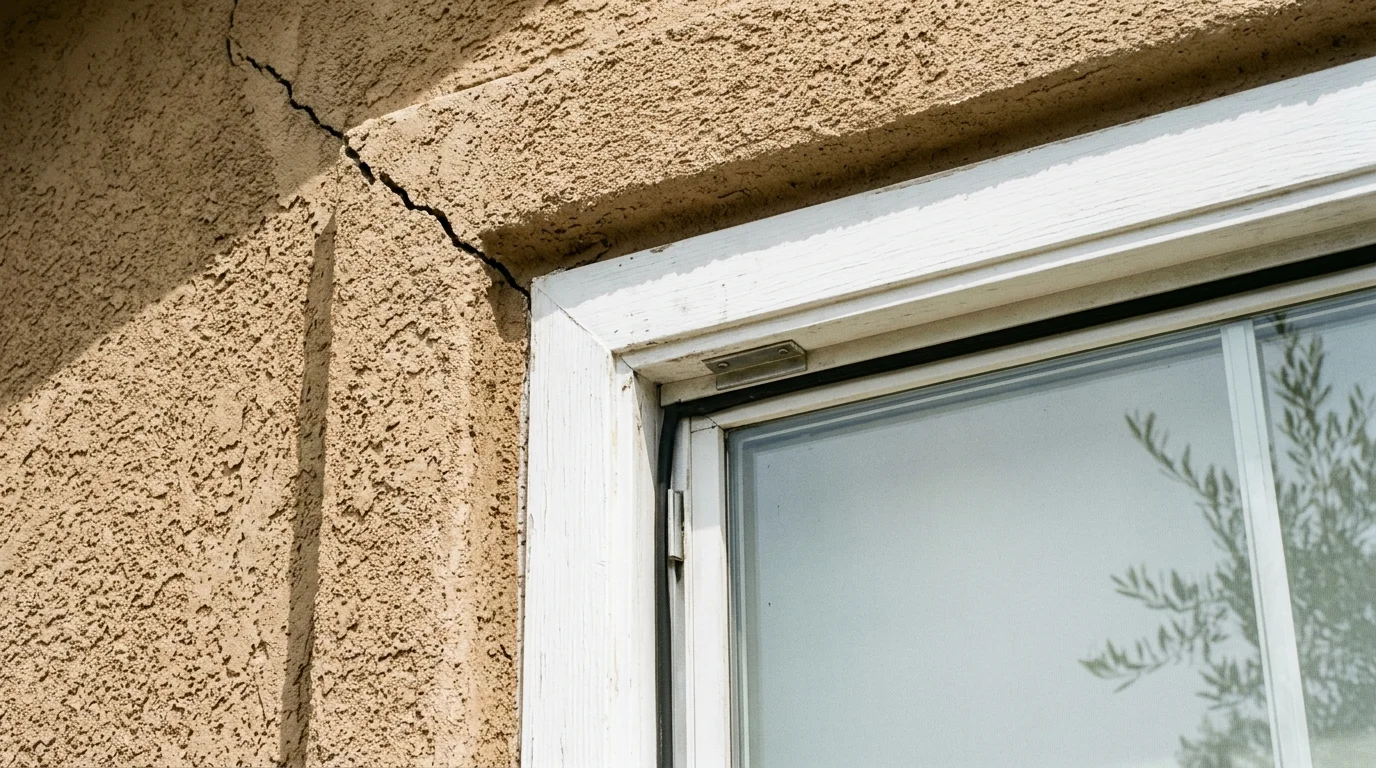
A diagonal crack leaving a window corner deserves attention. It marks a place where the wall has changed shape around an opening. It doesn’t reveal the cause by itself.
The contractor should look beyond the crack’s direction. Useful clues include whether it crosses the decorative trim, follows a material joint, or continues into the main wall. Interior staining, loose finish, failed sealant, and previous patches also add context.
Record the crack before work starts. Take a straight-on photo and wider pictures showing the whole opening. Note whether the crack appeared after window work or returned through an older patch. That history can help the stucco and window contractors compare their findings.
Avoid a diagnosis based only on crack width or appearance. No universal measurement was confirmed for deciding that every window-corner crack needs the same repair. The wall system, substrate, window installation, and concealed conditions all matter.
A surface-only repair may be reasonable when the surrounding assembly is sound. If the contractor finds damaged material or a failed transition, the opening may need a larger repair area.
The layers behind the opening: paper, flashing, sealant, stucco
The stucco surface is only the layer you can see. Depending on the wall assembly, a contractor may encounter building paper or another water-resistive layer, flashing components, lath, sealant joints, and the window frame.
The exact products and sequence aren’t identical on every house. They can also differ after a prior remodel. That makes selective opening valuable. It replaces guesses with evidence from the actual wall.
Ask the contractor to identify each exposed layer. Photos taken during removal can document torn paper, open joints, corrosion, old sealant, or an unusual window transition. The proposed repair should explain how new work will connect with material that remains.
Specific overlaps, dimensions, and fastening details couldn’t be confirmed as universal rules for every San Diego window assembly. Those details should follow the window manufacturer’s instructions, the approved wall assembly, and any direction from the local building department.
If concealed moisture protection needs repair, see how waterproofing and moisture-barrier work fits into a stucco opening repair.
Head flashing and the detail that has to shed water outward
The head is the horizontal area above the window. When it gets opened, the contractor should determine how water is directed toward the exterior. Stucco placed over an unclear or damaged transition doesn’t answer that question.
Ask to see the head condition before new material covers it. The window installer and stucco contractor should agree on which trade handles the transition. They should also agree on how it connects with the surrounding wall system.
Don’t accept a universal flashing dimension quoted without inspecting the opening. A single projection, slope, or overlap couldn’t be confirmed for every product and wall type. The window manufacturer’s installation instructions and the authority reviewing permits should set the applicable detail.
Decorative trim also needs consideration. A foam shape or raised stucco band shouldn’t obscure an unresolved head condition. If trim must be removed, the scope should describe how much comes off and how its profile will be rebuilt.
The finished surface matters, but the concealed transition needs agreement before texture and color work begin.
What happens when stucco is the only thing holding water out
Fresh stucco can make a window look closed and finished. Appearance alone doesn’t confirm that the opening manages water correctly.
A crack patch or bead of sealant may close one visible route. It won’t repair torn concealed material or an open transition found behind the surface. When water returns through a cosmetic repair, the new stain may appear somewhere different from the original one.
Ask the contractor what keeps water moving toward the exterior if the finish develops another crack. The answer should refer to the assembly found at your opening, not a generic promise about stucco.
This is also where repair boundaries matter. Opening too little can leave the suspected defect hidden. Opening more than necessary can create extra finish-matching work. A licensed contractor should select the boundary after examining the wall and coordinating with the window installer.
For coastal walls already showing staining or recurring dampness, our guide to stucco moisture damage near the coast explains why the visible spot needs a broader inspection.
Window replacement and the stucco it destroys
Window replacement can disturb more than the frame. Cutting may remove perimeter sealant, the stucco return, decorative trim, lath, and portions of concealed wall material. The extent depends on the replacement method and existing opening.
Photograph the window before cutting begins. Include the head, sill, jambs, trim profile, texture, and nearby cracks. These photos give both contractors a common starting point.
The proposal should identify the expected cut line. It should also state who removes the stucco, who handles conditions exposed behind it, and who restores the finish. Without that division, one trade may leave work that the other didn’t include.
Hidden conditions can change the repair. The written agreement should explain how the contractors will document those findings before expanding the opening.
Don’t let the final trim choice happen after demolition. Reusing a profile, simplifying it, or rebuilding it can change the patch area. Decide the intended appearance while the original opening can still be measured and photographed.
Insert-style versus full-frame replacement and what each does to the wall
An insert-style replacement generally works within more of the existing opening. A full-frame replacement removes more of the original window assembly. Those labels aren’t enough to define the stucco work, since products and installation plans vary.
Ask the installer to draw the cut line on a photo. The drawing should show what remains at the head, jambs, sill, and decorative trim. It should also identify any area the stucco contractor must open before the new window goes in.
With an insert-style plan, ask how the existing frame and perimeter will be treated. With full-frame work, ask how the newly exposed wall layers will be inspected and connected to the replacement assembly.
Permit questions should go to the city or county that issues permits where you live. Don’t assume the answer is identical for a home in Chula Vista, San Diego, or an unincorporated area.
Whichever method is proposed, coordinate both trades before ordering the window. Product dimensions, trim depth, and the planned stucco return need to work together.
Repairing the return and matching the finish at an opening
The return is the stucco surface that turns from the wall toward the window. It may be narrow and plain, or part of a deeper decorative treatment. Repairing it requires control at several visible edges.
First, agree on the final shape. The contractor needs to know whether the existing trim profile stays, gets rebuilt, or changes. The window frame must remain usable while the finished opening looks intentional.
Texture matching needs a wider view than the return itself. Sunlight can expose differences between an old finish and a new patch. Color can also vary between the protected return and the weathered wall face. An exact invisible match shouldn’t be assumed before a test area is reviewed.
Ask where the patch will stop. Natural corners, trim edges, and broader wall areas can produce different visual results. The right boundary depends on the existing texture and repair size.
Our stucco patching service covers localized restoration. Larger finish concerns may require a separate discussion about texture and color beyond the opening.
Sealant at the perimeter: where it belongs and where it hides a problem
Perimeter sealant can be part of a window detail, but its location should follow the window and wall assembly. More sealant isn’t automatically a better repair.
Before adding a new bead, the contractor should identify the joint being sealed. Ask what materials meet there, whether the old sealant has separated, and whether the joint was intended to remain open for drainage. Don’t cover an unexplained gap until its purpose is clear.
Heavy sealant over a crack can hide movement or conceal a failed transition. It can also make later removal messier. If the surrounding stucco feels loose or shows moisture damage, the contractor may need to open the area before resealing it.
The proposal should name the sealant product selected for the specific materials. It should also describe surface preparation and the edges of the joint. Universal service-life claims or replacement intervals couldn’t be confirmed for every sealant and exposure.
Treat sealant as one component of the opening. It shouldn’t replace inspection of the head, sill, returns, and concealed layers.
What to agree with the window installer before they cut
Get the window installer and stucco contractor aligned before demolition. A short written scope can prevent a finished window from being surrounded by an unresolved wall opening.
Agree on these points:
- The replacement method and exact cut boundary
- Which trim, returns, and nearby stucco will be removed
- Who protects the opening while work is incomplete
- Who inspects and photographs concealed conditions
- Who handles flashing and moisture-barrier transitions
- Who rebuilds the stucco return and decorative trim
- Which texture and color result the proposal includes
- How unexpected damage changes the approved scope
- Who confirms whether permit review applies
Ask both contractors to use the same window drawings and product instructions. If their plans conflict, resolve that conflict before materials cover the opening.
The stucco contractor should also inspect beyond the neat cut line when visible conditions justify it. That doesn’t mean removing the whole wall. It means defining the repair from evidence rather than convenience.
Before hiring, verify the contractor’s license through the CSLB license check. Keep the proposal, product information, photos, and approved changes together.
When to call us
Recurring corner cracks, damp finishes, loose trim, and window-replacement cuts need a licensed stucco contractor when the surrounding wall must be opened or rebuilt. Call us at (858) 400-4352 and we’ll connect you with a licensed local stucco contractor.