A patch can look solid while its edges tell another story. When new material meets a cured wall, adhesion becomes the central decision. A stucco bonding agent may help, but only after the existing surface and new material are identified.
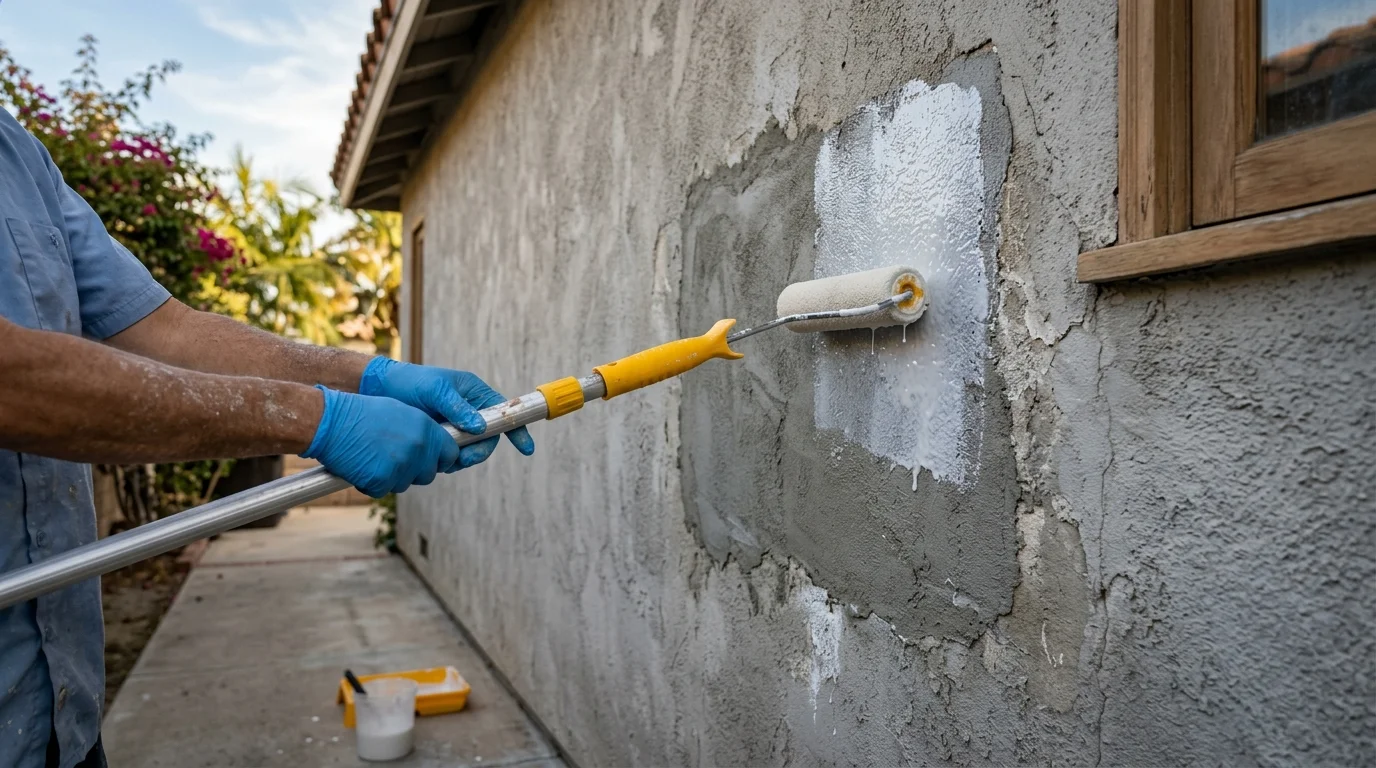
Why fresh stucco does not automatically stick to cured stucco
Fresh stucco and cured stucco aren’t one continuous batch. The new material meets the face of an existing wall. Everything on that face becomes part of the bond decision.
That surface might be bare and firm. It might also carry dust, loose grains, chalk, paint, sealer, or an older repair product. A bonding liquid can’t make an unstable layer dependable. If the surface material releases, anything attached to it can release too.
Start by identifying what’s actually exposed. Bare cement-based stucco, painted stucco, and an unidentified coating aren’t the same background. A repaired area may also cross several materials at once.
The patch’s purpose matters as well. A shallow cosmetic correction isn’t the same as a deeper repair. Larger areas can raise questions about the existing assembly, movement, moisture, and finish continuity.
That’s why product choice comes after inspection. The contractor should identify both sides of the interface. They can then compare the proposed materials with the manufacturer’s current instructions.
For a broader look at covering an older wall, read our guide to applying stucco over existing stucco in San Diego.
Mechanical bond versus chemical bond
A mechanical bond depends on the new material gripping a prepared surface profile. A chemical bond depends on a compatible bonding product at the interface. Some repair plans may involve both.
Those terms describe different parts of the same decision. They aren’t promises that a rough wall or bottled product will solve every adhesion problem.
A mechanical approach starts with the existing surface. The contractor looks for a firm background and a usable profile. Glossy, weak, or contaminated areas need attention before new material is placed.
A chemical approach adds another product between the old and new materials. Its label should identify acceptable surfaces, compatible materials, application method, and timing. If the proposed use isn’t listed, the manufacturer should confirm it.
Neither approach corrects hidden movement or a failing underlying assembly. A patch can stay attached to a loose piece of old stucco while that old piece separates from the wall. The visible bond line wasn’t the only issue.
Ask a contractor to explain the complete bond path. That means the new material, the interface, the existing finish, and the layers behind it. The answer should fit the wall you have, not a generic repair recipe.
What a bonding agent actually does at the interface
A stucco bonding agent is an interface product. It’s selected to help compatible new material adhere to a prepared existing surface.
That narrow job matters. The product isn’t a substitute for removing loose material. It doesn’t identify an unknown coating or correct movement behind the finish. It also doesn’t decide whether the repair needs another approach.
Bonding agents vary. One label may call for placement while the film has a particular appearance. Another may require the applied product to reach a different stage. The approved substrates and top materials can also differ.
That’s why the container’s current instructions control the application. The contractor should follow the named product’s preparation, coverage, weather, and timing directions. Don’t transfer directions from another brand or an old container.
For a homeowner, the useful question is simple: which exact product connects these two exact materials? The answer should name the existing surface and the material going over it.
If either side remains uncertain, pause before coating the wall. A small compatibility check or manufacturer guidance can prevent a much larger removal job later.
Bonding agent versus primer versus sealer: three different jobs
These labels often sit close together in a store, but they don’t automatically mean the same thing.
A bonding agent is chosen for adhesion between compatible materials. A primer prepares a surface for a specified coating system. A sealer is sold to alter how a surface accepts or resists another material. The actual function still depends on the product label.
The word “primer” alone isn’t enough. Paint primer doesn’t automatically belong beneath cement-based stucco. A masonry primer intended for one coating shouldn’t be treated as a universal bonding layer.
“Sealer” needs the same caution. An existing sealer may affect what can adhere above it. Adding another sealer could also change the surface in ways the stucco system doesn’t permit.
Read the full system, not just the largest words on the package. Confirm the substrate, the next coat, surface preparation, application conditions, and recoat instructions. When the instructions don’t name the proposed combination, ask the manufacturer.
This distinction becomes important during re-stucco work. A broad recoat must account for the existing finish across the wall, including past paint and repairs. A product that suits one bare patch may not suit every surrounding area.
Surface prep first, product second
Bonding starts with what remains on the wall. Before selecting a product, the contractor should map sound material, loose areas, cracks, coatings, repairs, and transitions.
The goal isn’t simply to make the wall look clean. It’s to expose and understand the surface that will carry the new material. Dust sitting on a firm wall still creates a weak interface. So does a coating that’s separating from the stucco beneath it.
Preparation must match the proposed system. The product instructions may call for a specific surface condition or application method. Those directions should be followed without guessing.
Pay close attention where a patch meets old finish. Thin edges can be hard to blend and easy to overload. A contractor may adjust the repair boundary after finding weak material beyond the visible damage.
San Diego County walls don’t share one history. A house in Point Loma may have different coatings and exposure than one in El Cajon. Even neighboring walls can differ because of shade, irrigation, past repairs, and orientation.
Document what’s uncovered. Photos and product names help the contractor keep the repair plan tied to actual conditions.
Dust, chalk, paint and previous coatings as bond breakers
Surface contamination isn’t always dramatic. Fine dust can settle after grinding or removal. Chalk may appear as residue when an older finish is rubbed. Paint can look attached while releasing at an edge.
Previous coatings create another layer of uncertainty. A clear treatment may be difficult to see. An old patch might contain a different material from the surrounding wall. Overspray can also cross a repair boundary.
A bonding agent only contacts the surface beneath it. If that surface is loose or incompatible, the bottle doesn’t erase the problem. The existing layer must first be identified and evaluated.
Don’t rely on color alone. Two adjacent areas may look alike while behaving differently. Look at texture, sheen, residue, edges, and the response of the surface during preparation.
If the coating can’t be identified, record what’s known and contact the proposed product’s manufacturer. Ask whether that product is approved over the observed condition. If the answer can’t be confirmed, a licensed stucco contractor can discuss removal or another repair path.
The safest specification is the one supported by the actual product instructions and wall conditions, not a label remembered from another project.
Painted stucco: the case where you have a bigger decision to make
Painted stucco adds a layer between the original finish and the proposed repair. New material would bond to that painted surface unless the repair plan removes or changes it.
The first question is whether the paint is firmly attached. The next is whether the selected bonding and stucco products list that surface as acceptable. Both questions matter.
Covering paint without identifying it can produce an uncertain assembly. Removing paint only from the patch area can create a different challenge at the perimeter. Broad removal or recoating may affect texture and color across the elevation.
This is where patch scope can change. A small damaged spot may still suit professional stucco patching. Widespread coating failure or a wall covered by several unknown layers may call for a broader discussion.
Don’t assume every painted wall needs complete removal. Don’t assume a bonding agent makes every paint acceptable either. The right direction depends on the paint’s condition and the written compatibility of the chosen system.
In coastal Encinitas, central City Heights, and South Bay neighborhoods, past maintenance can differ from property to property. Inspect the actual wall instead of choosing a method by ZIP code.
Suction: why a dry old wall steals water from new material
“Suction” describes how a porous background draws moisture from material placed against it. For a repair, the existing wall’s condition can affect how the new material behaves at the interface.
That doesn’t mean every wall should be soaked. It means the contractor must follow the selected material’s instructions for surface moisture. One system may call for a particular condition. Another may give different directions.
Weather and wall orientation also affect the working surface. A sunny inland wall and a shaded coastal wall may not behave alike during application. Conditions can change across one elevation as shade moves.
Watch for uneven behavior. If one area accepts material differently from another, stop and identify why. The cause could involve surface condition, coating history, or moisture, and it shouldn’t be guessed from appearance alone.
Avoid homemade moisture rules. No universal waiting time or wetting schedule was confirmed for every bonding agent and stucco product. Check the current manufacturer instructions for the exact materials being combined.
A licensed contractor can also decide whether the observed moisture points to a larger wall issue. Bonding over an unexplained condition may hide the symptom without addressing its source.
Timing and why an open window matters
Bonding products have application instructions tied to their own formulation. The stage for placing the next material must come from the current label or technical sheet.
This is where casual substitutions fail. “Still wet,” “tacky,” and “fully dry” aren’t interchangeable directions. A method used with one product may conflict with another.
Plan the work before applying the bonding agent. The surface should already be prepared. Tools and compatible repair material should be ready. The installer should understand the wall boundaries and the product directions.
Don’t coat more area than can be handled within the stated conditions. If weather, access, or another delay interrupts the work, check the manufacturer’s guidance before continuing. Reapplication rules shouldn’t be invented on site.
Store the product information with the project notes. Record the product name and the observed wall condition. That gives the homeowner a useful reference if the area needs evaluation later.
When instructions are missing or unclear, contact the manufacturer. An unlabeled container or remembered timing rule isn’t a sound basis for choosing the interface between old and new stucco.
Where this goes wrong on a DIY patch
DIY bonding problems usually begin before the bonding liquid is opened. The repairer sees a hole or loose spot but doesn’t identify every layer around it.
Common trouble points include coating over dust, trusting loose paint, choosing by product name alone, and missing the placement window. Another mistake is treating the bonding agent as the repair material itself.
Patch depth and boundaries matter too. A shallow fill across a weak edge may look finished at first. That appearance doesn’t confirm the condition underneath. Texture and color matching can also turn a small repair into a visible panel.
Before starting, write down what the new material will touch. Is it bare stucco, paint, an old patch, or an unidentified coating? Then confirm that the proposed product names that surface and the next material.
If the wall has widespread cracking, loose sections, unexplained moisture, or several coating layers, stop treating it as a simple adhesion problem. Those conditions need a broader evaluation.
Homeowners comparing patching with a full wall treatment can also review our guide to stucco over existing stucco. Check any contractor through the official CSLB license search.
When to call us
Call when the surface is painted, loose, damp, widely cracked, or hard to identify. A licensed stucco pro can inspect the layers and match the repair approach to the chosen materials. Call us at (858) 400-4352 and we’ll connect you with a licensed local stucco contractor.