Stucco chimney repair should begin with an on-site diagnosis, not an automatic patch. The contractor needs to inspect the crack, chimney surfaces, cap, flashing, and roof junction before defining the repair.
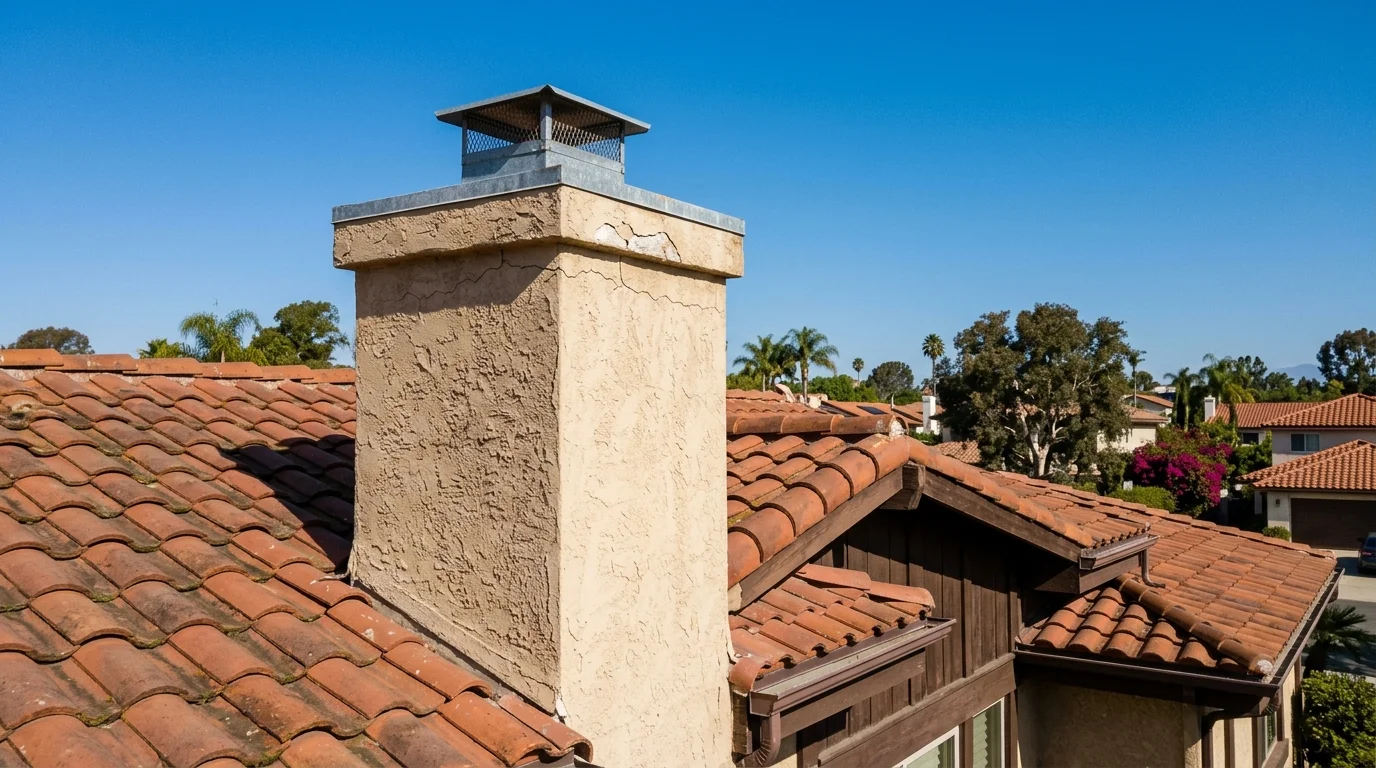
Why a chimney chase cracks before the rest of the house does
A crack on the chimney may appear before one becomes noticeable elsewhere. That observation doesn’t establish a universal cause. The approved records for this site don’t confirm that every chimney cracks first, or that one condition explains every crack.
Treat the location as a starting point for inspection. Note whether the crack appears on one face or wraps around a corner. Record whether it begins near the cap, crosses a change in material, or reaches the roof junction. Those details help a contractor investigate the actual assembly.
A licensed pro should also compare the chimney with nearby exterior walls. The comparison can show whether the issue looks isolated or appears elsewhere. It still won’t replace hands-on examination.
Don’t let a photo-based guess become the repair scope. A picture can document color, shape, and location. It can’t confirm what’s concealed beneath the finish. San Diego County homes also fall under different local building departments. The property address and planned scope matter when checking current requirements.
Our guide to stucco crack types in San Diego can help you describe what you see. It shouldn’t be used as a remote structural or moisture diagnosis.
Movement, thermal cycling and a tall narrow structure
Movement and thermal cycling often appear in discussions about chimney cracking. This site’s verified claims ledger doesn’t establish either one as the cause of a particular crack. Ask the contractor to test that explanation against conditions found on-site.
Start with a clear timeline. Tell the contractor when you first noticed the crack. Share older photos if you have them. Mention any prior patch, roof work, repainting, or chimney-related work without guessing how those events connect.
Next, ask what visible evidence supports the diagnosis. A useful scope identifies the damaged area and the proposed repair boundary. It should also separate confirmed findings from possibilities that need further inspection.
The chimney’s height and narrow shape may influence the contractor’s investigation, but they don’t prove the cause. The pro should inspect every accessible face and the transitions around the assembly. If another trade needs to examine part of the chimney, that should be stated before stucco work begins.
For homeowners comparing repair methods, stucco crack repair is a useful starting point. The matched contractor still needs to determine whether crack treatment alone fits the conditions.
Water entry at the cap, the crown and the flashing
Cracked stucco doesn’t reveal where water entered. The cap, crown, flashing, roof junction, and stucco surface are separate inspection points. None should be declared responsible without evidence from the property.
Ask the contractor to show you each observed defect. Photographs should identify the exact face and elevation. Written notes should distinguish visible staining, open joints, damaged finish, and areas that couldn’t be inspected. Avoid accepting a single broad label such as “water damage” without a defined location.
The approved claims ledger doesn’t provide a universal moisture test, repair product, or drying period. Those details must come from the licensed professional who inspects the assembly. Product instructions and the actual substrate may also affect the proposed method.
A homeowner in Point Loma may deal with a different permitting office than one in Chula Vista or an unincorporated community. Confirm the property’s jurisdiction before relying on general advice. For properties within the City of San Diego, homeowners can ask Development Services about current permit requirements. Other addresses should be checked with the department serving that location.
Our page about waterproofing and moisture barriers explains how to request the appropriate referral.
The chase is a wall assembly with weather on all four sides
A chimney chase deserves inspection on every accessible face. Looking only from the yard can miss conditions facing the roof ridge, a neighboring property, or another part of the house.
Ask for photos that label each side. Include close views of cracks and wider views showing their position. The wider image matters because it records nearby corners, openings, roof surfaces, and material transitions. It also helps another contractor understand where the close-up came from.
The inspection should cover more than the finish color. Ask the pro to identify what can be confirmed about the stucco assembly and what remains concealed. If the substrate, lath, or moisture barrier can’t be evaluated without opening an area, the estimate should say that plainly.
Don’t assume one patch specification works on every face. The contractor should explain the proposed boundaries and how the repaired area will meet the existing finish. Texture and color expectations belong in writing before work starts.
This is especially useful on San Diego homes with chimneys visible from several neighboring lots or streets. The repair may be technically limited but visually prominent. Discuss the expected appearance from ground level as well as the close-up finish.
Cracks that are cosmetic versus cracks admitting water
A homeowner can document a crack, but shouldn’t label it cosmetic from appearance alone. The same caution applies to calling it a leak path. Neither conclusion can be verified here without an inspection.
Track observable facts instead. Note the crack’s location, direction, and visible width without estimating measurements. Photograph it from the same position over time. Record staining, soft finishes, interior marks, or loose material if present. Don’t claim those observations prove a particular cause.
A licensed contractor can decide what further examination is appropriate. Ask whether the scope treats only the visible finish or includes investigation beneath it. If the pro recommends opening an area, request a written explanation of what that step is intended to confirm.
The estimate should also state what happens if concealed conditions differ from the initial findings. That doesn’t require guessing a price. It requires a process for documenting new information and approving a revised scope before extra work proceeds.
The distinction matters because “cosmetic” can become shorthand for “ignore it,” while “water damage” can be used without evidence. A better conversation stays specific. Describe what’s visible, identify what isn’t known, and ask the licensed pro to connect each repair step to a confirmed condition.
Flashing and roof-to-wall junctions: the part stucco cannot fix
Stucco work and roof-junction work shouldn’t be blended into one vague line item. If the flashing or roof connection needs attention, ask which licensed contractor will evaluate and handle that part.
The stucco contractor can define the stucco scope. That doesn’t automatically establish the scope for another trade. Ask each professional to state where their work begins and ends. If one repair must happen before another, get the sequence in writing.
Don’t accept a statement that new stucco alone will resolve every condition near the roof. The approved ledger doesn’t support that promise. It also doesn’t provide chimney flashing details or installation specifications. Those decisions require an on-site assessment and current requirements for the property.
Photographs are helpful at this junction. Ask for images before work, after any area is opened, and after each trade completes its portion. The record makes it easier to understand what was found and what was changed.
If permitting may apply, confirm it with the proper building department. Don’t assume rules for the City of San Diego apply unchanged in Oceanside, La Mesa, or National City. The project address and exact scope should guide that inquiry.
Why patching a chimney without fixing the cap wastes the patch
A patch shouldn’t be sold as the complete solution when another confirmed defect remains outside its scope. That includes a cap issue identified during the inspection. The key word is confirmed. This site can’t diagnose a cap from a description or photograph.
Ask the contractor to explain why the stucco cracked and what evidence supports that conclusion. If the cause remains uncertain, the proposal should say so. It should also identify any inspection or work another licensed professional needs to complete.
Sequence matters in the written plan. If separate work must precede the stucco repair, list that dependency before authorizing the patch. Don’t rely on a verbal promise that the other condition can be handled later.
The final stucco scope should identify preparation, repair boundaries, finish expectations, and responsibility for adjacent surfaces. It shouldn’t promise a universal lifespan or guaranteed outcome. No verified lifespan figure appears in this site’s claims ledger.
A narrow patch may still be the selected repair after inspection. The decision should follow the evidence, not a desire to cover the crack quickly.
Access, scaffolding and why chimney work is not a ladder job
Chimney access should be planned by the contractor responsible for the work. This article can’t approve a ladder, scaffold, roof route, or other setup for a specific property.
Ask the estimator how each repair area will be reached. A proposal should account for every face included in the scope, not only the side visible from the driveway. Tile roofs, neighboring structures, landscaping, and property boundaries may affect the proposed access plan. The contractor must evaluate the actual site.
Don’t climb onto the roof simply to improve an estimate photo. Ground-level images and existing records can begin the conversation. The licensed pro can decide what inspection access is appropriate.
The approved claims ledger doesn’t provide equipment rules, height limits, crew requirements, or setup times. Don’t accept invented figures presented as universal standards. Ask the contractor to explain the planned method and who controls the work area.
Access can also affect which surfaces are included. Get exclusions in writing. If one chimney face can’t be inspected during the estimate, make sure the proposal identifies that limitation before work starts.
Where the stucco trade ends and roofing or masonry begins
California identifies stucco work under the CSLB C-35 lathing and plastering classification. That fact doesn’t authorize Stucco Pro SD to perform work. We’re a referral service that connects homeowners with licensed, independent local pros.
A chimney project may raise questions beyond the stucco surface. Don’t ask one contractor to make unsupported claims about another trade’s work. Instead, request a written division of responsibility. The document should identify who evaluates each component and who completes each accepted task.
Avoid broad phrases such as “repair chimney” when the proposal means only a stucco patch. Name the surfaces and boundaries. If masonry, roofing, or another component isn’t included, the exclusion should be clear.
You can confirm a contractor’s status through the official CSLB license check. Match the business name and license information to the person presenting the proposal. Ask the contractor which classification applies to the planned scope.
The brand doesn’t provide its own workmanship warranty. Any warranty must come from the matched contractor. Read its terms, exclusions, and responsible business name before signing.
When to bring in a licensed pro
Bring in a licensed pro when the chimney has visible cracking, loose finish, staining, or an uncertain repair history. You’ll also want professional scoping when the work reaches roof junctions, concealed layers, or areas that can’t be inspected safely from the ground.
California’s contractor exemption is limited. The aggregate contract price must be under $1,000, the work must be casual or minor, and no building permit can be required. The threshold took effect January 1, 2026. Splitting a project into smaller contracts doesn’t preserve the exemption, and a person advertising as a contractor doesn’t qualify for it.
That rule isn’t a diagnosis or permit determination. Ask the applicable building department whether the planned work requires a permit. Then verify the contractor through the CSLB’s official lookup.
Get the repair scope in writing. It should name the inspected areas, confirmed conditions, exclusions, trade boundaries, access assumptions, and finish expectations. Ask how concealed findings will be documented before additional work begins.
Stucco Pro SD doesn’t inspect chimneys or perform repairs. We connect homeowners across San Diego County with licensed independent stucco contractors who can assess the property and propose an appropriate scope.
When to call us
Call when chimney cracking needs an on-site assessment from a licensed stucco pro. The contractor can define the stucco scope and identify where another licensed trade may be needed.
Call us at (858) 400-4352 and we’ll connect you with a licensed local stucco contractor.