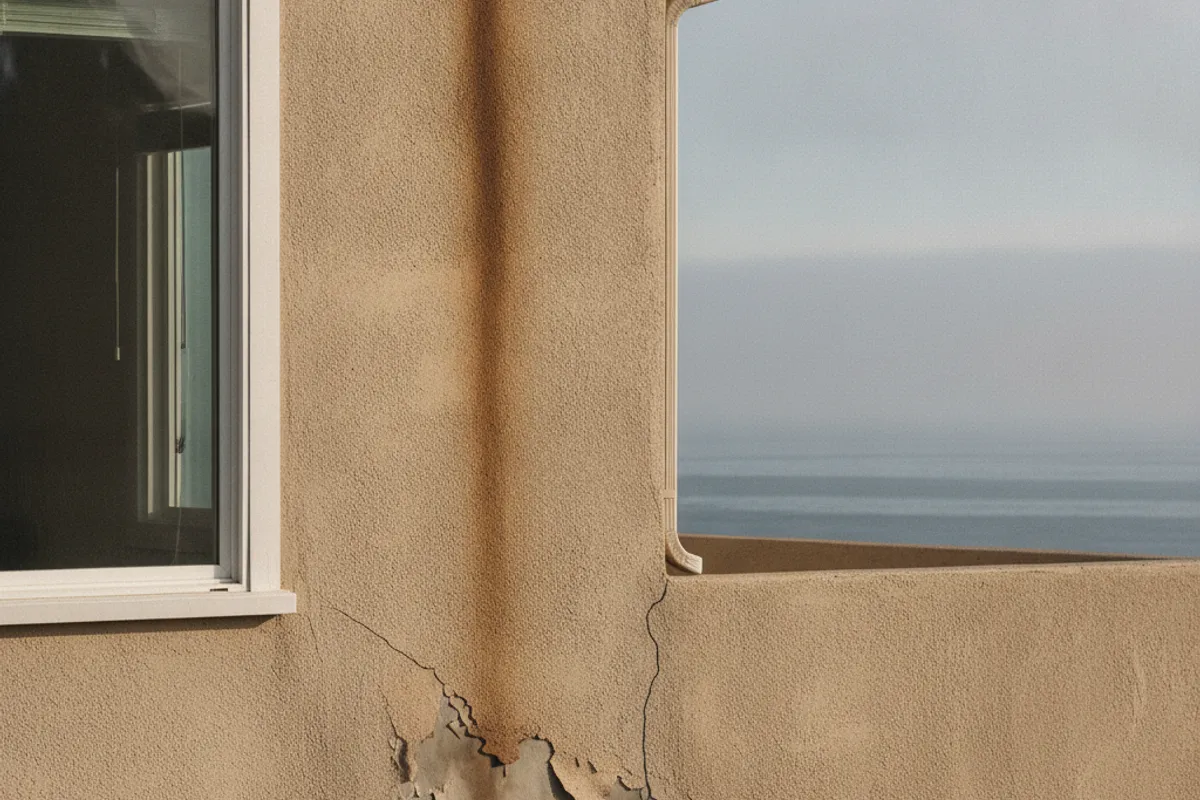
That white, powdery bloom on a stucco wall is called efflorescence. It consists of soluble salts carried to the surface by water moving through the masonry. When the water evaporates, it leaves the salt crystals behind. The chalky residue is just a symptom. The actual problem is the moisture trapped inside the wall.
Diagnosing the white powder on your wall
You need to know exactly what is on your exterior before you try to clean it. Treating salt like a fungus wastes time and hides active leaks.
Efflorescence appears as a crystalline, powdery deposit. It often dissolves if you spray it with a hose. Mold and mildew look fuzzy or slimy and require identification by a specialist. If the surface feels like dry baking flour and matches the wall color, your finish coat is chalking from sun exposure. Flaking material means the paint is failing. Each issue requires a different fix.
Where the moisture comes from
Water must enter the stucco for salts to bloom. Sometimes the cause is temporary. New stucco holds moisture and releases it while curing. This initial bloom usually stops after the wall dries completely.
Persistent salt deposits point to an ongoing water intrusion. Sprinklers hitting the house can saturate the exterior. Roof runoff might spill directly onto the siding. Moisture can also wick up from the soil if the wall base touches wet dirt.
The most common culprit is a blocked weep screed. This metal drainage track sits at the bottom of the wall. If soil or concrete covers it, water backs up inside the assembly. You can learn more about this in our guide to weep screed drainage.
Why cleaning alone fails
Washing the salts away does not fix the wall. If water continues to enter the stucco, the white powder will return. The moisture will just dissolve more salts and carry them out.
You have to stop the water first. Direct your sprinklers away from the house. Clear dirt away from the base of the wall. Once the exterior stays dry, a proper moisture barrier can help protect the finish.
Safe removal methods
Start with the gentlest method possible. Take a stiff nylon brush and scrub the dry wall. This knocks off the loose powder without adding new moisture to the stucco.
If dry brushing leaves a residue, rinse the area with a garden hose while you scrub. Avoid pressure washing. High pressure forces water deep into the porous stucco and creates more salt deposits later.
Stubborn blooms might require a masonry-safe chemical cleaner. Look for products designed specifically for efflorescence removal. Follow the manufacturer directions exactly. Test any cleaner on a small, hidden patch of wall first to ensure it does not discolor the finish.
When to call a professional
A light dusting of salt on a new wall is usually cosmetic. Thick, crusty buildup that returns every winter signals a serious defect. Heavy efflorescence means a large amount of water is traveling through the wall assembly.
This constant moisture rots wood framing and rusts metal lath. If the wall shows deep cracks alongside the white deposits, the damage goes beyond the surface. Read about coastal moisture damage to spot the signs of failing stucco. The independent pros we connect you with are licensed to inspect and repair these structural issues.
Frequently asked questions
Is stucco efflorescence dangerous?
The salt deposit itself is harmless to touch and breathe. The danger lies in the trapped water causing it. Trapped moisture rots the structural wood framing behind the stucco.
Will painting over efflorescence fix it?
No. Paint traps the moisture inside the wall. The water will eventually push the paint off the stucco, causing it to bubble and peel. You must stop the water source before applying any new coating.
How long does new stucco take to stop blooming?
New stucco can show salt deposits for several months after installation. The cement needs time to fully cure and release its initial moisture. Once the wall dries out entirely, the blooming should stop.
Does vinegar work on stucco salt deposits?
Mild acids can dissolve the salts, but they can also etch and damage the cement in your stucco. A dedicated masonry cleaner is much safer for the wall finish. Always follow the product instructions for application and rinsing.