The cost to stucco a house in San Diego can’t be reduced to one trustworthy figure. No verified local market rate was available, so the reliable answer comes from site-specific bids that separate wall preparation, the stucco assembly, access, finish, and permitting.
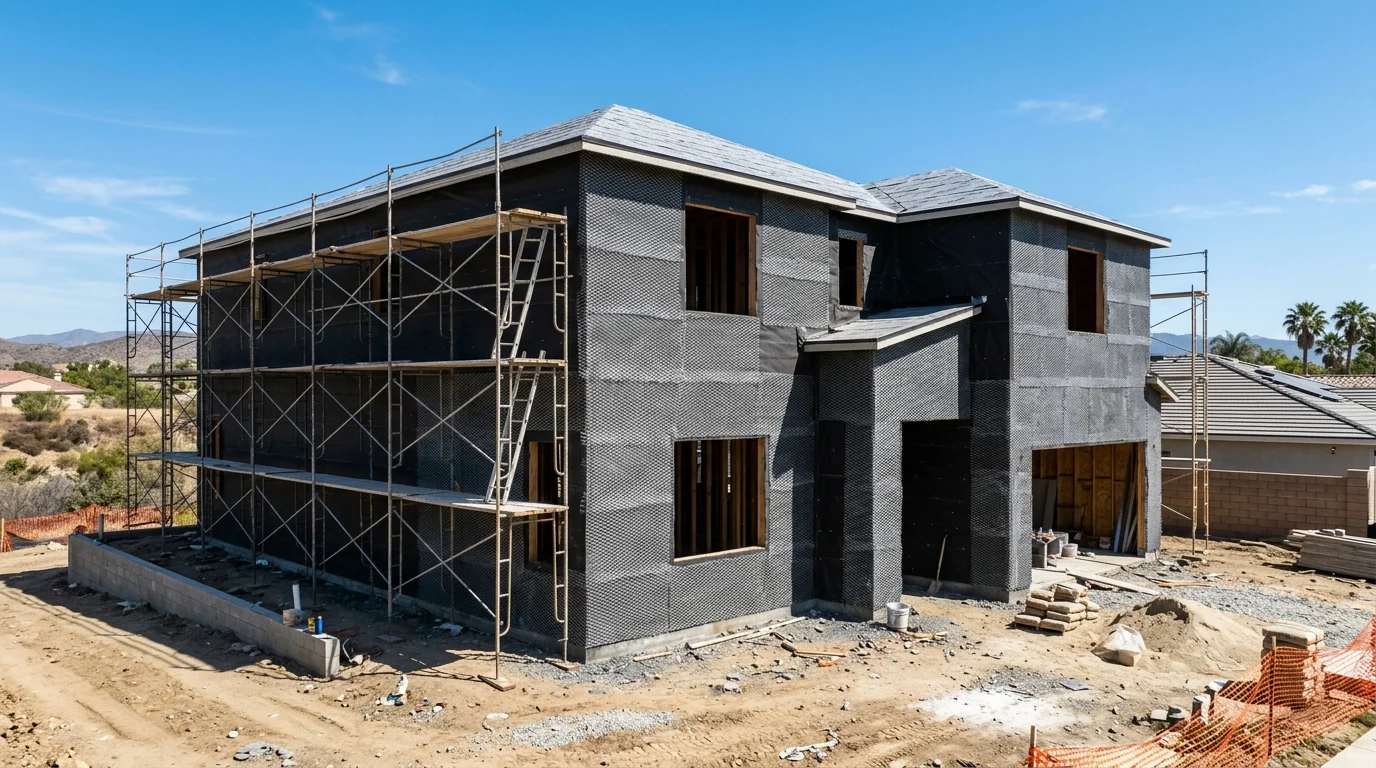
A first-time installation is also different from coating a house that already has stucco. Before comparing totals, make sure every contractor is pricing the same wall, details, and finished result.
Why a first-time stucco job is priced differently from a re-coat
A re-coat starts with an existing stucco assembly. A first-time job starts with wood, masonry, siding, or another exterior surface. That difference changes the scope before the visible stucco finish is considered.
The contractor must identify the current wall and design a compatible installation. The bid may need separate allowances for removing siding, preparing the exposed surface, building the new assembly, and finishing around openings. Those items shouldn’t be hidden inside one unexplained total.
This work is closer to new construction stucco than a cosmetic refresh. However, an occupied house brings its own access, protection, and transition questions. Existing windows, doors, meters, vents, patios, and roof connections all remain in place.
Ask each bidder to state where the new stucco begins and ends. The proposal should also identify anything that remains outside the quoted scope. That makes the total meaningful and helps prevent a re-coat price from being compared with a complete first-time installation.
The substrate you are starting from: wood, block, brick, existing siding
The starting wall is one of the first things a contractor should inspect. Wood framing, concrete block, brick, and existing siding aren’t interchangeable bid conditions. Even two walls that look similar from the street may require different preparation.
The proposal should name the substrate the contractor observed. It should also explain whether any existing cladding stays, comes off, or needs further investigation. If removal is included, look for clear language covering disposal and the condition of the wall after exposure.
Existing siding deserves special attention. A quote shouldn’t assume the concealed wall is sound without stating how unexpected conditions will be handled. Ask whether the total includes a defined allowance or whether concealed problems will require a written change order.
San Diego County also has varied housing across Coastal North County, central San Diego, East County, and the South Bay. A city name alone doesn’t establish the wall assembly. A licensed contractor needs to inspect the individual house and price what is actually present.
Preparation of the wall as its own scope
Wall preparation should appear as real work in the proposal. It shouldn’t disappear into a vague line labeled “stucco installation.” Ask what must happen before paper, lath, or another specified component is placed.
Preparation can include removing materials, clearing attachment areas, protecting nearby surfaces, and addressing conditions exposed during removal. The exact work depends on the house. A general cost article can’t confirm what a covered wall will reveal.
The useful question is who carries that uncertainty. One contractor may exclude concealed conditions. Another may include a defined amount of preparation. Those totals don’t represent the same offer, even when the finished texture sounds identical.
Ask bidders to separate known preparation from work that can’t be confirmed yet. The proposal should explain how added work is documented, approved, and priced before it proceeds. Photographs can also help establish what was visible during the initial inspection.
This part of the bid matters because finish choices can’t correct an unsuitable starting surface. Get the wall scope clear first. Then compare the visible finish.
Lath, paper and the weather-resistive layer
The materials behind stucco aren’t decorative extras. They form part of the proposed wall assembly, so they need their own description in every bid.
Ask each contractor to identify the paper, lath, and weather-resistive components included. The proposal should say whether the assembly is entirely new or connects with existing materials. It should also identify how openings, corners, and wall transitions are included in the scope.
Don’t rely on a universal layer count from a general pricing page. The appropriate assembly must be selected for the actual wall and confirmed with the building department that serves the property. Product and system requirements should also be tied to the installation being proposed.
If existing lath is discovered during selective removal, ask whether it can remain or requires a separate evaluation. Our lath replacement service connects homeowners with licensed contractors for that specific scope.
When comparing bids, look beyond broad phrases such as “all materials included.” The materials and boundaries should be named clearly enough that another bidder can price the same assembly.
Three-coat versus one-coat systems and what changes
“One-coat” and “three-coat” aren’t enough information by themselves. A proposal should identify the exact system being priced, its included stages, and the finish that will remain visible.
Ask whether both bidders are proposing the same type of assembly. If they aren’t, request a written explanation of the difference. That explanation should cover the materials, preparation, inspection points, and finish included in each option. It should also identify any work assigned to another trade.
Don’t select a system from its label alone. The existing wall, product requirements, and local permit review can affect what a contractor proposes. The licensed contractor and the local building department should confirm what fits the property.
Our guide to how stucco is installed explains the sequence in more detail. Use it to form questions, then require the proposal to describe the actual project. Two totals only become comparable after the underlying systems match.
Openings, trim and details as a labor multiplier
Wall area doesn’t tell the entire pricing story. A broad, uninterrupted wall presents a different scope from one divided by windows, doors, vents, trim, and utility penetrations.
Ask the contractor to count and describe those details during the site visit. The proposal should address returns around openings, transitions to other finishes, architectural trim, and areas where stucco stops. If decorative elements are optional, have them priced separately.
Existing windows and doors also create scope boundaries. The bid should say which adjacent materials are included and which belong to another contractor. That distinction matters when stucco meets frames, flashing, roofing, stone, or painted trim.
This is why two houses with similar exterior area can receive very different proposals. The comparison should focus on the number and type of details, not just a wall measurement.
Before accepting a total, walk the perimeter with the bidder. Mark every opening and transition that could be interpreted differently. Clear boundaries reduce surprises after work begins.
Height, access and site conditions
Height and access affect how a contractor plans the project. Ask each bidder to document upper stories, narrow side yards, slopes, gates, landscaping, overhead obstructions, and areas with limited staging space.
A house in Encinitas and one in El Cajon may require different access plans. Properties in City Heights, Chula Vista, or the South Bay can also present their own lot layouts. The address doesn’t set the cost. The conditions observed at that address do.
The bid should say what access equipment and site protection are included. It should also identify anything the homeowner must move or arrange before work begins. Don’t assume every contractor included the same staging plan.
Ask how material delivery, debris handling, and access to each elevation are reflected in the proposal. If one side of the house isn’t accessible during the first visit, the contractor shouldn’t quietly price it as though it were fully inspected.
Finish selection and its effect on labor
Finish discussions need more detail than a color name. Texture, color, transitions, samples, and the expected appearance should be written into the proposal.
Ask every bidder to price the same finish specification. If one proposal includes a different texture or product, its total isn’t a direct comparison. Request separate options when you’re deciding between finishes.
Samples help establish what the contractor is pricing. Confirm where a sample will be viewed and how its approval will be recorded. Lighting, wall orientation, and surrounding colors can change how a finish appears at the house, so a small image shouldn’t be treated as the final standard.
The proposal should also state whether trim, decorative bands, or contrasting areas receive the same finish. If color decisions are still open, set a clear selection point in the project schedule.
Finish is the visible part of the work, but it shouldn’t conceal missing preparation or assembly details. Compare the complete scope first, then compare finish options within that scope.
Permits and inspections as a schedule factor, not just a fee
There isn’t one verified permit fee or rule that can be quoted for every San Diego County property. The city or county that issues permits where the house is located sets the applicable process. Confirm current requirements directly with that local building department.
Ask the contractor whether the proposal includes permit research, application work, fees, corrections, and inspection coordination. The bid should name who handles each task. It should also explain what happens if the issuing authority requests a change.
Permit review can affect sequencing even when the fee isn’t large compared with the project. A realistic proposal should identify required approval points without promising an unconfirmed timeline.
California’s limited contractor-license exemption is narrow. Effective January 1, 2026, the aggregate contract price must be less than $1,000, the work must be casual and minor, and no building permit can be required. Splitting a larger job into smaller contracts doesn’t create the exemption. Anyone advertising as a contractor also loses that exemption at any price.
A whole-house stucco proposal should be evaluated as regulated construction work, not casual handyman work.
How to compare two bids on a job like this
Start by making the scopes match. A lower total can reflect fewer walls, less preparation, a different system, excluded disposal, or an unfinished transition. It isn’t automatically a better price.
Put both proposals side by side and compare:
- The measured elevations and excluded areas
- Existing siding removal and disposal
- Wall preparation and concealed-condition language
- The specified paper, lath, and stucco system
- Openings, trim, corners, and material transitions
- Access, staging, site protection, and cleanup
- Finish product, texture, color, and sample approval
- Permit responsibilities and inspection coordination
- Payment schedule and written change-order process
Ask for unclear language to be revised before signing. Verbal explanations are difficult to compare later. A detailed written scope gives you a stable basis for deciding.
Stucco falls under California’s C-35 lathing and plastering classification. Verify the contractor’s license through the official CSLB license check. Confirm that the record matches the person or business named in your contract.
California also limits a home improvement downpayment to $1,000 or 10 percent of the contract amount, whichever is less. The smaller amount controls. Don’t treat 10 percent as an automatic charge on a larger proposal.
Once scope, system, access, finish, and permit responsibilities align, the totals become useful. Until then, you’re comparing different jobs.
When to call us
A first-time whole-house stucco installation needs a licensed stucco contractor to inspect the wall and prepare a property-specific bid. Call us at (858) 400-4352 and we’ll connect you with a licensed local stucco contractor.