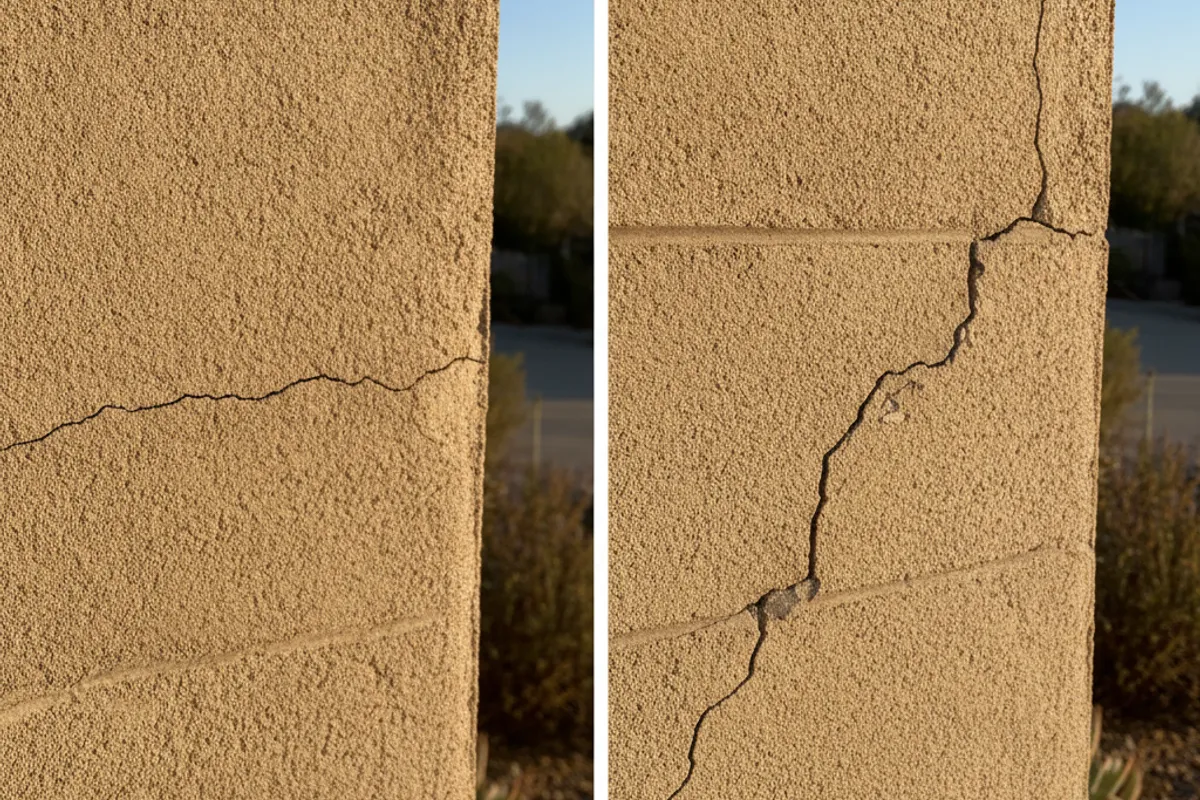
Stucco mesh in a search bar usually means one of two jobs. Hardware listings sell galvanized netting for new walls. Homeowners with a hollow-sounding wall are looking at the same product after it has already been buried in the coats, where rust and missing keying show up as stains and cracks. Stucco lath is that skeleton. Because stucco is essentially a thin layer of concrete, it has high compressive strength but no tensile strength. The metal wire mesh fastened to the framing is what holds the wall together. Without lath, a stucco wall would crumble under its own weight or shatter at the first sign of movement. The mesh gives the cement something to grip and stops small shifts from turning a crack into a hole.
The main types of stucco lath
Expanded metal lath, woven wire, and welded wire are the standard materials. Expanded metal starts as a solid sheet that gets slit and stretched into a diamond pattern. Woven wire resembles chicken wire, while welded wire forms a rigid grid. Older homes in central San Diego often have original wood lath. Wood lath behaves differently than metal because wood expands when wet. When wood lath fails, the crews we match you with convert the wall to metal lath rather than trying to replicate the wood. The finished exterior looks exactly the same.
The weather-resistive barrier behind the wire
People often assume the stucco itself stops rain. It doesn’t. Stucco is porous by design and absorbs water. The layer that actually keeps moisture out of the framing is the weather-resistive barrier. This building paper or house wrap goes on the wall before the lath.
The lath goes over the paper, but it can’t sit perfectly flat against it. Fasteners and furring hold the mesh slightly away from the wall. This gap allows the wet cement to push through the holes in the wire and slump down behind it. This process is called keying. If lath is nailed flat against the sheathing, the stucco can’t key behind the wire. The cement just sits on the surface and eventually falls off. Read more about how stucco is installed to see this sequence in action.
How lath fails inside the wall
The most common enemy of metal lath is trapped moisture. Salt air constantly attacks metal finishes, so coastal walls face chemical corrosion that inland walls avoid. Once water gets past the weather barrier, it rusts the metal mesh.
Other failures come from the installation sequence. If a crew misses the wall studs with their fasteners, the heavy wet stucco pulls the lath away from the sheathing. If the edges of the lath sheets don’t overlap correctly, the wall creates a weak hinge point that invites cracking. Mixing different types of metal fasteners and wire can also trigger galvanic corrosion, causing the metals to eat each other. Heat plays a role during the application process too. Inland summer heat and direct afternoon sun can force the fresh scratch coat to dry out before it cures. A dried coat shrinks and cracks, leaving the lath exposed to future water intrusion.
Spotting lath trouble from the outside
Homeowners can often see signs of failing lath before the stucco falls off. Look for rust stains bleeding through the paint. A wall that bulges outward usually means the fasteners have pulled loose or the lath has rusted through completely. If you tap on the stucco and hear a hollow sound, the cement has separated from the wire. Cracks that run in a perfect horizontal or vertical grid often trace the seams where lath sheets failed to overlap. You can learn more about reading these signs in our guide to hairline vs structural stucco cracks.
| Visual sign | What it means inside the wall |
|---|---|
| Rust-colored streaks | Lath or fasteners are actively corroding |
| Hollow sound when tapped | Stucco has lost its key and separated from the lath |
| Grid-pattern cracking | Lath seams are separating or poorly overlapped |
| Bulging wall sections | Fasteners missed the studs or lath has torn |
Why a surface patch is never enough
When lath rusts away, the structural integrity of that wall section is gone. Troweling fresh cement over the top is a cosmetic fix that fails quickly. The new stucco has nothing to grip.
Fixing the problem requires opening the wall. The crew must chip away the old stucco to expose the framing. Opening a wall routinely reveals damaged sheathing or rot that the stucco was hiding. The lath replacement process involves stripping everything down to the studs. The crew replaces the building paper, the weep screed, and the lath at the same time. These components form a single moisture-management system. If you skip the paper or the weep screed, water just destroys the new lath.
Frequently asked questions
What is the purpose of stucco lath?
Stucco lath provides tensile strength to the wall. It gives the wet cement a structure to grip and holds the finished exterior together as the house settles.
Can you install stucco without metal lath?
Traditional hard-coat stucco requires lath to stay attached to a framed wall. Applying cement directly to wood sheathing or building paper means the stucco won’t stick and eventually falls off.
Why does metal lath rust?
Moisture that gets trapped behind the stucco attacks the metal. Coastal salt air accelerates this chemical breakdown, especially if the weather barrier behind the lath fails.
Can you repair rusted lath without removing the stucco?
No. The lath sits behind the cement layer. Replacing damaged lath means a crew must break out the old stucco, expose the framing, and rebuild the wall from the studs outward.
If you see rust stains or bulging sections on your exterior walls, the wire mesh underneath may be failing. Call us to get matched with licensed local pros who can evaluate your wall and handle the repair correctly.