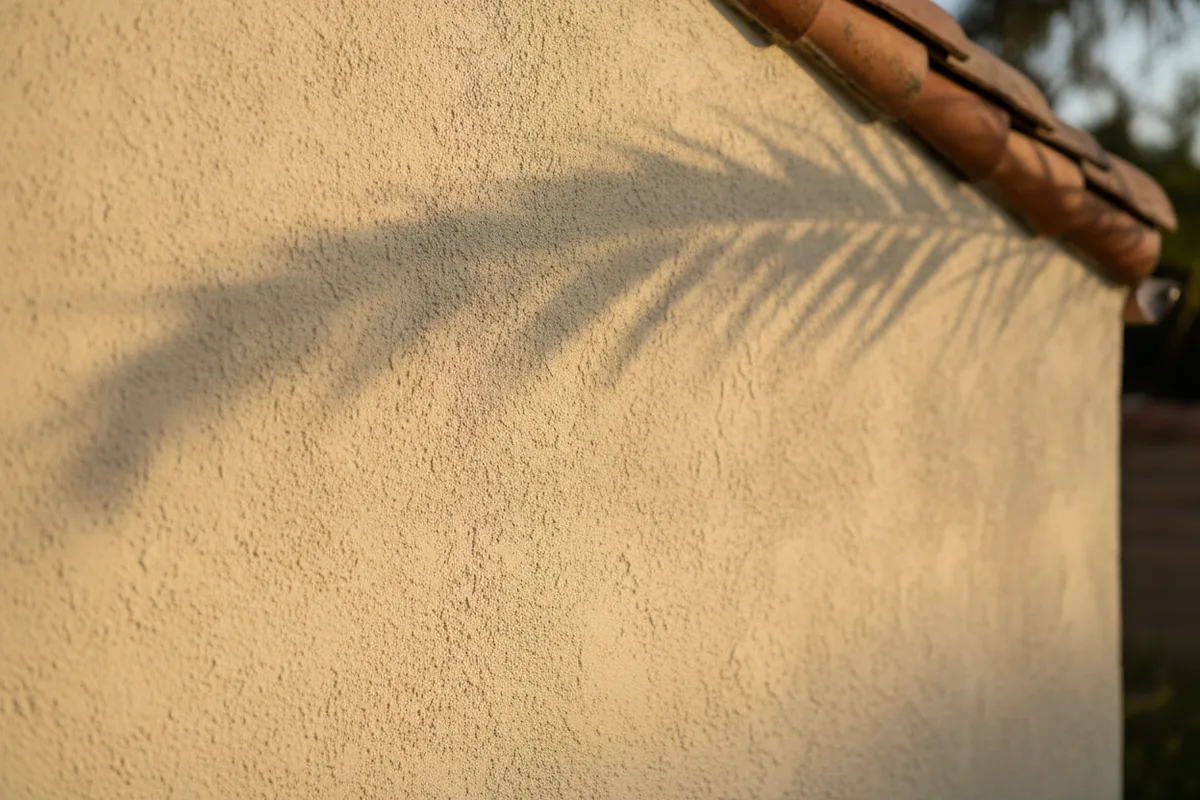
The finish coat is the only layer of stucco you actually see, and it sets the entire look of a house. In San Diego, five finishes cover almost every home: smooth (Santa Barbara), sand float, lace, dash, and worm. The one you choose changes the texture, how well the wall hides cracks, and how it holds up to coastal salt air. Here’s how each finish works and which ones fit San Diego homes best.
What are the main types of stucco finishes?
A stucco finish is the top coat troweled or sprayed over the base coats. The finish decides the surface texture, not the strength of the wall. Most San Diego homes wear one of five finishes, and each one reads differently on the eye and behaves differently over time.
Two things separate the finishes: how coarse the texture is, and how the material is applied. Coarse textures like dash hide surface imperfections and hairline cracks. Smooth textures show every flaw but give a clean, modern face. Applied by hand, a finish looks custom. Sprayed, it goes on faster and more uniform.
Smooth (Santa Barbara) finish
Smooth finish, often called Santa Barbara or Old World, is a fine, nearly flat texture troweled by hand. It’s the signature look of Spanish Colonial and Mediterranean homes, which make up a large share of San Diego’s older neighborhoods. Up close it has gentle undulations, not a mirror finish.
Smooth is the least forgiving finish. Because there’s no texture to hide behind, cracks and patches show clearly, and repairs demand a skilled hand. It’s usually applied with an acrylic or lime-based finish coat for better flexibility. On coastal homes it’s a favorite because the tighter surface holds less salt, dust, and moisture than a heavy texture.
Sand (float) finish
Sand finish, also called float finish, is the most common stucco texture in California tract housing. A crew floats the finish coat with a sponge or rubber float to leave a fine, even grain. It comes in fine, medium, and coarse depending on the aggregate size.
Sand finish hits a practical middle ground. It hides minor imperfections better than smooth, costs less to apply than a hand-troweled look, and matches easily during repairs. That last point matters in San Diego, where so many homes already wear a sand float and homeowners want a patch to disappear. If your house has this finish, texture matching is straightforward for an experienced crew.
Lace and skip-trowel finish
Lace, sometimes called skip-trowel, is a two-step texture. A crew sprays a base layer, then knocks down the high spots with a trowel to leave a mottled, overlapping pattern. The result has both raised and flat areas, which is why it hides cracks and blemishes so well.
Lace is one of the most popular finishes on San Diego homes built from the 1970s onward. It’s durable, forgiving, and quick to apply, and it comes in fine, medium, and heavy patterns. Because the texture is busy, repairs blend in with less effort than smooth or sand, though matching the exact knockdown pattern still takes practice.
Dash and machine-dash finish
Dash is the coarsest common finish. The material is sprayed or flung onto the wall with a hopper gun or a hand-held dash brush, leaving a heavy, bumpy texture with no knockdown. Machine dash is the sprayed version, and hand dash is the older, thrown-on method.
Dash finish is built to hide flaws. The deep texture masks cracks, uneven substrates, and past repairs, which is why it shows up on commercial buildings and older homes. The trade-off is that the rough surface catches more dirt and can be harder to clean, and on the coast the extra texture holds more salt spray. It’s less common on newer San Diego residential projects for that reason.
Worm (swirl) finish
Worm finish, also called putz or swirl, uses a finish coat with large aggregate that leaves winding grooves as the trowel drags across it. The grooves look like worm trails, which is where the name comes from. It’s a decorative, old-fashioned texture you’ll see on some mid-century and Spanish-style San Diego homes.
Worm is more of a specialty finish today. It’s striking but hard to match and hard to clean, so most homeowners choose it for character rather than practicality. If you’re restoring a home that already has it, matching the pattern is a job for a crew that has done it before.
Acrylic vs traditional cement finish coat
Beyond texture, there’s a material choice that matters just as much in San Diego: acrylic finish versus traditional cement finish. A traditional cement-based color coat is troweled on and colored with dry pigment. An acrylic finish is a factory-mixed, polymer-based coat that goes over the base.
Acrylic finishes flex more, resist hairline cracking, hold color longer, and shed water better, which is why they’re a strong pick for coastal and hillside homes that move with temperature swings. Cement finishes cost less and are easier to patch with standard materials. Many San Diego re-stucco jobs now use an acrylic finish for the durability, applied as the final color and finish coat over a fresh base.
Which stucco finish suits your San Diego home?
The right finish depends on three things: your home’s architecture, its exposure, and how much you care about hiding future cracks.
Match the architecture first. Spanish, Mediterranean, and Old World homes look right in a smooth Santa Barbara finish. Ranch, tract, and contemporary homes usually wear sand float or lace, and most San Diego neighborhoods already lean one way or the other.
Then weigh the exposure. Homes in coastal cities like La Jolla, Del Mar, and Coronado face constant salt air, so a tighter, smoother finish with an acrylic coat sheds salt and moisture better and stays cleaner. Inland and hillside homes have more freedom, though a finish that hides movement cracks is still smart.
Finally, be honest about maintenance. Smooth looks best but shows every flaw and needs skilled repair. Lace and sand hide imperfections and are far easier to patch down the road. If a clean look matters most, go smooth. If low upkeep matters most, lace is the safe choice.
How hard is it to match an existing finish?
Matching a finish is often harder than choosing one. A patch has to match the texture, the color, and the aging of the surrounding wall, and a mismatch stands out more than the original damage. Smooth and worm finishes are the toughest to match. Sand and lace are the most forgiving.
At Stucco Pro SD, we connect homeowners with local stucco crews across all 67 cities in San Diego County, and the network handles everything from a single patch to a full re-stucco with a new finish. If you’re not sure which finish your home has or what a repair will take, a crew can identify it on site. Homeowners in La Jolla and other coastal areas often start with a finish assessment before any work begins.
Frequently asked questions
What is the most popular stucco finish in San Diego?
Sand float and lace are the two most common finishes on San Diego homes. Sand float dominates California tract housing, and lace shows up on most homes built from the 1970s onward because it hides cracks and is quick to apply. Smooth Santa Barbara finish is the top choice for Spanish and Mediterranean-style homes.
What is the best stucco finish for a coastal home?
A smoother finish with an acrylic color coat is usually best near the coast. The tighter surface holds less salt, dust, and moisture than a heavy dash or worm texture, and the acrylic coat flexes and sheds water better. That combination stays cleaner and resists hairline cracking in salt air.
Which stucco finish hides cracks best?
Dash and lace hide cracks best because their heavy, broken textures break up the eye’s view of the surface. Smooth finish hides the least, so cracks and patches show clearly. If you want a low-maintenance wall that masks future movement, a medium lace finish is the practical pick.
Can you change your stucco finish without re-stuccoing the whole house?
Sometimes. If the existing stucco is sound, a new finish coat can go over it, which changes the texture without a full tear-off. A smoother finish over a rough one may need a leveling coat first. A crew should inspect the wall for cracks and moisture before deciding whether a re-coat or a full re-stucco is the right call.
Is acrylic or cement stucco finish better?
Neither is better for every home. Acrylic finishes flex more, resist hairline cracks, hold color longer, and shed water well, which suits coastal and hillside San Diego homes. Cement finishes cost less and patch easily with standard materials. Many re-stucco jobs now use acrylic for durability, but a sound cement finish is still a solid choice inland.