How to inspect your weep screed drainage
Weep screed is the metal strip at the base of your stucco wall that drains moisture out of the system. Checking it once a year catches the most common cause of stucco failure at the foundation line.
What you'll learn
- What weep screed is and where to find it
- How to check whether the drainage gap is open
- Signs that the weep screed has corroded and needs replacement
- How to clear minor debris from the drainage path
Step by step
- Locate the weep screed Walk the perimeter of your home and look at the bottom edge of the stucco, where it terminates above the foundation or the concrete slab. You should see a thin metal strip with small perforations along its bottom edge and a gap between the strip's bottom edge and whatever is below it. That gap is where water exits the stucco system.
- Check the drainage gap The gap between the bottom of the weep screed and the surface below should be clear: no soil, mulch, rock, or concrete poured against it. Probe the gap lightly with a thin screwdriver. If it slides in freely for an inch or more, the drainage path is open. If it hits a hard stop immediately, the gap may be blocked or absent.
- Look for rust staining Rust-colored staining on the stucco surface directly above or below the weep screed indicates corrosion. In coastal San Diego communities, even a small amount of orange staining at the foundation line is a sign that the galvanized coating on the screed has broken down.
- Check for soil or hardscape contact Soil, planters, raised beds, or hardscape materials that touch the stucco above the weep screed short-circuit the moisture management system. The stucco needs a visible gap between its bottom edge and any soil or hardscape, with the weep screed exposed in that gap. Your crew confirms the clearance the code requires for your assembly.
- Clear minor debris Use a small stiff brush or compressed air to clear leaves, dirt, and spider webs from the weep screed drainage slots and the gap below. Do not use water pressure directly into the gap. If the screed is corroded or the gap has been filled with hardscape or poured concrete, call a stucco contractor.
If the weep screed is corroded, missing, or buried under hardscape, do not attempt DIY replacement. Weep screed replacement requires removing and rebuilding the stucco at the foundation line, which is contractor work with a permit in most San Diego jurisdictions.
Rather have a pro handle it?
We match homeowners across San Diego County with insured local stucco crews. One call puts you in front of one of them.
Keep learning.
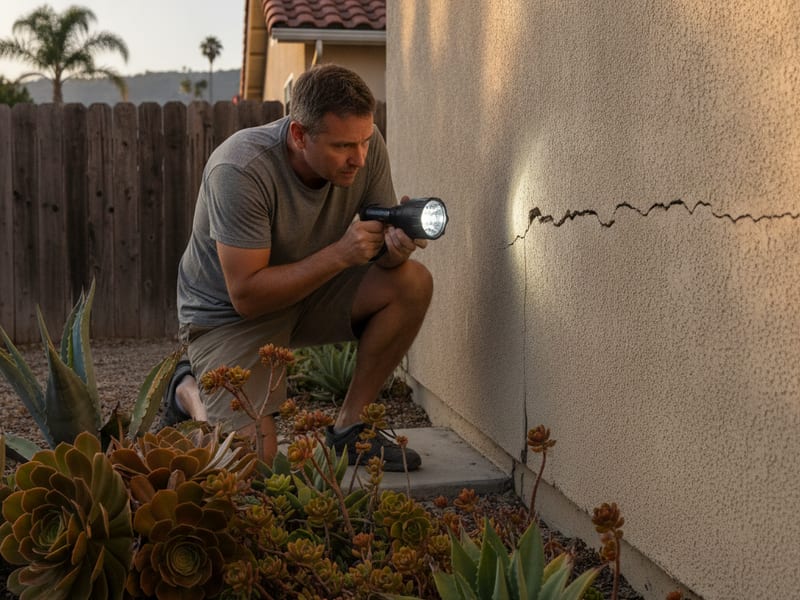
How to inspect stucco cracks on your home
Not every stucco crack is the same problem. A quick inspection with the right approach tells you whether a crack is cosmetic shrinkage or a sign that water is getting behind the wall.
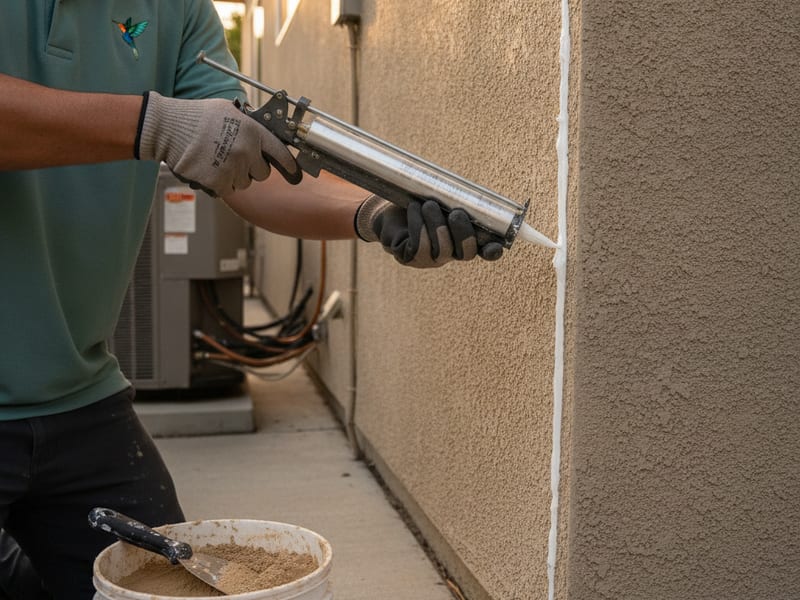
How to seal hairline stucco cracks yourself
A true hairline crack with no staining and solid surrounding stucco can be sealed by a careful homeowner. Larger or active cracks need a professional. Here is how to handle the ones you can do yourself.
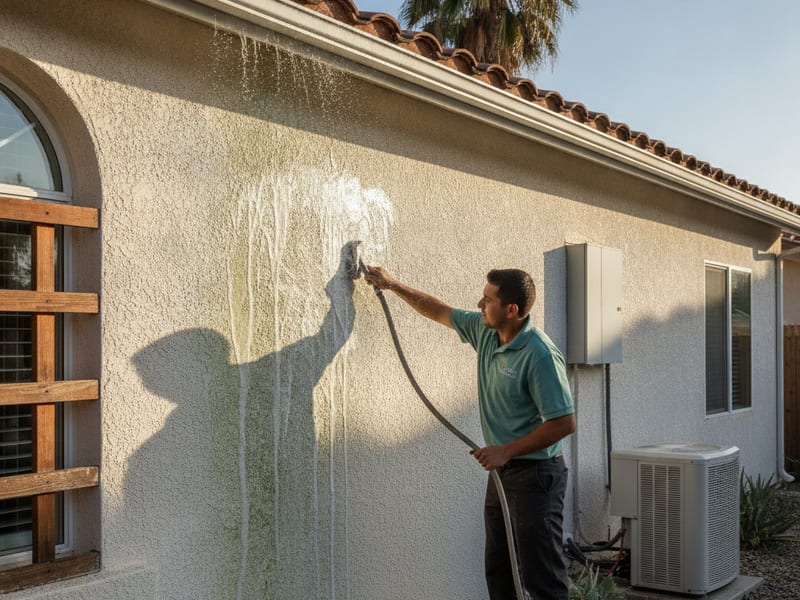
How to clean a stucco wall
Stucco collects dirt, mildew, and efflorescence over time. A proper cleaning extends the life of the finish coat and is the correct first step before any painting or crack sealing.