Choosing between acrylic stucco and a cement finish coat shouldn’t begin with whichever sounds newer. There isn’t a confirmed universal winner for every San Diego wall. The right choice depends on the existing assembly, exact product, preparation plan, exposure, and future repair needs.
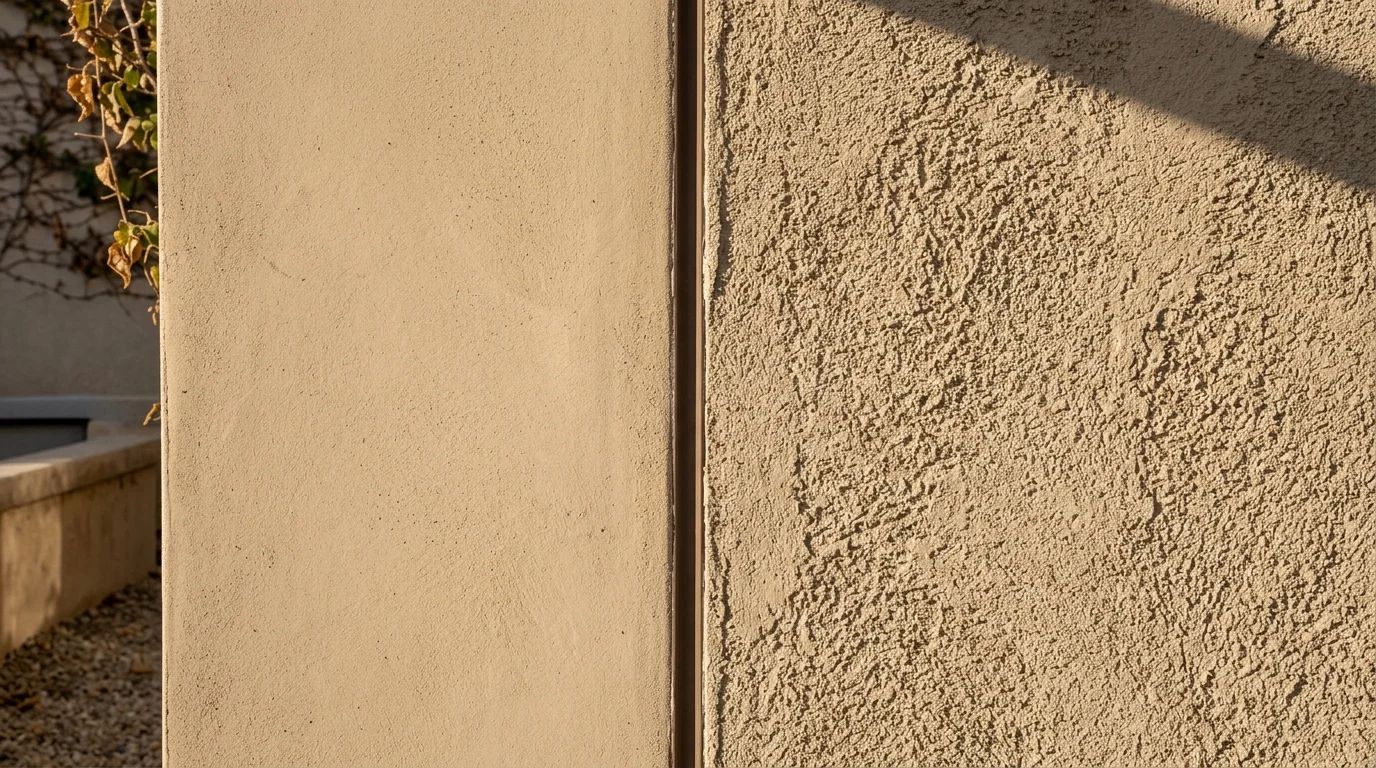
The two finish-coat systems and what they are made of
“Acrylic stucco” and “cement finish” aren’t complete product specifications. Each proposal should name the exact finish and identify its place in the wall assembly. The manufacturer’s current technical data should describe its ingredients, approved substrates, preparation, application, and limitations.
Ask the contractor to distinguish the finish coat from everything beneath it. That includes the existing finish, repairs, base material, primer, and any prior coating. A finish that looks suitable in a sample can still be wrong for the layers already on the house.
This matters throughout San Diego County. A proposal for coastal North County shouldn’t be copied blindly onto an East County property. The same caution applies between the central city and South Bay. The address, wall condition, and existing materials deserve an individual inspection.
Start by requesting the product name and written scope. Then compare the proposed system with the broader types of stucco finishes used in San Diego. That separates material choices from texture names, which are often discussed as though they’re the same decision.
Cement finish: color through the material, cures hard
“Color through the material” and “cures hard” are common descriptions in cement-finish proposals. Those phrases aren’t enough to approve a product. Ask the contractor to show where the manufacturer documents the finish’s composition, mixing directions, approved base, color method, and curing requirements.
If mixing happens at the property, the written scope should explain how the contractor will follow the product instructions. It should also identify the selected color and texture. Don’t accept a verbal promise that every wall will look identical under every type of light.
An existing cement finish doesn’t automatically prove that another cement coat belongs over it. The contractor still needs to identify loose areas, previous repairs, coatings, and unknown layers. Ask what preparation the manufacturer requires for those conditions.
If your goal is changing the exterior color without relying only on paint, review the proposed work as a complete color finish coat project. The scope should say what receives the finish and what must be repaired first.
Acrylic finish: a polymer-bound coating over a base
When an estimate says “acrylic stucco,” get the manufacturer and product name. Ask whether the material is a finish, a coating, or one part of a larger listed system. The label alone doesn’t confirm what can sit beneath it.
The current technical sheet should answer the important questions. Confirm the approved base, primer, preparation, application limits, texture, and color. If the contractor describes the product as flexible, ask for the manufacturer’s wording and limits. “Flexible” shouldn’t become a promise that the wall can’t crack.
The proposal should also identify the layer receiving the acrylic finish. It should explain how cracks, loose material, old paint, patches, and possible moisture concerns will be handled before application. Covering an uncertain surface doesn’t resolve that uncertainty.
When the existing exterior needs more than a finish change, ask whether the scope is really a re-stucco project. That conversation can prevent a finish selection from hiding a larger preparation problem.
Crack behavior and why this is the headline difference
Crack behavior often drives this decision. Still, no finish name guarantees a crack-free wall. Before choosing acrylic stucco or cement finish, document the existing cracks and ask the contractor to address them separately.
A new texture can change how a crack looks. Don’t treat that visual change as proof that its cause was corrected. Ask which cracks will be repaired, what material will be used, and how the repair fits the proposed finish system.
The contractor should also explain what the finish is expected to do if movement continues. Any performance claim should match the current manufacturer documentation for the exact product and assembly. General statements about acrylic being flexible or cement being hard aren’t enough.
When cracks are the main concern, compare the finish proposal with a dedicated stucco crack repair scope. That keeps two decisions separate. First, determine what the crack needs. Then decide which finish belongs over the completed repair.
Color consistency out of the bucket versus out of the mixer
“Out of the bucket” and “out of the mixer” describe different control points. They don’t establish how a finished wall will look. The product instructions and the contractor’s application plan matter more than the shorthand.
Request a sample using the exact proposed color and texture. View it beside the house, not only on a screen or printed chart. Compare it at more than one wall location because surrounding surfaces and light can change how the color appears.
The proposal should record the product name, color designation, texture, and any other identifiers supplied by the manufacturer. Keep that information with your property records. It may help if the wall needs attention later.
For larger elevations, ask how the contractor plans transitions, corners, stopping points, and adjoining walls. Don’t rely on “it will match” without a documented selection. If an HOA or another reviewer must approve the appearance, obtain that approval through the process that applies to your property.
Permeability and drying, and why it matters on a coastal wall
Permeability and drying deserve attention whenever the outer layer changes. A universal rating for acrylic stucco or cement finish couldn’t be confirmed across all products. Use the current technical data for the exact material instead.
For a coastal wall, ask the contractor to identify the complete existing assembly. Then request the proposed product’s documented permeability information, compatible substrates, and preparation requirements. If the manufacturer doesn’t publish a needed value or approval, ask the contractor how compatibility was established.
Don’t let words such as “breathable” or “waterproof” carry an undefined promise. Ask what the term means for that product and wall. The scope should also separate finish work from repairs involving damaged material, drainage, or a moisture barrier.
Permit requirements can’t be stated for every project or address. Ask the city or county that issues permits where you live. Describe the complete scope, not just the finish name, so the answer applies to the actual work.
Texture range each system can achieve
Don’t choose a finish system from texture names alone. Ask to see physical samples made with the exact products under consideration. A photo can narrow the options, but it doesn’t establish the final surface.
Compare the sample with the home’s existing walls, trim, roofline, and neighboring elevations. Decide whether the goal is a deliberate change or a close match. Those are different assignments and should produce different written scopes.
If part of the original finish will remain, ask how the contractor will manage the boundary between old and new work. Texture, color, and transition placement all matter there. For a broader overview of common visual options, use the guide to San Diego stucco finish types, then return to the exact manufacturer samples for your selection.
Keep the approved sample until the work is complete. Record the product and texture details with it.
Repairability years later: the argument homeowners never hear
Future repairability belongs in the buying decision. Ask what information a later contractor would need to identify the finish, reproduce the texture, and select a compatible repair material.
Keep the contract, technical sheet, product name, color designation, and sample. If the manufacturer provides batch or lot details, save those too. This record is more useful than relying on a general description such as “tan acrylic stucco.”
No contractor should promise that a repair years later will disappear under every viewing condition. Product availability, wall condition, and the future repair scope haven’t been established yet. Ask instead how the chosen finish affects the repair process and what documentation should remain with the house.
Also discuss whether a damaged area could be addressed locally or might require a wider finish transition. The answer should come from an inspection and the selected product instructions. Repairability can break a tie when two finishes otherwise meet your appearance goals.
Compatibility with what is already on your wall
Compatibility is the gate before color, texture, or price. The contractor needs to identify the surface receiving the new finish. Appearance alone may not provide enough information, especially on a wall with old paint, patches, or several previous finish changes.
Ask how the existing layers were identified. Then ask what testing, preparation, primer, or removal the manufacturer requires. The written proposal should connect each step to the exact product being installed.
If a layer can’t be identified, the uncertainty should remain visible in the conversation. Don’t let it become an unsupported assumption. The contractor can explain what further inspection or preparation is needed before selecting the final system.
Compatibility also includes repaired sections and adjoining materials. Ask how those areas will be treated and where finish transitions will occur. If the existing condition calls for a full exterior renewal, the re-stucco service may fit better than a finish-only proposal. The licensed contractor should determine that after inspecting the property.
How to decide, and what to ask a licensed pro
Choose between acrylic stucco and cement finish by comparing documented systems, not broad labels. Start with the existing wall, then work outward toward appearance.
Ask each contractor the same questions:
- What exact manufacturer and product are you proposing?
- What existing layer will receive the finish?
- Is that substrate approved in the current product documentation?
- What repairs and preparation are included?
- What color and texture sample will define the selection?
- How will corners, transitions, patches, and adjoining walls be handled?
- What records should stay with the house for later repairs?
- Does the city or county that issues permits require anything for this scope?
Compare written scopes line by line. Pricing must come from the contractor after inspection. No confirmed countywide figure determines what your wall should cost, so unsupported averages won’t settle the choice.
Stucco work falls under California’s C-35 lathing and plastering classification. Check the contractor through the official CSLB license lookup. Confirm that the license information matches the person or company named in your proposal.
The better choice is the documented system that fits the inspected wall and your appearance goals. If a contractor can’t explain compatibility, preparation, and future repair needs, the material label isn’t enough.
When to call us
Call when you’re comparing finish systems and need a licensed pro to inspect the existing wall. This is especially helpful when cracks, prior coatings, or unknown layers make compatibility unclear. Call us at (858) 400-4352 and we’ll connect you with a licensed local stucco contractor.