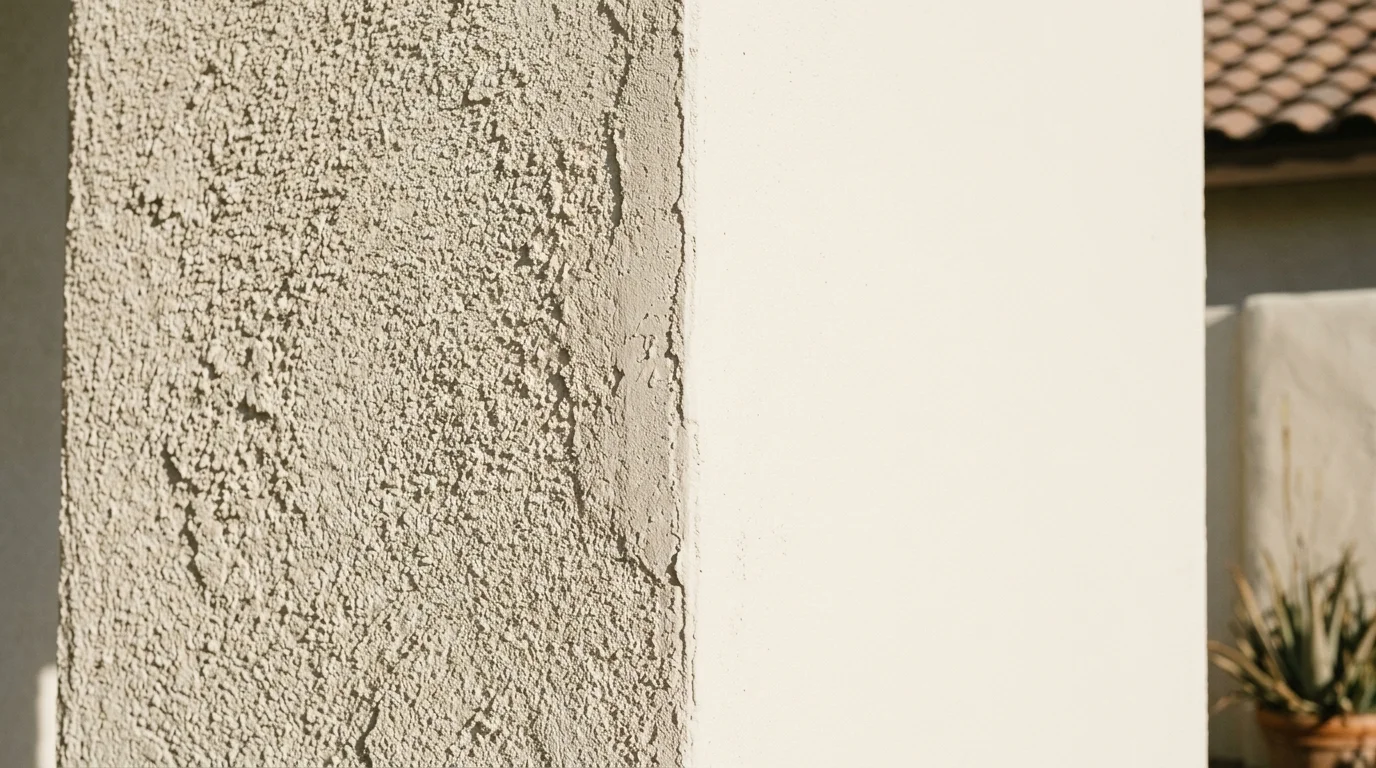
Sand finish stucco gives a wall visible grain and a softer, more varied surface. Smooth stucco creates a flatter look, but every change in light and workmanship becomes easier to notice. The right choice depends on the house, the existing walls, and how exact you want the finished surface to appear.
What each finish is and how it is achieved at the wall
A finish name describes the final appearance, not the entire wall system. Sand finish stucco has a visible, granular texture. Smooth stucco has a flatter surface with less visible grain.
The final look depends on the material and the application method. It also depends on the wall beneath it. Corners, repairs, old coatings, and surface changes can affect what you see after completion.
For sand finish, the contractor works the finish so its grain stays visible. For smooth stucco, the contractor develops a flatter face with trowel work. The exact process can vary with the selected product and the existing substrate. Ask the contractor to identify both before work begins.
Don’t approve a finish from a name alone. “Fine sand” and “smooth” can mean different things to different people. A physical sample gives everyone the same reference.
If you’re comparing more than these two looks, our guide to types of stucco finishes in San Diego shows how they relate. Use that overview to narrow your choices. Then compare real samples beside the house.
Grain size and why sand finish has grades
Sand finish stucco isn’t one fixed texture. Some samples show a tight, fine grain. Others have a more noticeable granular pattern. The change can seem minor in your hand, yet look much stronger across a full elevation.
Labels don’t always give homeowners enough information. One contractor’s fine sand sample may not resemble another product with a similar name. Product, color, application, and viewing distance all affect the impression.
Compare samples at the wall instead of under indoor lighting. View each one from the sidewalk, driveway, and front entry. A grain that looks pronounced from inches away may read as gentle from the curb.
The surrounding house also matters. Detailed trim can compete with a coarse texture. Broad walls can make a subtle finish feel calmer. There isn’t one correct grain for every San Diego home.
Ask the contractor to prepare a sample that uses the proposed finish material. If the project must meet existing stucco, place the sample directly beside it. Check the grain pattern, direction, color, and transition edge. Those details provide a clearer decision than a finish name printed on a brochure.
The smooth finish and the skill it demands
Smooth stucco reduces the visual cover supplied by grain. That makes consistency across the wall especially important. Trowel movement, surface changes, transitions, and previous repairs may become part of the finished appearance.
“Smooth” also needs a shared definition. Some homeowners expect a nearly uniform surface. Others prefer slight movement that shows the material was worked by hand. Those expectations should be discussed before the contractor prices or begins the finish.
Use sample areas to settle that distinction. Look across the sample from an angle, not only straight ahead. Then inspect it under the light that normally reaches that wall.
A smooth finish may require more preparation when the existing wall has visible variations. The contractor should explain what can be corrected and what may remain visible. That conversation matters on older homes, additions, and walls with several past patches.
If color is changing with the texture, review the planned color finish coat as part of the same sample. Color and surface shouldn’t be approved as separate ideas. Together, they create the appearance you’ll see from the street.
Why smooth walls show everything and sand finishes forgive
A flatter surface gives shadows fewer places to break apart. Long reflections and grazing light can make small surface changes easier to see. Sand finish interrupts that view with visible grain.
That doesn’t mean sand finish hides every defect. A poor transition, raised patch, or uneven corner can still stand out. Grain changes can also reveal where new work meets older stucco.
Think of sand finish as visual texture, not camouflage. It can soften the appearance of minor variation when the grain remains consistent. It can’t correct a wall that needs proper preparation.
Smooth stucco calls for closer agreement about acceptable variation. Before choosing it, identify the views that matter most. The front approach, patio doors, side yards, and second-story walls can show the same finish differently.
This distinction becomes important during remodeling. A new opening or addition may interrupt a large existing wall. Ask whether the proposed finish will make that transition quieter or more noticeable. The answer should come from a site inspection and a representative sample, not a small photo on a screen.
Light: how each one reads through a San Diego day
San Diego sunlight can change the apparent texture from morning to evening. A wall facing early light may show grain and trowel movement clearly. The same surface can appear quieter when light reaches it more directly.
Sand finish creates many small highlights and shadows. Smooth stucco tends to show broader changes across the wall. Neither effect is automatically better. The choice depends on the architecture and the look you want.
Walk around the property before approving a sample location. A front wall in Chula Vista may face different light than its side-yard return. An Encinitas courtyard can also read differently from a broad inland elevation near El Cajon.
Place the sample where the finish will actually be seen. Check it in morning, midday, and evening light when possible. Also view it beside roof edges, trim, stone, and painted surfaces.
Color needs the same treatment. Warm off-white, bright white, and deeper colors can emphasize texture differently. Don’t rely on a phone photo to make the final choice. Screens, exposure settings, and shadows can change the appearance you’re trying to judge.
Cracking and how visible a crack is in each
Finish selection affects how a crack looks, not what caused it. A crack can cross sand finish or smooth stucco. Changing the texture alone doesn’t explain the condition beneath the surface.
On a smooth wall, a fine line may contrast with the flatter background. Sand finish can break up that line visually, especially from farther away. Close inspection may still reveal it.
A repair creates another visibility issue. Matching the crack treatment isn’t enough. The surrounding color, texture, edge, and wall plane also need attention. Smooth walls can make a raised repair edge easy to notice. Sand finishes can expose a patch when its grain differs from the original.
Have a licensed stucco contractor inspect recurring, widening, or unfamiliar cracking before choosing a cosmetic finish. The contractor can explain the proposed repair and how the finish will meet the surrounding wall.
For help sorting visible patterns before that conversation, see our guide to stucco crack types in San Diego. Don’t use appearance alone to diagnose the cause or choose a repair.
Cleaning, dirt-holding and coastal exposure
Texture changes how dirt appears and where it remains visible. Sand finish has more surface variation. Smooth stucco has fewer textured recesses, but streaks and isolated marks may stand out against its flatter face.
Conditions also vary across San Diego County. An exposed coastal wall in Point Loma won’t have the same surroundings as a sheltered East County courtyard. Landscaping, irrigation, roof runoff, traffic, and wall orientation all affect what reaches the surface.
Inspect the problem before choosing a cleaning method. Some discoloration may sit on the finish. Other marks may relate to moisture movement or a coating condition. Cleaning won’t resolve every source.
Ask the product manufacturer or licensed contractor which method suits the installed finish. Test any proposed method in a small, less visible area first. Avoid assuming that stronger pressure or harsher products will produce a better result.
When comparing finishes, include maintenance expectations in the sample review. A light color may show some marks sooner. A deeper texture may hold shadows that resemble discoloration from a distance. Choose based on the actual walls, nearby conditions, and the maintenance approach recommended for the selected material.
Repairability: patching a sand finish versus patching a smooth wall
Both finishes can be patched, but an invisible patch shouldn’t be promised. The repair must meet the existing wall in texture, color, edge, and overall plane. Differences can remain visible after the patch is complete.
Sand finish matching depends heavily on grain. A patch can have the right color yet look wrong because its particles appear larger, tighter, or differently distributed. Smooth work presents another challenge. A slight ridge or change in trowel character may catch light across the repair.
The age and condition of the surrounding finish also matter. New material starts beside a wall that has already experienced weather and cleaning. A small sample helps set realistic expectations before a larger repair begins.
For isolated damage, ask whether localized texture matching is practical. The contractor should inspect the wall and explain the expected transition. For several repairs across one elevation, a broader finish approach may create a more consistent appearance.
Take comparison photos from several distances after the sample dries. Review the repair straight on and from each side. The most revealing view is often the angle used when entering the driveway or walking toward the front door.
Cost drivers, in labor terms rather than numbers
No reliable project price can be given from the finish name alone. Labor changes with preparation, access, masking, wall condition, detail work, sample approval, and the number of transitions. The selected material also affects the scope a contractor proposes.
Smooth stucco may involve more effort to create a consistent appearance across imperfect walls. Sand finish still requires careful grain control, especially when matching existing work. Neither label guarantees a simpler project.
Ask each contractor to describe what the bid includes. The scope should identify surface preparation, repair areas, finish material, color, sample process, protected surfaces, and cleanup. That makes competing proposals easier to compare.
Don’t let a lower price hide a different scope. One proposal may cover a single patched area. Another may address the full wall around it. Those aren’t equivalent results.
Before hiring, verify the contractor through the CSLB license check. California’s minor-work exemption applies only when the aggregate contract price is under $1,000, the work is casual or minor, and no building permit is required. The threshold became effective January 1, 2026. Splitting work into smaller contracts doesn’t preserve that exemption, and someone advertising as a contractor loses it at any price.
Matching what is already on the house versus starting over
Existing walls should usually lead the finish decision. If most of the house has sand finish, changing one repaired elevation to smooth may create a deliberate contrast or an obvious mismatch. Decide which result you actually want.
Start by identifying where the new work stops. Outside corners, trim bands, wall returns, and changes in plane can provide cleaner visual breaks. A patch ending in the middle of a broad wall may be harder to blend.
Matching deserves a site-specific sample. Compare the existing grain and color at several locations. Sun exposure, repairs, coatings, and dirt can make one wall look unlike another. Don’t treat a single spot as the whole house.
Starting over with a broader finish scope gives you more freedom to change texture. It also expands the area that needs preparation and finish work. A licensed contractor can explain whether a repair, one-elevation treatment, or larger recoat fits the wall’s condition.
If you’re preserving the current look, prioritize the closest practical match. If you’re changing the architecture, compare sand and smooth samples against every major elevation. The best choice should feel intentional from the curb, patio, and side yard.
When to call us
Call when the finish must cross repairs, match existing walls, or cover several connected elevations. Call us at (858) 400-4352 and we’ll connect you with a licensed local stucco contractor.