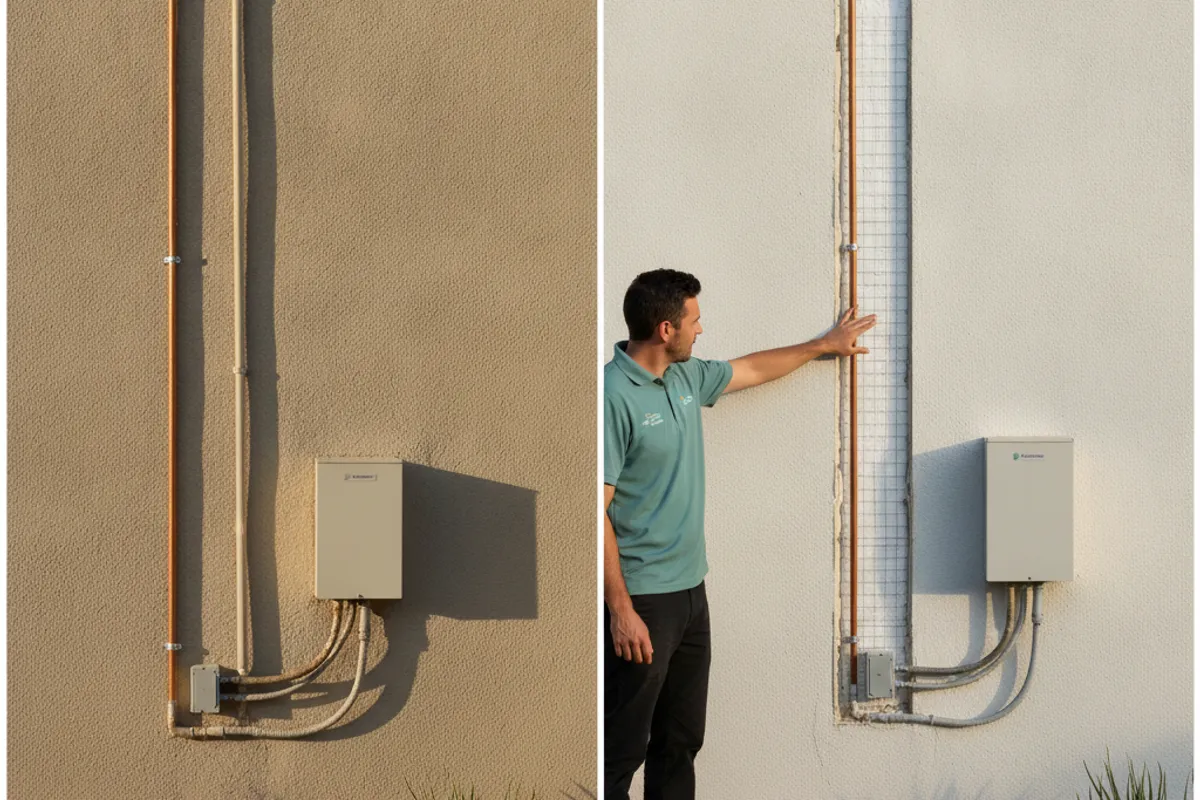
EIFS stands for Exterior Insulation and Finish Systems. It’s a multi-layered exterior wall cladding that uses rigid foam insulation board as its base rather than cement. Often called synthetic stucco, the system looks exactly like traditional stucco from the street. The difference lies entirely beneath the surface coat.
The layers of an EIFS wall
A traditional stucco wall relies on heavy layers of sand, Portland cement, and water. An EIFS assembly replaces that heavy cement core with lighter synthetic materials. The system builds outward from the exterior wall sheathing in specific layers.
First, installers attach rigid insulation board directly to the wall. This foam board is the defining feature of synthetic stucco. Next comes a base coat embedded with fiberglass reinforcing mesh. The mesh gives the wall its structural flexibility. Finally, a textured finish coat goes over the top. This final layer provides the color and the classic stucco look.
Barrier systems versus drainage systems
Older synthetic stucco installations were barrier systems. These designs relied entirely on the outer surface to keep water out. If moisture found a way past the surface coat, it had no way to escape. The trapped water simply sat against the wood sheathing and caused severe rot.
Modern installations use drainage EIFS. These updated systems include a water-resistive barrier over the sheathing and create a physical gap behind the foam board. If water penetrates the outer layer, gravity pulls it down through the gap and out the bottom of the wall. Knowing which version is on your house is the single most useful fact you can learn about your exterior.
How to tell synthetic stucco from traditional stucco
You can’t tell the difference just by looking at the texture. You have to interact with the wall. The knock test is the most reliable method. Tap on the exterior wall with your knuckles. Traditional stucco feels like knocking on a solid concrete sidewalk. Synthetic stucco produces a hollow sound and has a slight give to it.
You can also check the edges around your windows. EIFS stands noticeably proud of the window frame because of the foam board behind it. Traditional stucco sits much tighter to the wall. Finally, look at the decorative trim. Elaborate architectural shapes and cornices are often carved from foam and coated with synthetic finishes. Cement stucco can’t easily form those complex shapes.
For a deeper breakdown of these differences, read our guide on EIFS vs. traditional stucco.
Where synthetic stucco usually shows up
Commercial buildings use EIFS heavily because the foam board lowers heating and cooling costs. You’ll also find it on residential homes built or re-clad from roughly the 1980s onward. Many builders use synthetic stucco exclusively for decorative trim bands around windows and rooflines while using traditional cement stucco for the flat walls.
Why the material matters for wall repairs
Traditional stucco and synthetic stucco don’t mix. A standard cement patch applied to an EIFS wall will fail. The heavy cement pulls away from the lighter synthetic base coat and cracks the surrounding finish.
Repairing EIFS requires matching the original layers. The technician must cut out the damaged foam, glue in a replacement piece, embed new fiberglass mesh, and blend the synthetic finish coat. If you need this done, the independent pros we connect you with are licensed to handle the specific materials your wall requires. You can learn more about the process in our overview on how to repair EIFS.
When to schedule an EIFS inspection
An EIFS inspection involves checking the wall for trapped moisture. Inspectors use specialized moisture meters to test the framing behind the foam board. You should schedule an inspection if you plan to buy a home with synthetic stucco. You also need one if you notice soft spots, bubbling paint, or mold near your windows. Finding trapped moisture early prevents major structural rot.
Frequently asked questions
Is EIFS the same thing as Dryvit?
Dryvit is a specific brand name of synthetic stucco. People often use the term to describe all EIFS installations, just like using the word Kleenex for tissues. The actual materials and installation process remain the same regardless of the manufacturer.
Can you paint an EIFS wall?
Yes, you can paint synthetic stucco. You must use an acrylic-based paint designed specifically for elastomeric finishes. Standard exterior house paint can trap moisture inside the system and cause the finish coat to bubble.
How long does synthetic stucco last?
The lifespan depends entirely on proper maintenance and regular sealing. The system performs well as long as the exterior seal remains intact. Water intrusion is the primary cause of premature failure.
Does homeowners insurance cover EIFS damage?
Coverage varies widely by carrier and policy. Many insurance companies exclude coverage for moisture damage caused by older barrier EIFS systems. You must read your specific policy documents to confirm your exact coverage details.