When a home has a synthetic stucco exterior, homeowners often ask for Dryvit repair. Dryvit repair is the process of fixing an exterior insulation and finish system, or EIFS. Dryvit is a manufacturer brand name that became the generic term for synthetic stucco. Fixing these walls requires specific materials and methods. They differ entirely from traditional hard-coat stucco patches.
The difference between the brand and the system
Most people use the word Dryvit the same way they use Hoover for a vacuum. It was the dominant early brand in the synthetic stucco market. Because of that early dominance, the name stuck. When you need a wall patched, you are actually looking for EIFS repair.
Common failures on synthetic stucco walls
EIFS walls consist of a foam insulation board, a base coat, and an acrylic finish. The base coat is embedded with fiberglass mesh. Because the system relies on a thin outer layer over foam, it faces specific wear.
Impact damage is the most frequent issue. A stray baseball or a careless landscaping tool can puncture right through the finish. The damage often goes straight into the foam board.
Sealant failure is another primary concern. The caulking around windows, doors, and wall penetrations eventually degrades. When water gets behind the system, it can’t easily escape.
You might also notice staining and streaking below roof terminations. This happens when water runs down the face of the wall. Proper flashing should direct that water away. Left alone, trapped water leads to delamination. This is where the outer layers separate from the foam board.
How a typical wall patch works
Patching EIFS is a multi-step process. A proper fix never involves just smearing caulk over a hole. The pros we connect you with follow a strict procedure to restore the weather barrier.
First, the damaged area is cut away completely. The crew removes material back to sound, dry foam. They cut the mesh layer back in a stepped pattern. This allows the new fiberglass mesh to overlap the old mesh.
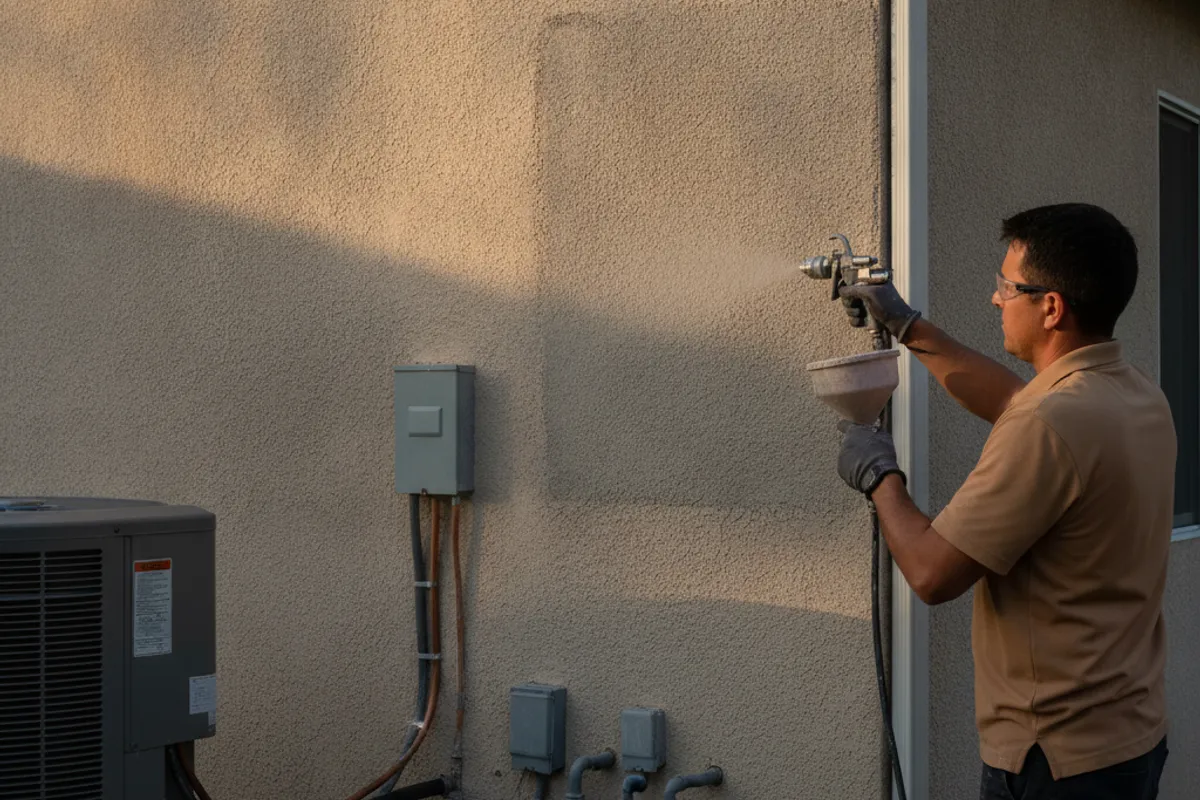
Next, they apply a new base coat. They embed the fresh mesh into this wet layer. Once that layer cures, the final step is texture matching. Identifying the specific finish and texture of your existing wall is necessary. This ensures the crew sources the right patch material. The new acrylic topcoat is floated to blend into the surrounding wall. You can read the full breakdown in our guide on how to repair EIFS.
Why knowing the brand is not enough
Telling a contractor you have a Dryvit wall gives them a starting point. It doesn’t give them the whole picture.
Knowing the manufacturer name doesn’t tell a repair crew which generation of the system you have. Older installations are often barrier systems. These rely entirely on the outer face to keep water out. Newer installations are drainage assemblies. They include a weather-resistive barrier and a drainage plane behind the foam.
Fixing a barrier system requires different techniques than patching a modern drainage assembly. A contractor must physically inspect the wall to determine the exact system type.
Frequently asked questions
Can you patch EIFS with traditional stucco?
No. Traditional stucco is a heavy cement mixture. It won’t bond properly to the acrylic and foam layers of an EIFS wall. Using hard-coat stucco on a synthetic wall causes cracking and immediate failure.
How long does a synthetic stucco patch take to cure?
The base coat and the acrylic finish coat both require specific drying times. The exact time depends on local humidity and temperature. The wall must stay dry throughout the curing process.
Why is it hard to match the paint on a patched area?
EIFS finish coats have the color mixed directly into the acrylic material. UV exposure fades the original wall over time. Even if you buy the exact original color code, the fresh patch looks brighter. The new material takes time to weather and blend in.
Does a small puncture require professional repair?
Small holes might seem minor. However, any break in the finish coat allows water into the foam layer. Prompt professional repair stops moisture from traveling behind the wall. This prevents structural rot over time.
If your synthetic stucco shows signs of impact damage or failing sealants, get it inspected. Water intrusion only gets worse over time. Reach out to coordinate an EIFS repair assessment. If you need a licensed professional, we connect you with an independent stucco repair service in San Diego. Call our office to get started.