Stucco lath replacement becomes the right scope after a licensed contractor confirms the hidden lath can’t remain within a sound repair. Cracks, stains, or loose-looking stucco may justify closer review, but they don’t prove what sits behind the finish. The decision depends on what an opening reveals and how far that condition continues.
What surface damage can and can’t reveal about the lath
The wall surface gives you a starting point, not a hidden-layer diagnosis. Record what you can see before anyone recommends a repair. Note the affected elevation, the shape of the area, nearby openings, and whether the appearance has changed.
Useful observations include visible cracking, staining, bulging, missing finish, or an existing exposed edge. Take one wide photo that identifies the wall. Then take closer photos showing the damaged area. These records help a contractor find the same location and explain the proposed boundary.
Those surface clues still can’t confirm damaged stucco lath. A rust-colored stain doesn’t prove that all lath behind it needs replacement. A crack doesn’t reveal which hidden layer, if any, has been affected. Even a small missing section may not show where usable material begins.
That distinction matters across San Diego County. An Encinitas wall west of I-5 and an El Cajon wall near I-8 shouldn’t receive a diagnosis based only on neighborhood assumptions. The actual wall condition controls the scope. The same applies in City Heights, Chula Vista, National City, and inland North County.
A licensed contractor may recommend stucco patching when the repair can stay localized. That recommendation should explain what remains and what gets replaced. A patch is a repair scope, not proof that every hidden layer is sound.
If the terminology feels unclear, start with this guide to stucco lath and mesh. It explains where lath sits within the wall system. It shouldn’t replace an assessment of the opened area at your property.
Why rust, separation, and movement change the repair scope
Confirmed rust, separation, or movement at an opening changes the conversation. The issue is no longer limited to matching the visible surface. The contractor must decide whether the exposed lath can remain and where any replacement should stop.
Start by separating visible evidence from assumptions. Rusted lath behind stucco means corrosion has been seen on the exposed material. It doesn’t establish how far that condition continues beyond the opening. The proposal should state what was observed, where it appeared, and whether more exposure is needed.
Separation also needs precise language. Ask the contractor to identify which materials aren’t staying together. “The wall is loose” isn’t enough for a clear quote. The written scope should name the affected area and explain which layer the contractor proposes to remove.
Movement deserves the same care. Record where the movement was observed and who observed it. Don’t let a broad description turn one damaged location into an unsupported recommendation for an entire elevation.
A good scope has a stopping point. It should explain how the contractor will identify the boundary between material being replaced and material remaining. It should also state how additional damage will be documented before the scope expands.
Professional lath replacement doesn’t automatically mean removing all stucco from a wall. It means the proposed repair includes replacing lath within a defined area. If that boundary may grow after opening, the contract should explain the approval process.
The approved source record doesn’t provide a visual standard that homeowners can use to diagnose hidden lath. It also doesn’t establish a universal replacement area. Those decisions belong in the matched contractor’s written findings and scope.
When a small opening helps define the damaged area
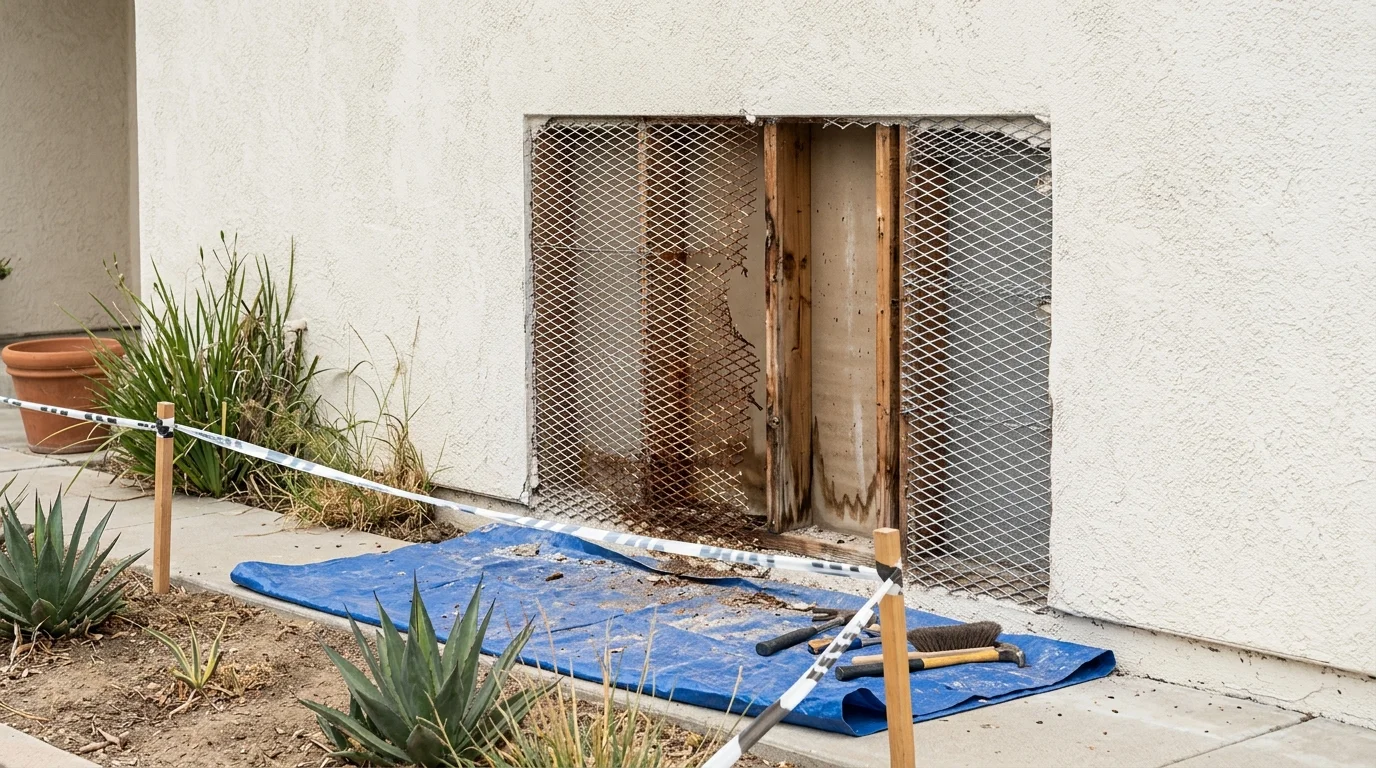
A controlled opening can replace guesswork with visible information. Its purpose is to show the layers at a selected location and help define the repair boundary. It isn’t a demolition tutorial or a reason to open the wall without a plan.
The approved claims record doesn’t prescribe an opening size. No universal dimension can be confirmed for every wall. A licensed contractor should choose the location and extent based on the specific damage, access, and proposed repair.
Before work begins, ask what the opening is meant to establish. The answer should connect directly to the scope decision. For example, the contractor may need to document whether the suspected condition appears at one edge or continues beyond it.
Ask for photographs before the opening is closed. They should show the location, the exposed layers, and the proposed repair boundary. A wider image provides context. Closer images document the condition used to support the recommendation.
The scope should also explain what happens if the opening reveals a separate problem. Additional removal shouldn’t appear as a vague verbal instruction. The contractor should describe the finding, identify the added work, and obtain approval through the contract process.
Permit requirements for a generic stucco lath replacement couldn’t be confirmed from the approved record. They may depend on the address and proposed work. For property inside the City of San Diego, confirm the current requirement with Development Services. Homeowners elsewhere should contact the building department serving their property.
That address check matters locally. San Diego County includes incorporated cities and unincorporated communities. Don’t assume a City of San Diego answer governs a project in Oceanside, Escondido, La Mesa, or the South Bay.
How the wall is rebuilt before the finish returns
Once the replacement boundary is confirmed, the written scope should describe how the opened area returns to a finished wall. It should cover more than the visible color and texture. Every affected layer needs a named responsibility.
A typical scope description may include controlled removal within the approved boundary, documentation of exposed conditions, replacement of confirmed damaged lath, restoration of removed stucco, and coordination of the finish. Those are scope categories, not technical specifications for every property.
The approved claims record doesn’t confirm fastener types, overlaps, coat thicknesses, cure times, or exterior-wall assembly details. This article won’t prescribe them. Ask the licensed contractor to identify the materials and method proposed for your specific wall.
That written detail helps before the work gets covered. You should be able to compare the exposed condition with the repair being proposed. If the contractor discovers another affected material, the scope should say whether that work is included, excluded, or assigned to another qualified trade.
Removal should stay tied to a stated purpose. This guide to when stucco removal has to happen explains the broader scope decision. For lath work, ask which sections must come off and why each boundary was chosen.
The finish deserves its own line item. “Match existing” can mean different things unless the quote identifies texture, color treatment, and the area receiving the finish. Existing weathering may affect appearance, so ask what result the contractor is promising in writing.
Don’t let the finish discussion hide the lath decision. A convincing surface repair doesn’t answer what remained behind it. Keep the exposed findings, replacement boundary, rebuilt layers, and finish expectations separate in the proposal.
What an itemized lath replacement scope should include
An itemized scope turns “replace damaged lath” into a proposal you can compare. It should identify the exact wall area and connect each task to the condition found there.
Look for these details:
- The property elevation and repair location, supported by photos.
- The opening or removal area included in the original quote.
- The condition that would justify expanding that boundary.
- The lath area being replaced and the area remaining in place.
- Each affected wall layer, named by the contractor.
- The proposed stucco texture and finish treatment.
- Access, surface protection, debris handling, and exclusions.
- Responsibility for permit confirmation when it applies.
- A written change process for conditions found after opening.
Ask whether the proposal separates confirmed work from possible added work. A contractor shouldn’t have to predict what an unopened wall contains. You also shouldn’t receive an undefined authorization to keep removing material without documentation.
No verified price or market range for stucco lath replacement appears in the approved claims record. Confirm pricing through written quotes tied to your wall, measured scope, access, materials, and finish. Ask each contractor to use comparable line items so differences are visible.
Verify the contractor through the official CSLB license check. Stucco Pro SD matches homeowners with licensed, independent local pros. The matched contractor performs the work and is responsible for the project contract.
Before signing, make sure the contractor’s name and proposed scope match the documents you’ve reviewed. Keep the photographs, proposal, approved changes, and final scope together. That record shows why a patch remained localized or why stucco lath replacement became necessary.
When to call us
Call when an opened or visibly damaged stucco area needs a licensed pro to define the repair scope. Call us at (858) 400-4352 and we’ll connect you with a licensed local stucco contractor.